Quick Answer
The Dance of the Dragons is the Targaryen civil war at the centre of HBO's House of the Dragon. It pits the supporters of Princess Rhaenyra Targaryen (the Blacks) against the supporters of her younger half brother King Aegon II (the Greens) over the right to sit the Iron Throne after the death of King Viserys I.
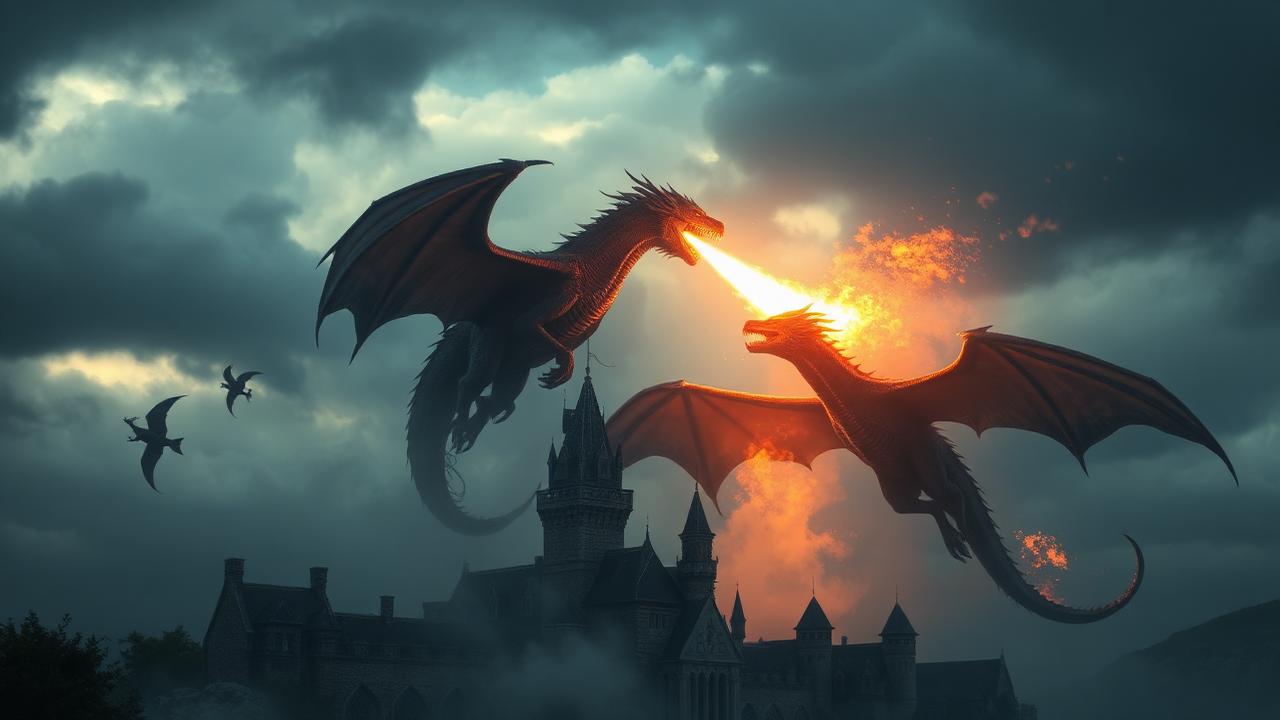
The conflict is unique in Westerosi history because both sides command living dragons, turning a routine succession dispute into the only war in the setting where strategic level dragon power is used on dragon power.
By the end of the Dance, most of the dragons are dead, the Targaryen dynasty is fatally weakened, and the long road that eventually leads to Robert's Rebellion is set in motion.
How the Succession Crisis Actually Starts
King Viserys I Targaryen breaks centuries of patriarchal Westerosi tradition by naming his eldest child, Princess Rhaenyra, as his heir. The lords of the Seven Kingdoms swear oaths to honour that choice, including Otto Hightower and the men who later betray her.
When Viserys dies, his second wife Alicent Hightower and her father use the moment to crown her eldest son, Aegon II, in secret. Rhaenyra, on Dragonstone, refuses to accept the coup, and the realm splits cleanly down the middle.
The Two Sides: Blacks vs Greens
The factions are named after the colours of the gowns worn at the famous tournament that opens the rivalry, but the political maths is simple.
- The Blacks: loyal to Queen Rhaenyra Targaryen. Backed by House Velaryon, the wealth and fleet of the Sea Snake Corlys Velaryon, Prince Daemon Targaryen, and most of the riverlands and the North.
- The Greens: loyal to King Aegon II Targaryen. Backed by Queen Dowager Alicent Hightower, her father Ser Otto Hightower, Lord Commander Criston Cole of the Kingsguard, Prince Aemond Targaryen, and the wealth of Oldtown.
Both sides claim legitimacy, both sides have dragons, and both sides quickly discover that there is no clean ending to a Targaryen civil war.
Why the Dragons Change Everything
In the timeline of Game of Thrones, dragons are mythological. In House of the Dragon, the Targaryens still command an entire flight of them, and that fact reshapes the strategic logic of every battle.
A single mature dragon can burn a town to ash. Two mature dragons fighting each other can destroy an army on the ground beneath them. The Dance is the only conflict in this universe where commanders on both sides have to plan around the threat of an aerial strike that almost nothing can stop.
The Dragons You Actually Need to Know
Casual viewers can drown in the names, but a handful of dragons drive almost every major beat of the war:
- Vhagar: the oldest and largest living dragon, ridden by Prince Aemond Targaryen for the Greens. Vhagar fought in Aegon the Conqueror's original invasion of Westeros and is effectively a flying mountain.
- Caraxes (the Blood Wyrm): long necked, scarlet, and extremely aggressive, ridden by Prince Daemon Targaryen for the Blacks.
- Syrax: the yellow she dragon bonded to Queen Rhaenyra since childhood. Rarely ridden into combat, but central to the politics of King's Landing.
- Sunfyre: the gold scaled dragon of King Aegon II, considered the most beautiful dragon ever to fly, and one of the war's most tragic figures.
- Meleys, Seasmoke, Vermithor, Silverwing: all play decisive roles in the climactic battles.
Themes: Misogyny, Inheritance, and Decay
Strip away the dragons and the Dance is a story about a kingdom that would rather burn than crown a woman. Lords who knelt to swear allegiance to Rhaenyra in her father's lifetime swap sides the moment a male heir is offered, even one whose claim is weaker by every rule Viserys spelt out.
It is also a story about families eating themselves. Childhood friends end up sanctioning the assassinations of each other's children. Brothers turn their dragons on brothers. The same blood that made the Targaryens conquerors becomes the wedge that splits them, and the show never lets the audience forget that the cost is paid in dragons and children, not just political capital.
The Long Shadow Over Game of Thrones
The Dance of the Dragons is the moment House Targaryen loses its single greatest strategic advantage. By the end of the war, the dragon population collapses, the survivors are sickly, and the last dragons die out within a few generations.
Once the dragons are gone, the Targaryen monarchy becomes just another ruling house. The slow drift to Robert's Rebellion, the Mad King, and the events of Game of Thrones is set in motion the moment Vhagar swallows a smaller dragon over Storm's End and turns a cold war into open slaughter.
What to Watch For This Season
If you are catching up, the show is doing three things at once that are worth tracking:
- Dragon pairings: who claims which unclaimed dragon shifts the balance of power in a single scene.
- The small council politics: Otto Hightower, Criston Cole, and Larys Strong run the war for the Greens behind the throne.
- The succession of Rhaenyra's children: every Velaryon heir is a flashpoint and a target.
The Takeaway
House of the Dragon is not just a prequel filler season between bigger Game of Thrones events. The Dance of the Dragons is the single most consequential conflict in the entire setting, the moment the dragons stop being an unbeatable weapon and become a finite, dying resource. Once you understand the Blacks vs Greens split, who rides which dragon, and why the lords of Westeros refuse to crown a queen, every betrayal in the show suddenly makes sense, and so does the long, slow decline that eventually delivers the Iron Throne to a Baratheon two centuries later.