Quick Answer
The best sushi rice (shari) starts with premium Japanese short grain rice rinsed 4 to 5 times until the water runs clear, soaked for 30 minutes, then cooked 1:1 with filtered water and a small piece of kombu.
While hot, drizzle the rice with awasezu, a seasoning blend of rice vinegar, sugar, and salt in a ratio of roughly 1/3 cup vinegar to 2 tbsp sugar to 1 tsp salt per 2 cups of raw rice.
Fold (never stir) the seasoning in with a wide slicing motion, fanning the rice to cool it quickly. The result is glossy, slightly sticky grains that hold their shape on the palate.
Why rice is the most important ingredient in sushi
In any sushi bar worth its name, apprentice chefs spend months working only on rice before they are allowed to touch fish. The rice carries the seasoning, the texture, and the temperature of the dish. Beautiful fish on bad rice is bad sushi.
What you are aiming for: each grain separate but tacky, glossy on the outside, tender but firm at the core, evenly tangy and slightly sweet, served at body temperature.
Choose the right rice
Use only Japanese short grain white rice. The high amylopectin starch content is what gives the cooked rice its signature stickiness. Brands like Koshihikari, Tamanishiki, Nishiki, and Kokuho Rose are widely available in the US and EU.
Long grain rice (basmati, jasmine, parboiled) will not work. The grains stay separate but they will not hold together when shaped into nigiri or rolls.
The awasezu seasoning ratio
Awasezu is the seasoning that turns plain rice into sushi rice. The classic Edomae ratio for every 2 cups of dry rice is:
- 1/3 cup rice vinegar
- 2 tablespoons granulated sugar
- 1 teaspoon fine sea salt
Gently warm the mixture in a small saucepan just until the sugar and salt dissolve. Do not boil. Let it cool to room temperature before using.
Ingredients
| Ingredient | Amount |
|---|---|
| Japanese short grain rice | 2 cups (about 400 g) |
| Filtered water (for cooking) | 2 cups (480 ml) |
| Kombu (dried kelp), optional | 1 small piece (2 inches) |
| Rice vinegar | 1/3 cup |
| Granulated white sugar | 2 tbsp |
| Fine sea salt | 1 tsp |
Method
1. Rinse until clear
Place the dry rice in a large bowl and cover with cold water. Swish gently with your hand. The water will immediately turn milky from surface starch. Drain and repeat 4 to 5 times until the water is nearly clear. This step keeps the cooked rice from going gummy.
2. Soak
Drain the rinsed rice in a fine mesh sieve and let it rest for 30 minutes. The grains absorb water uniformly during the soak, which gives you an even cook from edge to centre.
3. Cook
Transfer the rice to a heavy bottomed pot (or rice cooker). Add the filtered water and lay the kombu on top. Cover with a tight fitting lid. Bring to a boil over high heat, then reduce to low and cook 15 minutes. Remove from heat and let steam, covered, for another 10 minutes. Do not lift the lid during cooking.
4. Prepare the awasezu
While the rice cooks, gently warm the rice vinegar, sugar, and salt in a small saucepan over low heat just until the solids dissolve. Pour into a small bowl and cool to room temperature.
5. Slice and fold
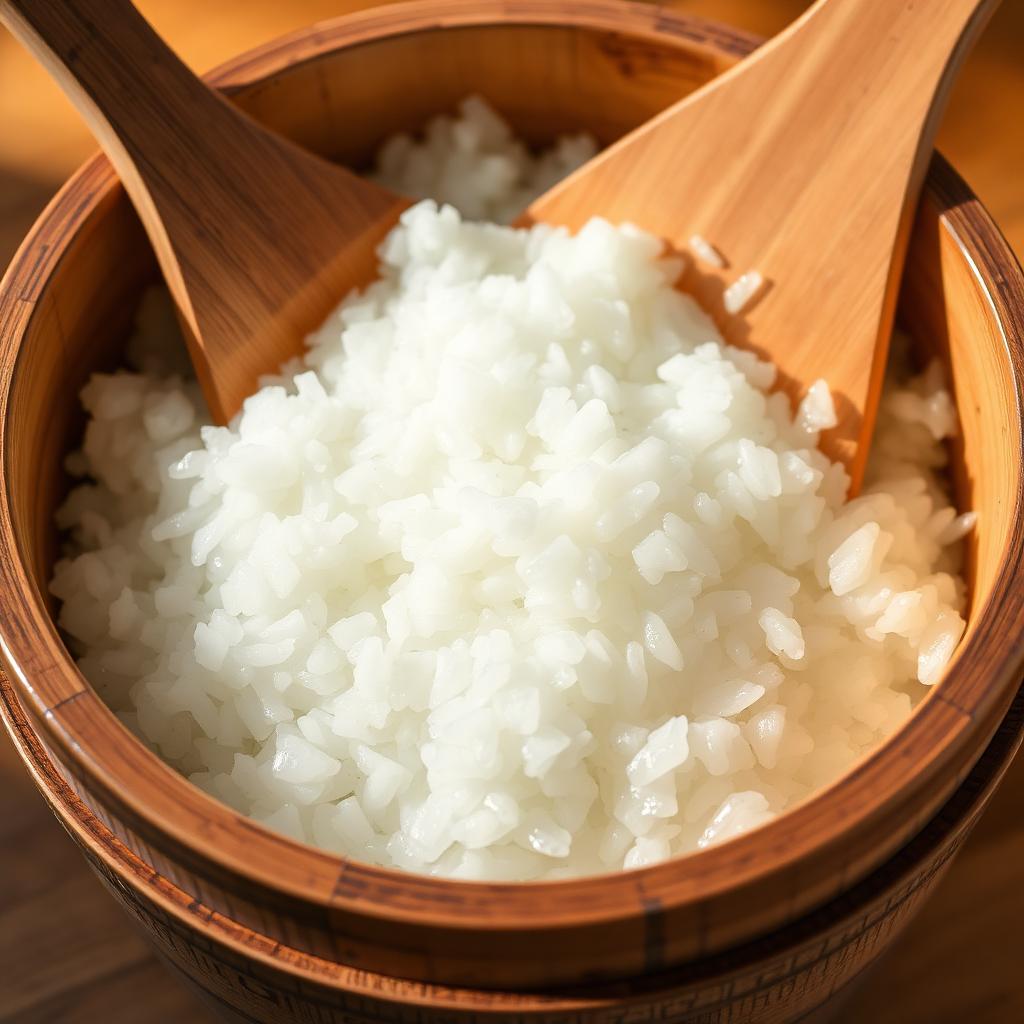
While the rice is hot, spread it into a wide wooden tub (hangiri) or a large glass baking dish. Discard the kombu. Drizzle the awasezu evenly over the rice with a slotted spoon or a rice paddle.
Using a flat plastic or wooden paddle, fold the rice using a gentle slicing motion at a 45 degree angle. Never stir or mash, which crushes the grains and turns the rice into glue.
While folding, fan the rice with a handheld fan or a piece of cardboard. The rapid cooling locks in the glossy sheen that defines great sushi rice.
6. Serve at body temperature
Cover the rice with a damp clean cloth to keep it from drying out. Use within 4 hours and never refrigerate. Cold rice goes hard and chalky.
Building sushi from the rice
Once you have great shari, the rest of sushi becomes accessible:
- Nigiri: Form a small oval of rice, about 18 g, and top with a slice of sashimi grade fish.
- Maki rolls: Spread a thin layer on a nori sheet, add fillings, and roll with a bamboo mat.
- Temaki cones: Place a small pile of rice on a quarter sheet of nori, add fish and vegetables, and roll into a cone.
- Chirashi: Scatter sliced sashimi over a bowl of warm shari.
Common mistakes
- Skipping the rinse. Surface starch turns the cooked rice into paste.
- Stirring instead of folding. Crushed grains lose their structure and gloss.
- Adding awasezu to cold rice. The seasoning sits on the surface instead of absorbing.
- Refrigerating leftovers. The starch retrogrades and the grains go chalky.
Frequently asked questions
Can I use a rice cooker?
Yes. Modern rice cookers have a sushi setting that nails the texture. Still rinse and soak the rice first.
Why kombu?
The kelp adds a subtle savoury background note (glutamate) that lifts the entire dish. It is optional but worth seeking out.
How much awasezu per cup of cooked rice?
About 1 tablespoon of seasoning per cup of cooked rice is the general rule, but follow the recipe ratios for the cleanest balance.
Yield and storage
This recipe yields about 4 cups of cooked sushi rice, enough for roughly 6 nigiri portions or 4 maki rolls per person serving 2 to 3 people. Always make a little extra because shaping nigiri and rolling maki uses more rice than you would guess on a first attempt.
Sushi rice does not store well. The vinegar prevents some bacterial growth, but the texture suffers badly in the fridge as starch retrogrades into a chalky, hard grain. Use within 4 hours of seasoning. If you absolutely must hold longer, keep it covered with a damp clean cloth at room temperature in a cool kitchen.
Hangiri and tools
A traditional hangiri is a flat bottomed wooden tub made from cypress or sugi. The unfinished wood absorbs excess moisture as the rice cools, which is part of why sushi rice from a proper hangiri has that signature glossy yet not wet surface. A large glass baking dish or a wide stainless steel sheet pan is a perfectly fine substitute for home cooks. Avoid plastic, which traps too much steam.
A flat plastic or wooden rice paddle (shamoji) is the right tool for folding. A rubber spatula is too soft and tends to mash the grains.
The takeaway
Sushi rice is a craft, but it is not a mystery. Rinse hard, soak, cook gently with kombu, season with warmed awasezu while hot, and fold with a slicing motion as you fan it cool. Get the rice right and the rest of your sushi will look and taste like it came from a professional kitchen.