Quick Answer
The best no knead Ligurian focaccia uses a high hydration dough (about 84% water), an 18 to 24 hour cold rise in the fridge, and a salt water brine poured into the dimples before baking.
The long cold rise develops gluten and flavour without any kneading. The brine keeps the top soft and tender while the bottom fries to a crisp in olive oil at the bottom of the pan.
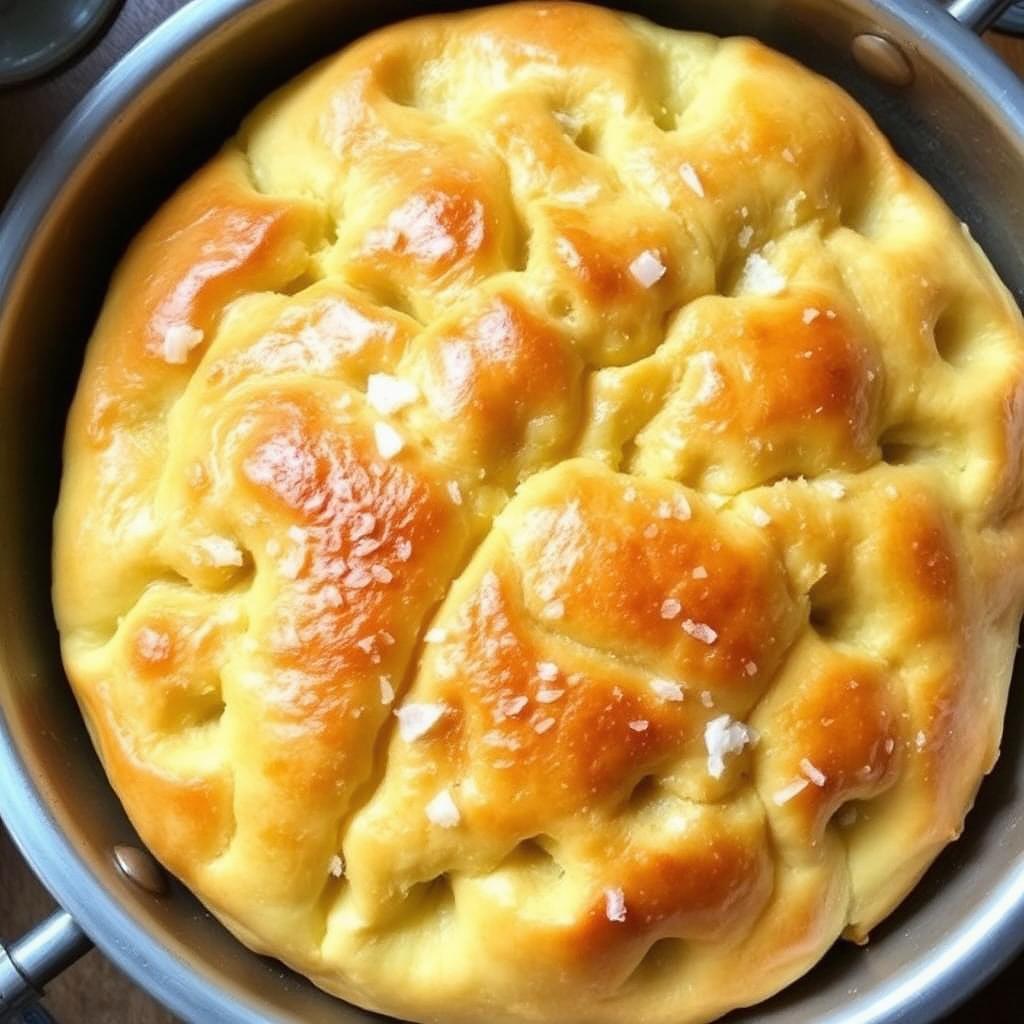
Bake at 220 C / 425 F for 25 to 30 minutes until the crust is deep golden brown. Turn the bread out onto a wire rack immediately so the bottom stays perfectly crisp.
Why no knead works
Traditional bread relies on physical kneading to align gluten strands into a strong elastic web. A long, cold, high hydration rise does the same thing chemically. Time and water do the work that your hands would normally do.
18 to 24 hours in the fridge gives the yeast time to ferment slowly, building deep wheat flavour, while gluten strands form naturally as the dough sits. The result is a dough that pulls apart with dozens of visible air pockets when you tip it out of the bowl, with zero kneading effort.
The Ligurian salt water brine
This is the single move that separates real Ligurian focaccia from supermarket flatbread. Just before baking, mix a few tablespoons of water with flaky sea salt and pour the mixture over the dimpled dough.
The brine pools in the dimples and produces steam in the oven, keeping the top of the focaccia tender, glossy, and slightly moist while the bottom fries to a crackling crisp in pooled olive oil. Skip the brine and the top dries out into a hard cracker.
Ingredients
| Ingredient | Amount |
|---|---|
| Bread flour (high protein) | 4 cups (500 g) |
| Active dry yeast | 2 tsp |
| Honey or sugar | 2 tsp |
| Fine sea salt | 2 tsp |
| Lukewarm water (about 43 C / 110 F) | 1 3/4 cups (420 ml) |
| Extra virgin olive oil | 1/2 cup, split (2 tbsp dough, 1/4 cup pan, 2 tbsp top) |
| Brine: warm water | 3 tbsp |
| Brine: flaky sea salt | 1 tsp |
| Optional toppings | fresh rosemary, sliced olives, cherry tomatoes |
Method
1. Bloom the yeast
In a large mixing bowl, whisk the yeast and honey into the lukewarm water. Let it sit 5 minutes until frothy. This is your sign that the yeast is alive.
2. Mix the dough
Add the bread flour and fine sea salt to the bowl. Stir with a wooden spoon or sturdy spatula until a wet, shaggy, sticky dough forms. Drizzle 2 tablespoons of olive oil over the top.
3. Cold rise (18 to 24 hours)
Cover tightly with plastic wrap and refrigerate 18 to 24 hours. The dough will roughly double or triple in volume and develop a network of visible bubbles. This long cold rise is what builds flavour and structure without any kneading.
4. Pan it
Pour 1/4 cup of olive oil into a 9 by 13 inch metal baking pan, coating the bottom and sides completely. Gently scrape the cold dough into the pan, turning it once to coat in the oil. Stretch the dough gently with oiled hands to roughly fill the pan.
5. Second rise (2 to 3 hours)
Cover loosely and let the dough rise at room temperature for 2 to 3 hours until it fills the pan and looks full of air bubbles. In a warm kitchen, this can happen faster.
6. Dimple
Drizzle 2 tablespoons of olive oil over the top. Oil your hands well. Press your fingertips straight down through the dough until you touch the bottom of the pan, creating deep dimples across the entire surface. Be confident: the dough is meant to be perforated all over.
7. Apply the brine
Whisk the 3 tablespoons of warm water and 1 teaspoon of flaky sea salt together until the salt dissolves. Pour this brine evenly over the dough so it pools in the dimples. Sprinkle on any toppings (rosemary, olives, halved cherry tomatoes) now.
8. Bake
Bake at 220 C / 425 F for 25 to 30 minutes until the crust is a deep golden brown and the bottom feels crisp when you peek under one corner with a spatula.
9. Cool on a rack
Tip the focaccia out of the pan onto a wire rack immediately. Cooling it in the pan steams the bottom and ruins the crisp crust. Let it cool 10 minutes before slicing.
Storage
Focaccia is best the day it is baked. Store leftovers at room temperature in a paper bag (never plastic, which steams it soggy) for up to 1 day. To refresh, sprinkle with a few drops of water and reheat in a 175 C / 350 F oven for 5 minutes. Freezes well for 1 month.
Topping ideas
- Classic Ligurian: Just olive oil and flaky salt.
- Rosemary: Press fresh rosemary leaves into the dimples before baking.
- Cherry tomato and olive: Halved cherry tomatoes plus pitted Castelvetrano olives.
- Onion and sage: Thinly sliced red onion and fresh sage.
- Three cheese: Mozzarella, parmesan, and pecorino added in the last 10 minutes of baking.
- Garlic confit: Soft cloves of slow cooked garlic pressed into the dough.
Common mistakes
- Skipping the long cold rise. The bread tastes flat and the texture is tight. The 18 to 24 hour rest is doing real work.
- Sprinkling salt directly on the dough. Pulls moisture out and gives you a dry, patchy crust. Always use the brine.
- Shallow dimples. Press your fingertips all the way to the bottom of the pan. The dimples define the texture.
- Leaving it in the pan to cool. Steams the bottom soggy. Tip it onto a rack immediately.
Frequently asked questions
Can I skip the cold rise?
You can do a same day version with a 2 hour warm rise instead, but the flavour and texture are noticeably less developed. The overnight cold rise is worth planning for.
Do I need bread flour?
Bread flour gives the best structure and chew thanks to its higher protein content (about 12 to 14%). All purpose flour works in a pinch but the crumb will be tighter and less open.
What olive oil should I use?
A fruity, peppery Ligurian or Tuscan extra virgin olive oil makes a real difference because the bread is fried in it. Save your most expensive oil for finishing and use a good mid range bottle for the pan.
The takeaway
No knead Ligurian focaccia is the easiest bread project you will ever take seriously. Mix in 5 minutes, rest in the fridge overnight, dimple with confidence, brine the top, and bake hot until deep golden. The reward is a soft, glossy, crackling crusted Italian flatbread that tastes like a holiday in Genoa.