Quick Answer
The best gluten free pizza crust uses a blend of fine white rice flour and tapioca starch for structure and chew, xanthan gum to trap fermentation gas, and whole psyllium husk powder to form the elastic gel that lets you actually shape the dough without cracking.
You proof the dough as a thick, sticky batter, press it onto parchment, and par bake on a hot stone or steel at 230 C for 8 to 10 minutes before adding sauce and toppings.
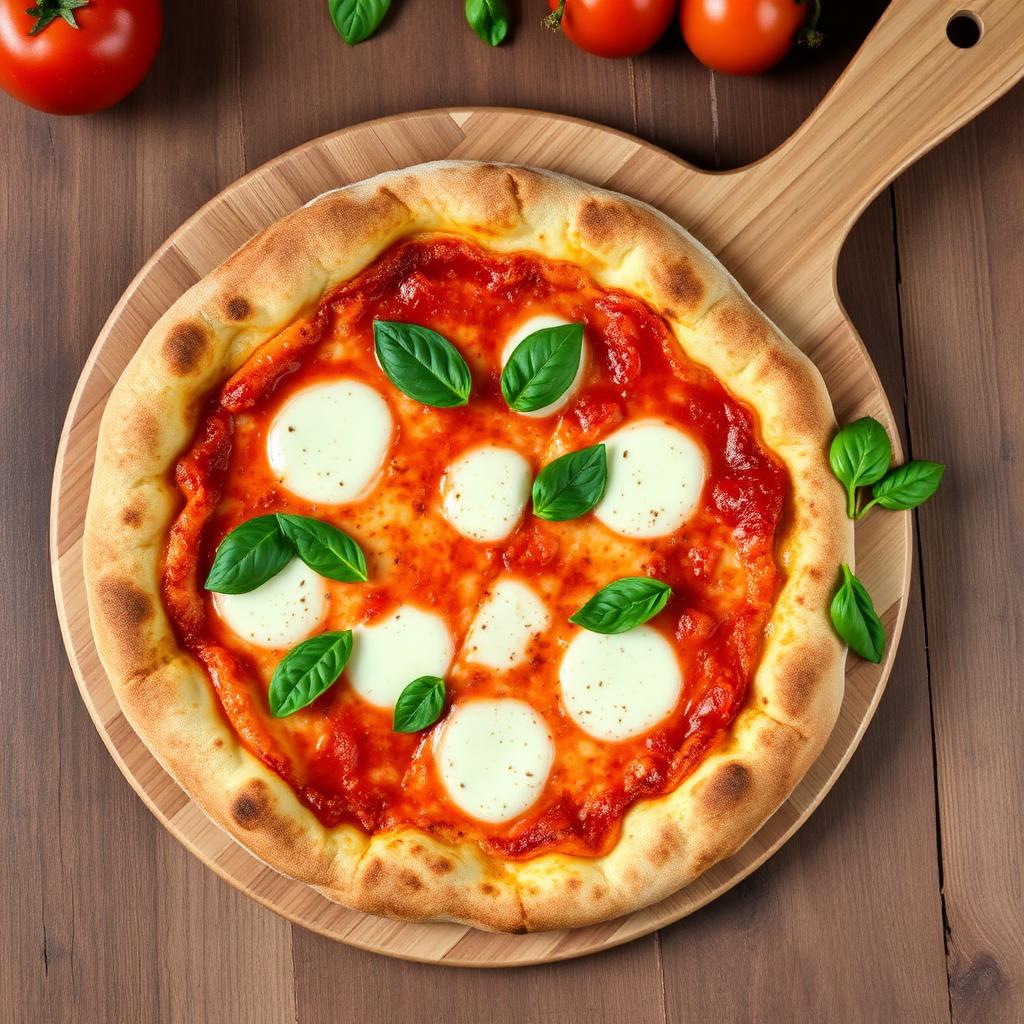
This two stage bake fixes the two classic gluten free failures, a soggy middle and a cracker bottom, and gives you a 12 inch round that pulls cleanly and crisps on the base.
Why gluten free pizza dough usually fails
Wheat flour works because gluten proteins form a stretchy net that traps the carbon dioxide yeast produces. Strip the gluten out and you lose that structure. The dough goes from elastic and chewy to crumbly and sandy.
Most home cooks try to fix this by adding more flour or rolling the dough thinner. Both make the problem worse. More flour absorbs more water and gives you a denser crust. Rolling thinner removes the trapped gas pockets that give pizza its airy lift.
The real fix is to rebuild the gluten network with a different toolkit: starches for body, a hydrocolloid for gas trapping, and a fibre gel for flexibility. Get the ratios right and the dough behaves like a slightly wetter, stickier version of a normal pizza dough.
The science behind the substitutions
Three ingredients carry most of the structural load.
- Fine white rice flour acts as the bulk flour. It is mild in flavour and lets the toppings dominate the taste.
- Tapioca starch delivers the signature chew. It also browns nicely on the crust edge.
- Xanthan gum and psyllium husk powder together replace the gluten net. Xanthan thickens the liquid phase so the gas does not escape, and psyllium forms a gel that you can stretch and shape.
If your gluten free flour blend already contains xanthan gum, you do not need to add more. Always check the label. Doubling up gives you a gummy, dense centre.
Ingredients you need
| Ingredient | Amount | Purpose |
|---|---|---|
| Gluten free flour blend (with xanthan) | 2 cups (260 g) | Structural bulk |
| Whole psyllium husk powder | 1 tbsp | Elastic gel network |
| Active dry yeast | 1 packet (7 g) | Leavening |
| Fine sea salt | 1 tsp | Flavour |
| Organic sugar | 1 tsp | Yeast food |
| Warm water (40 to 43 C) | 210 ml | Hydration |
| Extra virgin olive oil | 2 tbsp | Fat and tenderness |
Step by step preparation
- Whisk the sugar and yeast into the warm water and rest 5 to 7 minutes until a thick foam forms.
- In a small cup, whisk the psyllium husk powder into 2 tablespoons of extra water and let it set into a soft gel.
- In a stand mixer with the paddle attachment, combine the flour blend and salt. Add the yeast slurry, the psyllium gel, and the olive oil.
- Mix on medium for 4 to 5 minutes. The dough should look like a very thick paste, not a smooth ball. Do not add extra flour to firm it up.
- Lightly oil a sheet of parchment paper. Turn the dough out, oil your hands, and press it into a 12 inch round disc with a slightly thicker edge for the cornicione.
- Cover loosely with a damp cloth and prove in a warm spot for 30 minutes.
The par bake system that fixes a soggy middle
The par bake is the single most important step. It dries out the dough surface, sets the structure, and prevents the moisture from your sauce and cheese from collapsing the crust.
- Preheat the oven to 230 C with a baking stone or steel on the middle rack for at least 45 minutes.
- Slide the parchment with the bare dough directly onto the hot stone.
- Par bake for 8 to 10 minutes until the surface is dry and slightly firm to the touch.
- Remove, add sauce, cheese, and toppings, and bake for another 10 to 12 minutes until the edges are deeply golden and the cheese is blistered.
If you skip the par bake, you will get a passable pizza with a wet centre. The two stage bake gives you a crust that holds a slice cleanly when you lift it.
Topping tips that protect the crust
- Use a thicker, lower water tomato sauce. Watery sauces are murder on gluten free crusts.
- Pat fresh mozzarella dry with paper towel before using it. Excess whey will pool and soak the surface.
- Pre cook wet toppings like mushrooms or onions to drive off moisture.
- Finish with delicate ingredients like fresh basil or prosciutto after baking so they keep their texture.
How to store and reheat leftovers
Cooled slices store well wrapped in foil in the fridge for up to 3 days. Reheat in a dry skillet over medium heat with a lid for 4 to 5 minutes. The skillet rebuilds the crisp base while the lid steams the cheese back to life. Avoid the microwave, which makes gluten free crusts rubbery.
Frequently asked questions
Can I make this dough without xanthan gum?
Yes, but you need to compensate with more psyllium husk powder, roughly 1.5 tablespoons instead of 1. The crust becomes slightly denser but it stays flexible.
Can I skip the par bake?
You can, but expect a softer centre. The par bake is what separates a good gluten free pizza from a great one.
Is this recipe also dairy free?
The crust itself contains no dairy. Use a dairy free mozzarella alternative if you need a fully dairy free pizza.
The takeaway
A great gluten free pizza crust is a structural engineering problem, not a flour swap. Build the dough around tapioca and rice flour, lock the gas in with xanthan and a psyllium husk gel, and use a hot stone with a par bake to crisp the base. Do that and you will pull a pizza out of your home oven that holds its shape, pulls cleanly, and finally tastes like real pizza rather than a sad allergy substitute.