Quick Answer
The best gluten free bread uses a quality gluten free flour blend (containing xanthan gum) plus whole psyllium husk powder as a second binder, and egg whites for extra structure.
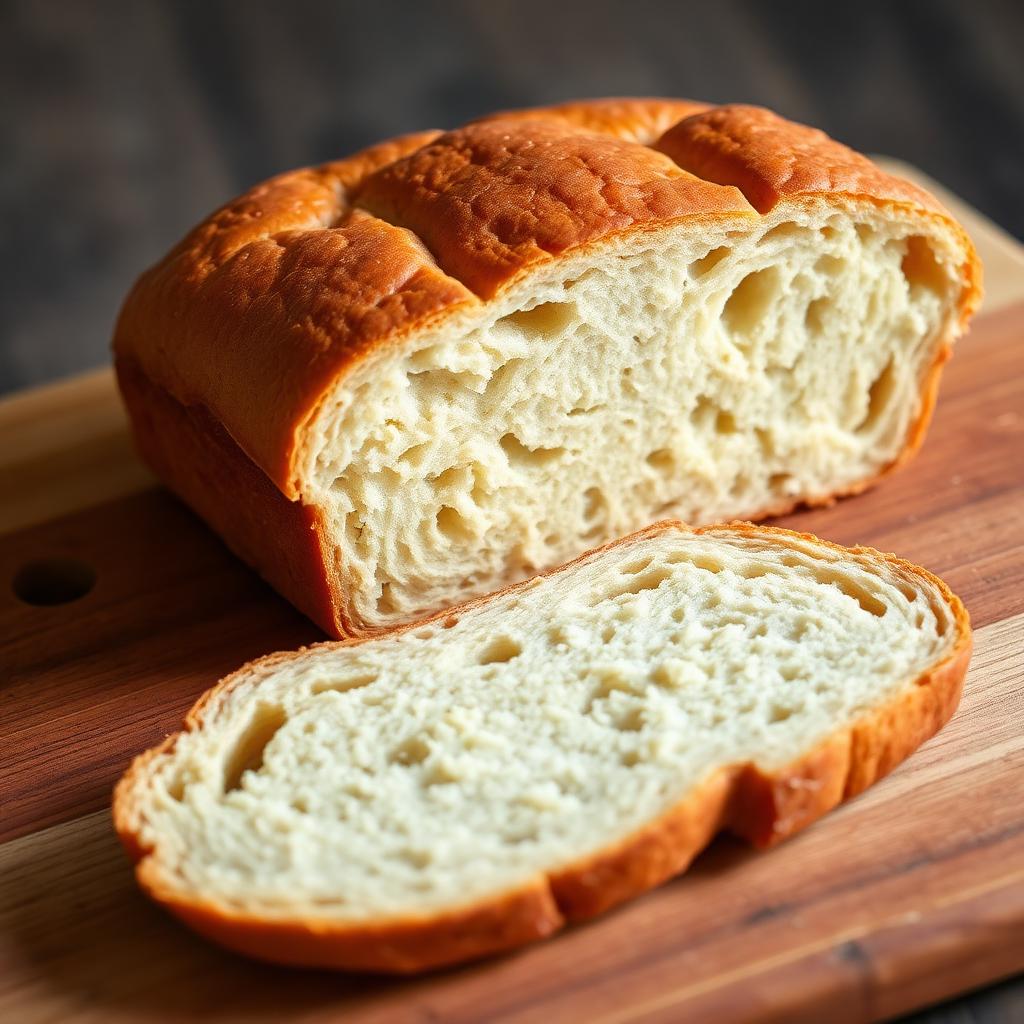
The psyllium and xanthan together form a gel network that mimics the elastic gluten web found in wheat bread, trapping carbon dioxide from the yeast so the loaf rises tall and slices cleanly instead of crumbling.
Bake at 190 C / 375 F for 50 to 55 minutes until the crust is golden and the loaf sounds hollow when tapped. Cool completely before slicing or the inside will turn gummy.
Why gluten free bread is hard
In wheat flour, gluten proteins form a stretchy web that holds carbon dioxide bubbles from yeast, letting bread rise and stay tall. Gluten free flours have no such network. Without a substitute, the bread collapses into a dense, crumbly brick that breaks apart when you slice it.
Modern gluten free baking solves this with hydrocolloid binders: xanthan gum, guar gum, and especially psyllium husk powder. These form gel networks in water that trap gas the same way gluten does.
The role of psyllium husk
Psyllium husk is the dried outer coating of the Plantago ovata seed. When mixed with water, it absorbs many times its weight and forms a strong elastic gel. In gluten free bread it provides structure, holds moisture, and adds a real chew that no other ingredient can match.
Use whole psyllium husk powder, not metamucil style fibre supplements (which contain added sweeteners). It is available at health food stores, larger supermarkets, and online.
Why egg whites
Whipped or even just whisked egg whites add lift and structure to gluten free bread. The proteins coagulate during baking and reinforce the dough framework, helping the loaf hold its shape. Three large whites is the right amount for a standard loaf.
Ingredients
| Ingredient | Amount |
|---|---|
| Gluten free flour blend (must contain xanthan gum) | 3 cups |
| Whole psyllium husk powder | 2 tbsp |
| Active dry yeast | 1 packet (7 g) |
| Warm water (about 40 C / 105 F) | 1 1/2 cups |
| Honey or organic sugar | 2 tbsp |
| Apple cider vinegar | 1 tsp |
| Large egg whites, room temperature | 3 |
| Extra virgin olive oil | 1/4 cup |
| Fine sea salt | 1 tsp |
Method
1. Bloom the yeast and psyllium
In a medium bowl, whisk the yeast and honey into the warm water. Let sit 5 minutes until frothy. Whisk in the psyllium husk powder and let it rest 3 minutes. The mixture will thicken into a loose gel.
2. Mix the dough
In the bowl of a stand mixer fitted with the paddle attachment, combine the gluten free flour blend and fine sea salt. Add the yeast and psyllium gel, apple cider vinegar, egg whites, and olive oil. Mix on medium speed for 5 minutes. The dough will look like a thick sticky cake batter, not a smooth bread dough ball. This is correct for gluten free bread.
3. Single rise in the pan
Scoop the sticky dough into a greased 8 by 4 inch loaf pan. Smooth the top with a wet spatula. Cover loosely with a damp cloth and let rise in a warm spot for 45 to 60 minutes until the dough rises just above the rim of the pan.
Gluten free bread only gets one rise. Punching down and re proofing collapses the structure permanently.
4. Bake
Heat the oven to 190 C / 375 F. Bake the loaf for 50 to 55 minutes until the crust is golden brown and the loaf sounds hollow when tapped on the bottom. An instant read thermometer in the centre should register 95 to 98 C / 205 to 210 F.
5. Cool completely
Tip the loaf out of the pan and cool on a wire rack for at least 2 hours before slicing. Cutting into hot gluten free bread causes the inside to turn gummy as the starches set. The cool down step is non negotiable.
Storage
Store sliced bread in an airtight container at room temperature for 2 days, in the fridge for 5 days, or in the freezer (sliced) for 2 months. Toast frozen slices straight from the freezer for the best texture.
Variations
- Seeded: Add 1/3 cup of mixed sunflower, pumpkin, and flax seeds to the dough.
- Herbed: Add 2 tablespoons of fresh chopped rosemary or thyme.
- Honey oat: Sprinkle the top with rolled oats and brush with extra honey before baking.
- Sandwich loaf: Use a slightly bigger 9 by 5 inch pan for taller slices that fit standard sandwich bread sizes.
Common mistakes
- Skipping the psyllium. The single most important ingredient. Without it, you get a crumbly cake like loaf.
- Letting it rise too long. Gluten free dough overproofs quickly. Stop the moment it reaches the rim of the pan.
- Slicing while warm. Gummy interior. Always wait 2 hours.
- Using a gluten free flour without xanthan. Add 1 teaspoon of xanthan gum separately if your blend does not include it.
Frequently asked questions
Can I use whole eggs instead of just whites?
Yes, but the loaf will be denser and slightly more yellow. Use 2 whole large eggs in place of 3 egg whites.
Why apple cider vinegar?
The acid feeds the yeast and helps the psyllium gel set faster. Without it the loaf rises more slowly and less reliably.
Is this loaf vegan?
No, because of the egg whites. For a vegan version, replace each egg white with 3 tablespoons of aquafaba (chickpea liquid) whisked to soft peaks.
Choosing a gluten free flour blend
The flour blend you use makes a huge difference. King Arthur Measure for Measure, Bob's Red Mill 1 to 1 Baking Flour, and Cup4Cup Multipurpose all work well in this recipe because they already contain xanthan gum. Avoid single ingredient flours (just rice, just almond, just chickpea) because they lack the balanced starch and protein profile needed for bread.
If you can only find a blend without xanthan, add 1 teaspoon of xanthan gum separately to the dry ingredients.
Slicing and serving
Once fully cooled, slice the loaf with a serrated bread knife into roughly 1/2 inch slices. The bread toasts beautifully and makes excellent sandwich bread, French toast, or grilled cheese. For freezer storage, slice the whole loaf first and freeze the slices flat in a single layer before bagging.
The takeaway
Great gluten free bread is a science of hydrocolloids and patience. Use a quality blend with xanthan, add psyllium husk and egg whites for structure, mix to a thick batter, let it rise once, bake hot, and cool fully. The result is a tall tender loaf with real chew that finally tastes like proper bread instead of a sad compromise.