Quick Answer
The A24 Backrooms movie, directed by Kane Parsons and starring Renate Reinsve, ends with therapist Dr. Mary Kline escaping the maze but landing inside an industrial research facility run by Phil (Mark Duplass) and an organisation called ASYNC, which is studying portals that are opening up around the world.
The final shot reveals that the Backrooms made a corrupted physical copy of Mary the moment she entered. While the real Mary is interrogated in the lab, the copy sits alone on a chair deep inside the yellow labyrinth, blinking with too many eyes. There is no traditional post credit scene; the cliffhanger lands right before the title cards.
The Setup: A Maze That Mirrors Memory
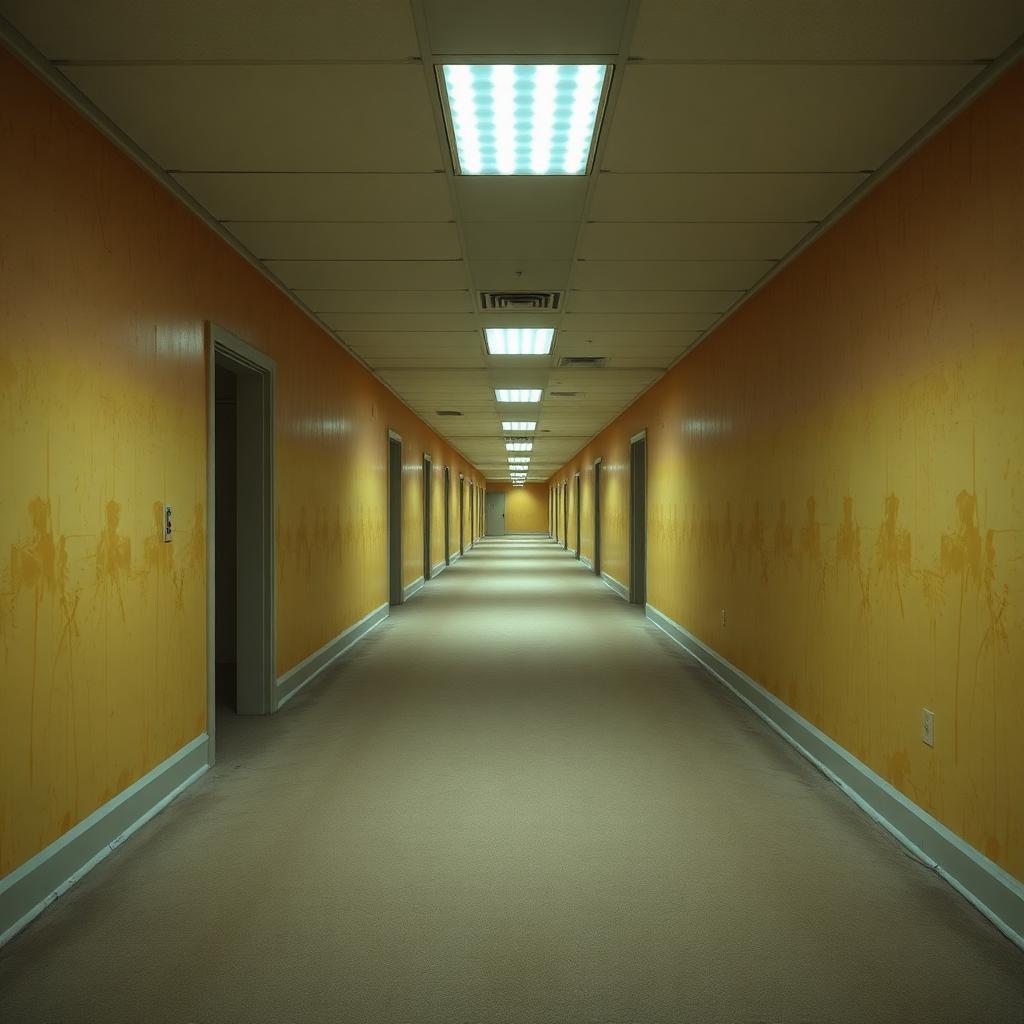
The film starts inside "Captain Clark's Ottoman Empire," a failing furniture store run by a recently divorced man named Clark. When he stumbles through a tear in reality in the store's basement, he falls into an infinite labyrinth of fluorescent lit, yellow wallpapered, damp carpeted rooms.
The crucial twist on the original creepypasta is that the Backrooms in this film are not a passive parallel dimension. They actively pull memories, trauma, and anxieties out of whoever enters and reshape themselves accordingly. Clark sees imperfect copies of his store, his ex wife as a faceless presence at a dinner table, and his old TV mascot, a cheesy pirate, looming as a real, two metre tall creature.
The Climax: Dr. Mary Kline's Descent
Clark's therapist, Dr. Mary Kline, follows him through the rift to bring him back. Reinsve plays Mary as someone trying to keep clinical distance while the maze starts mining her own grief and unresolved trauma in real time.
When Mary finally finds Clark, he is sitting at a table with misshapen fleshy copies of people from his life, calmly explaining that the Backrooms are "everything that ever was," a kind of cosmic archive of human experience. Before Mary can pull him out, the pirate mascot crashes into the room and crushes Clark in a single, brutal beat. Mary flees through shifting corridors and escapes by squeezing through a narrow tear in reality.
The Ending Explained: ASYNC and the Lab
What feels like Mary's escape into safety is anything but. She is immediately sedated by a hazmat suited team and wakes in a sterile debriefing room across from Phil, the calm head researcher played by Mark Duplass.
Phil drops the structural reveal of the film: the Backrooms are a real, natural anomaly, and identical portals are opening at multiple locations around the world. Mary is uniquely valuable because she survived direct contact with one of the entities inside the maze. The interrogation framing implies she will not be allowed to leave the facility easily.
The Final Shot: The Corrupted Copy
The closing image is the film's hardest punch. The camera leaves the lab and travels back into the yellow labyrinth. There, sitting alone on a chair in an empty room, is a figure that looks exactly like Mary, but with subtle wrong details: too many eyes, an off symmetry, a slightly distorted smile.
The implication is that the Backrooms make a corrupted copy of every conscious mind that enters. Mary's real body got out, but a piece of her is now permanently embedded inside the maze. Whether that copy can act, escape, or interact with the outside world is left deliberately unanswered, which is a clear sequel hook.
Is There a Post Credit Scene?
No, there is no traditional post credit scene. The director made a deliberate choice to land the final reveal right before the title cards, then let the credits play out clean. You can leave when the cast list starts without missing anything.
The decision fits the film's tone. A Marvel style stinger would undercut the cosmic horror dread the final shot is trying to build. The expanding global portals and the corrupted copy of Mary are more than enough setup for whatever comes next without needing a teaser scene to spell it out.
Key Themes Worth Re-Watching For
A second viewing rewards a few specific threads:
- Memory as architecture. Every room Clark and Mary pass through is a half remembered version of a real space from their own past. Pay attention to the wallpaper, lighting, and furniture, not just the monsters.
- The pirate mascot. The creature is not random. It is Clark's own commercial era trauma rendered physical, which is why it specifically hunts him.
- Mary's clinical detachment. Early scenes establish how Mary uses professional distance to manage her own grief. The maze systematically dismantles that defence.
- ASYNC's calm. Phil's lack of surprise about Mary's story strongly implies the organisation has been studying the Backrooms for years before Clark ever fell in.
What the Sequel Could Look Like
The ending leaves several deliberate threads dangling, which gives the franchise plenty of room to expand:
- Multiple global portals. Phil says identical openings are appearing around the world, which makes a multi country, multi character sequel natural.
- The ASYNC organisation. Their methods, funding source, and longer term goals are entirely unexplored.
- The corrupted Mary copy. Whether the copy has agency, can travel through the maze, or can eventually break out is the most obvious horror engine for a sequel.
- Other entities. The pirate mascot was one creature manifested from one man's psyche. Every new visitor implies an entire new bestiary.
Why the Film Works
What separates this Backrooms adaptation from the dozens of YouTube shorts and indie games inspired by the same lore is its commitment to character. Reinsve and Duplass turn what could have been a hollow concept into a film about grief, denial, and the limits of professional distance. The yellow halls are scary because of what they pull out of the people walking through them, not because of the wallpaper.
That is why the ending lands. The cosmic horror reveal about global portals matters, but the gut punch is the idea that the maze keeps a piece of you forever, and that piece is wrong in subtle ways you cannot see.
The Takeaway
The Backrooms movie ends with Mary out of the maze but captured by ASYNC, while a corrupted copy of her remains trapped in the yellow labyrinth forever. There is no post credit scene; the final image before the credits is the entire setup for whatever comes next. Clark is killed by his own pirate mascot, ASYNC is studying portals opening worldwide, and Mary's clinical detachment is dismantled by a place that uses memory as architecture. It is a quiet, unsettling ending that earns its cosmic horror because it stays grounded in two specific people and what the maze takes from each of them.