Quick Answer
The authentic pina colada was created in Puerto Rico in 1954 and is built on four ingredients: 2 ounces aged white or gold Puerto Rican rum, 2 ounces pineapple juice, 1.5 ounces cream of coconut (Coco Lopez is the original), and 0.5 ounces fresh lime juice.
For the classic resort style version, blend with 1 cup of crushed ice for 15 to 20 seconds. For a cleaner craft cocktail version, shake hard over big ice cubes and strain into pebble ice.
The lime juice is the unsung hero. It cuts the richness of the cream of coconut and stops the drink from sliding into sugary milkshake territory.
The two competing origin stories
The cocktail is officially the national drink of Puerto Rico, and two different bars claim the invention. The Caribe Hilton credits Ramon Monchito Marrero, who developed the recipe in 1954 after three months of testing. Barrachina Restaurant in Old San Juan claims their bartender invented it the same decade.
What both versions agree on is the structural recipe: Puerto Rican rum, real pineapple juice, sweetened cream of coconut, and ice. The fresh lime addition is a slightly more modern refinement, popularised by craft bartenders in the 2000s but now considered part of the classic build.
Why supermarket pina colada mix is a problem
Most jugs of pina colada mix on grocery store shelves are made with artificial flavours, glucose syrup, food colouring, and stabilisers. The result tastes nothing like the real cocktail. It is too sweet, too thin, and has the chemical aftertaste that gives the drink an unfair reputation as a tacky tourist option.
The real ingredients cost roughly the same per serve as the mix and take about 90 extra seconds. There is no good reason to use the bottled stuff once you have made it from scratch.
Cream of coconut vs coconut milk vs coconut cream
This is the most common point of confusion. They are not interchangeable.
- Cream of coconut is heavily sweetened, thick, and emulsified. Coco Lopez is the canonical brand. This is what the pina colada is built on.
- Coconut cream is the thick top layer from canned coconut milk. It is unsweetened. Use it only if you add your own simple syrup to compensate.
- Coconut milk is thinner and watered down. Using it gives you a flat, runny drink with no body.
If your cream of coconut has separated in the can, scoop the whole thing into a bowl and whisk until smooth before measuring.
Rum selection
Authentic pina coladas use Puerto Rican column still rum. The clean, slightly grassy profile lets the pineapple and coconut take the lead instead of fighting them. Bacardi Superior or Don Q Cristal are easy supermarket options. For a richer drink, use a lightly aged gold rum.
Avoid heavily aged dark rums or spiced rums. They overpower the delicate coconut and turn the drink muddy.
The full ingredient list
| Ingredient | Amount |
|---|---|
| Puerto Rican white or gold rum | 2 oz (60 ml) |
| Pineapple juice, ideally fresh | 2 oz (60 ml) |
| Cream of coconut | 1.5 oz (45 ml) |
| Fresh lime juice | 0.5 oz (15 ml) |
| Crushed ice (blended method) | 1 cup |
Method A: the blended resort version
- Add all the ingredients plus 1 cup of crushed ice to a high speed blender.
- Blend on high for 15 to 20 seconds until smooth and the texture looks like a thick milkshake.
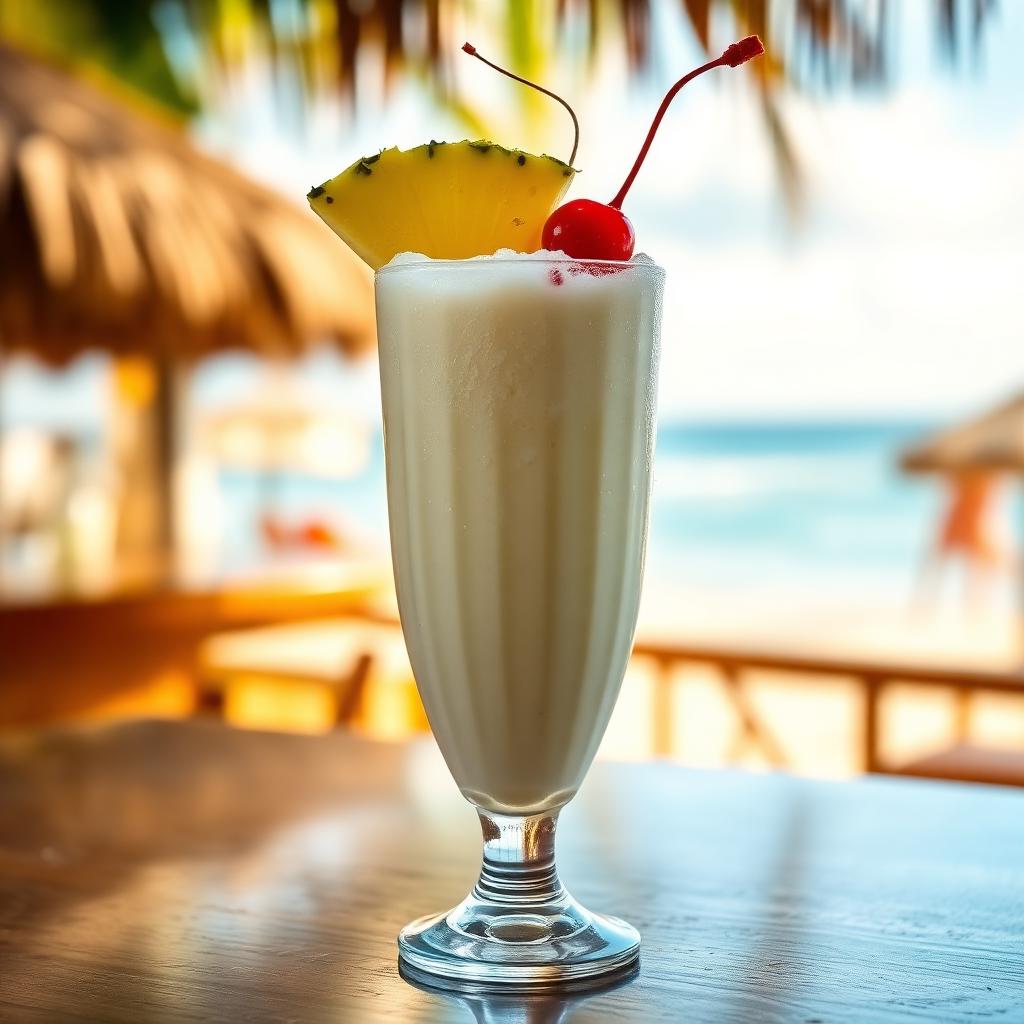
- Pour into a chilled hurricane glass or pilsner.
- Garnish with a fresh pineapple wedge and a maraschino cherry.
This is the version you grew up seeing at beach bars and on cruise ships. It is creamy, dessert like, and best served in the sun.
Method B: the shaken craft cocktail version
- Fill a cocktail shaker with large solid ice cubes.
- Add all four ingredients.
- Shake hard for 20 seconds. The motion emulsifies the cream of coconut with the pineapple juice and creates a velvety foam layer on top.
- Strain into a tall glass filled with fresh pebble ice.
- Garnish with a pineapple frond and a lime wheel.
This version is lighter, less sweet on the palate, and lets the rum show through. It is the style most modern craft cocktail bars serve.
Common mistakes
- Skipping the lime juice. The drink ends up cloyingly sweet and one dimensional.
- Using milk or coconut milk instead of cream of coconut. The body collapses.
- Blending for too long. After 30 seconds the ice over crushes and the drink turns watery.
- Using canned pineapple juice that is high in added sugar. Read the label and pick a 100 percent juice option.
Important note on alcohol
A pina colada is a sweet, easy drinking cocktail, which makes it easy to underestimate. A standard serve contains roughly 2 ounces of 40 percent rum, the same as any other cocktail. Pace yourself, drink water between rounds, and never serve to anyone under the legal drinking age in your country.
Frequently asked questions
Can I make a non alcoholic version?
Yes. Skip the rum entirely or replace it with a non alcoholic rum alternative. The drink is still satisfying because cream of coconut and pineapple carry most of the flavour.
How long does cream of coconut last after opening?
Transfer it out of the can into a sealed glass jar and refrigerate. It keeps for about 2 weeks. Stir before using.
Can I prep a batch for a party?
Yes. Multiply the recipe by the number of guests, blend in batches, and keep the mix in a chilled pitcher. Add the ice only at the moment of serving so it does not dilute.
The takeaway
The real pina colada is a four ingredient cocktail built on Puerto Rican rum, pineapple juice, cream of coconut, and a critical splash of lime juice. Blend it for the resort feel or shake it for a craft bar finish. Either way, ditch the bottled mix and let the original recipe do its job.