Quick Answer
Authentic Argentinian chimichurri is a chunky herb dressing of finely hand chopped flat leaf parsley, fresh garlic, oregano, red wine vinegar, olive oil, salt, and crushed chilli, rested at room temperature for at least 2 hours before serving.
It is never blitzed in a food processor. The blades bruise the parsley and release bitter chlorophyll, turning the dressing dark and muddy.
Spoon over grilled steak, chicken, vegetables, or use as a marinade for asado night.
What chimichurri is and is not
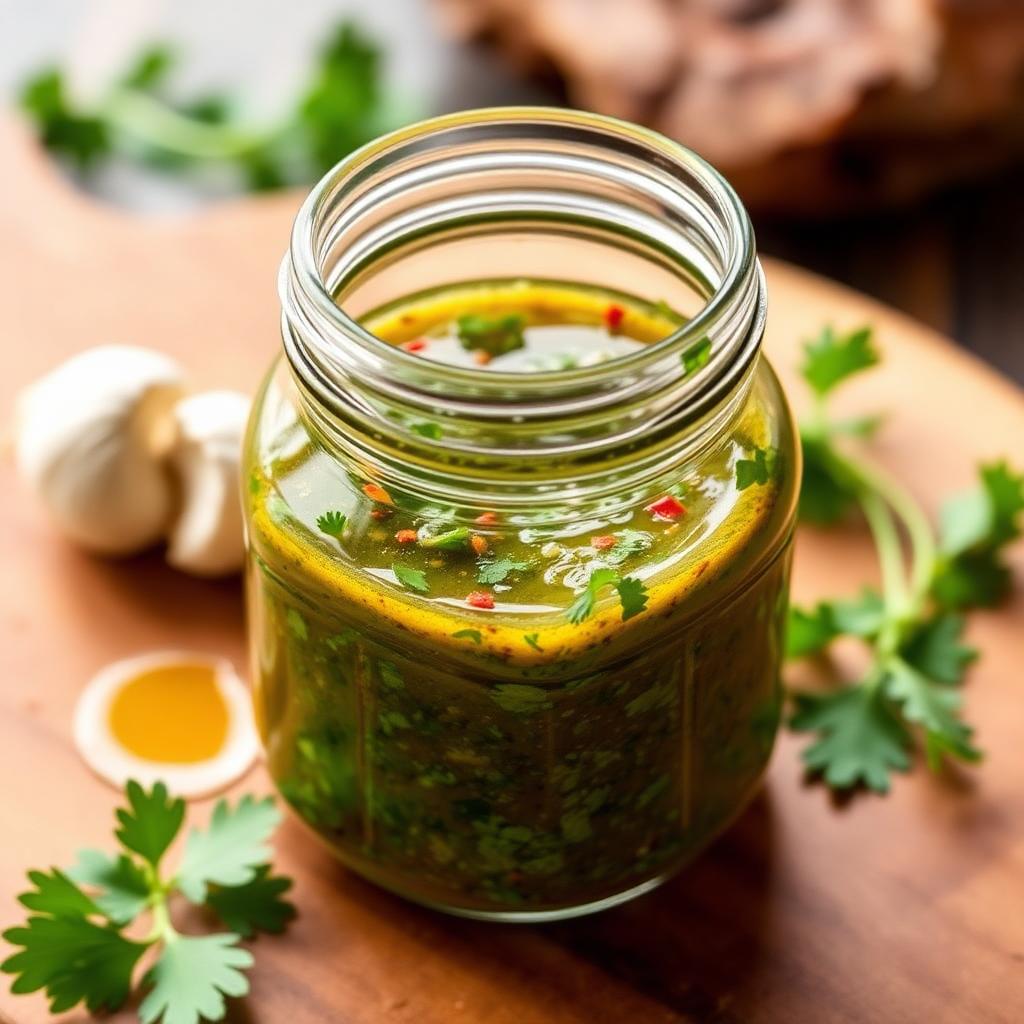
Chimichurri is the iconic green sauce of Argentinian and Uruguayan asado. It is a vinaigrette in the strictest sense (oil and acid with aromatics), not a paste like Italian pesto or a puree like Mexican salsa verde. The leaves should remain visible, individually coated in oil, and float around in the jar.
There are two main styles. Verde uses fresh herbs and is the most common. Rojo (red) adds smoked paprika and tomato. This recipe is the classic verde.
Why you chop by hand
A food processor bruises the parsley leaves. Crushed leaves release bitter chlorophyll into the oil, turning the dressing dark green and slightly bitter within an hour. A sharp chef's knife slices the cell walls cleanly. The result is bright, peppery, and clean tasting.
It also takes 5 minutes. Bunch the leaves tight, rock the knife back and forth, and the parsley is done before the food processor is even rinsed.
Pick the right vinegar
Use red wine vinegar with about 6% acidity. Cabernet Sauvignon vinegar is the traditional Argentinian choice, but any good red wine vinegar works. Avoid balsamic (too sweet), white wine vinegar (too sharp), and lime juice (changes the dish completely). Apple cider vinegar can pinch hit in an emergency but is not authentic.
Ingredients
| Ingredient | Amount |
|---|---|
| Fresh flat leaf Italian parsley, leaves only | 1 cup, packed |
| Garlic, finely minced | 4 cloves |
| Fresh oregano leaves (or 1 tbsp dried) | 2 tbsp, finely minced |
| Extra virgin olive oil (mild and buttery) | 1/3 cup |
| Red wine vinegar | 1/4 cup |
| Coarse kosher salt | 1 tsp |
| Freshly cracked black pepper | 1/2 tsp |
| Crushed red pepper flakes (or aji molido) | 1/2 tsp |
| Optional shallot, finely minced | 1 small |
Method
1. Salt the garlic
On a large cutting board, finely mince the garlic. Sprinkle with the kosher salt and use the side of the knife to press and drag the mixture into a coarse paste. The salt acts as an abrasive, breaking down the garlic and releasing its juices so the dressing tastes round, not raw.
2. Hand chop the herbs
Wash the parsley thoroughly and dry it completely (wet leaves dilute the dressing). Strip the leaves off the heavy stems. Bunch the leaves tightly on the cutting board and chop finely with a sharp chef's knife. Rock the blade evenly so every leaf is cut cleanly rather than crushed. Repeat with the oregano.
3. Steep with the acid
In a clean glass jar or bowl, combine the salted garlic, parsley, oregano, red wine vinegar, and red pepper flakes. Stir, then let the mixture sit at room temperature for 10 minutes. The vinegar pulls flavour out of the garlic and chilli, and softens the parsley slightly.
4. Add the oil
Pour in the olive oil and black pepper. Stir vigorously with a fork to combine. The mixture will not emulsify like a vinaigrette because of the volume of herbs holding the oil and acid in suspension.
5. Rest
Cover the jar and let the chimichurri rest at room temperature for at least 2 hours before serving. This rest is what separates good chimichurri from great. The flavours marry, the garlic mellows, and the herbs bloom.
Storage
Chimichurri keeps in the fridge for up to 1 week in a sealed jar. The oil will solidify when cold, so pull it out 30 minutes before serving and stir to recombine. Do not freeze: the parsley turns slimy on thaw.
How to use chimichurri
- Steak topper: Spoon over grilled ribeye, skirt steak, or flank steak the moment it comes off the heat.
- Marinade: Toss with chicken thighs or pork shoulder 4 hours before grilling.
- Sandwich spread: Slather on a steak sandwich or a chorizo bun (choripan).
- Roasted vegetables: Drizzle over roasted potatoes, asparagus, or cauliflower.
- Grain bowls: Stir into quinoa, farro, or rice for an instant flavour boost.
Variations
- Chimichurri rojo: Add 1 teaspoon smoked paprika and 1 tablespoon tomato paste.
- Spicy: Double the chilli flakes or add a finely minced jalapeno.
- Cilantro twist: Replace half the parsley with cilantro for a Mexican leaning version.
- Shallot: A minced shallot adds gentle onion sweetness without overpowering the herbs.
Common mistakes
- Using a food processor. Dark, bitter, muddy. Always hand chop.
- Skipping the rest. Fresh chimichurri tastes raw. The 2 hour rest is what brings it together.
- Wrong vinegar. Balsamic tastes wrong. Use red wine vinegar.
- Curly parsley. Curly parsley is bitter and watery. Always flat leaf Italian.
Frequently asked questions
Can I use dried oregano?
Yes. Use 1 tablespoon dried oregano in place of 2 tablespoons fresh. Dried oregano is more concentrated and gives a slightly earthier flavour, which works perfectly in chimichurri.
Why is mine bitter?
Almost always because the parsley was bruised by a food processor or chopped too long ago. Make a fresh batch and chop by hand right before resting.
How long does it keep?
Up to 1 week in the fridge in a sealed jar. The flavour peaks on days 2 and 3.
Pairing chimichurri with food
Chimichurri was born to sit alongside grilled meat, and the strongest pairings are unsurprisingly Argentinian asado classics: a thick ribeye (ojo de bife), skirt steak (entrana), short ribs (asado de tira), and morcilla (blood sausage). The bright acid cuts through the rich beef fat and resets your palate between bites.
Beyond steak, chimichurri pairs beautifully with grilled chicken thighs, swordfish or salmon, roasted lamb, lentil stews, and grilled summer vegetables like zucchini, eggplant, and corn. Spoon a tablespoon onto fried eggs at brunch or stir into mashed avocado for a herby toast topping.
Common ingredient swaps and substitutions
Out of fresh oregano? Use 1 tablespoon dried oregano instead. No red wine vinegar? Sherry vinegar is the next best substitute. Cannot find aji molido? Standard crushed red pepper flakes are a clean swap. The recipe is forgiving as long as you stay within the same flavour family.
The takeaway
Real chimichurri is built on three rules: hand chop the herbs, use red wine vinegar, and let it rest. Five minutes of knife work plus 2 hours of patience deliver a vibrant, peppery, garlicky condiment that turns any grilled meat into a backyard asado.