Quick Answer
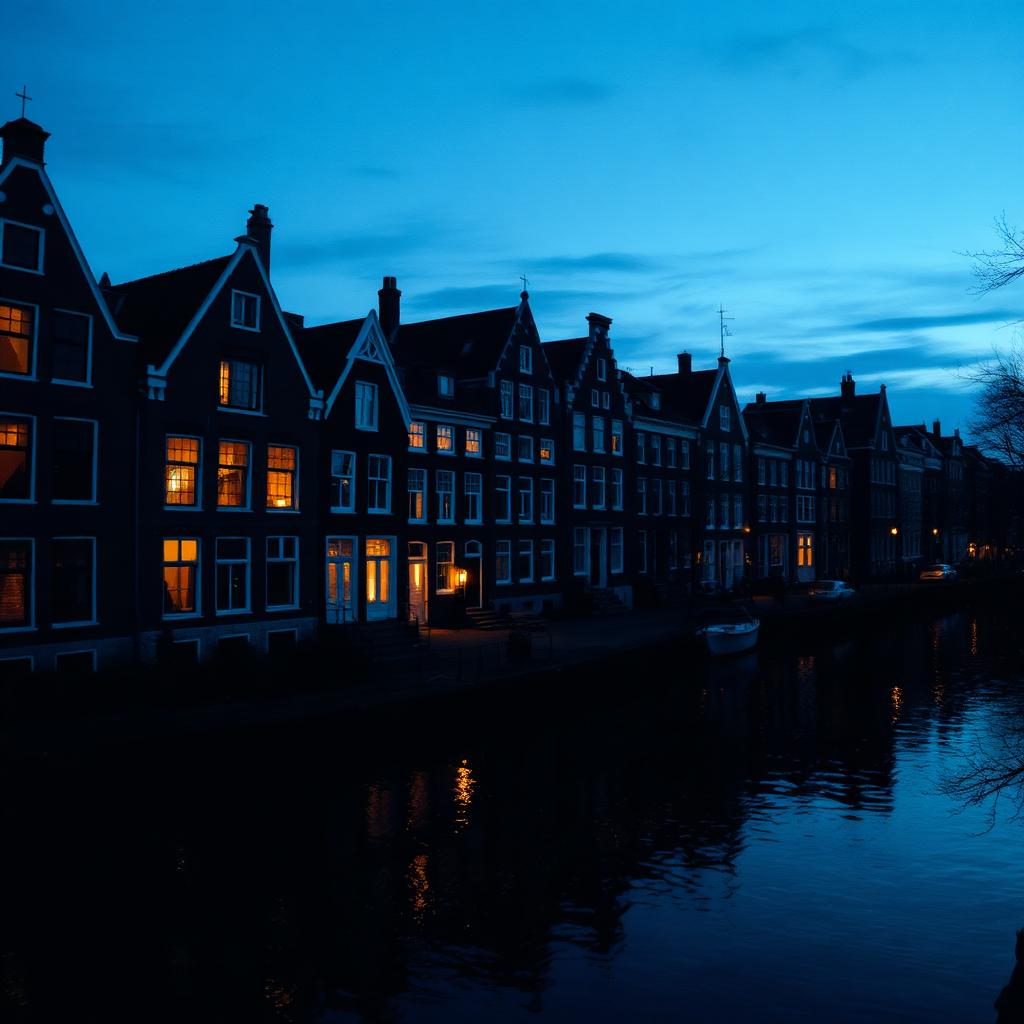
There is no PlayerUnknown game called 1666 Amsterdam. The phrase actually points to two completely different things that the internet keeps mashing together.
The first is 1666 Amsterdam, a long shelved action adventure title designed by Patrice Desilets at THQ Montreal, never released and tied up in years of legal disputes. The second is the city of Amsterdam itself, where Brendan Greene set up PlayerUnknown Productions to build Melba, a machine learning powered open world engine he has been developing since leaving Krafton.
The 1666 Amsterdam that actually existed on paper
1666 Amsterdam was a stealth action title conceived by Patrice Desilets, the original creative director of Assassin's Creed. After leaving Ubisoft he joined THQ Montreal in 2011 to build the project. THQ collapsed in 2013, Ubisoft acquired the IP, and Desilets and Ubisoft spent several years in legal proceedings before Desilets eventually recovered the rights in 2016. He then moved on to Ancestors: The Humankind Odyssey at his Panache Digital studio rather than reviving 1666 Amsterdam in any public form. As of mid 2026 there is still no production version, no trailer beyond the original brief concept, and no shipping product.
What PlayerUnknown is actually building in Amsterdam
Brendan Greene founded PlayerUnknown Productions after leaving Krafton in 2021. The studio is based in Amsterdam, which is where the lazy keyword association with 1666 Amsterdam comes from. The actual work has nothing to do with the Dutch Golden Age. The studio is focused on a single long term technology bet: a generative engine called Melba.
Melba is designed to produce planetary scale open worlds at runtime rather than have human designers hand place every terrain feature, road, building and tree. Greene has talked publicly about wanting to enable open worlds that are orders of magnitude larger than what current authored content workflows can deliver, with the goal of supporting persistent, massively multiplayer simulations.
The Preface tech demo and the Prologue and Wayback path
The studio has shipped two public artifacts that demonstrate the engine direction.
- Preface: Undiscovered World. Released free on Steam in 2023, this was a tech demo more than a game. Players could walk across a procedurally generated landscape that stretched well beyond what authored worlds typically offer, with the goal of validating the renderer and the world streaming pipeline.
- Prologue: Go Wayback. Announced as a survival focused early access title that would use the same generative tech to spin up a unique, dense wilderness map for every session, with weather, terrain and resource placement all driven by the engine rather than by hand.
In 2026, PlayerUnknown Productions confirmed it was restructuring and stepping back from active game development on Prologue to refocus on the underlying tech. That decision is what kicked off the latest round of speculation about whether the studio was shutting down or simply narrowing its scope.
Why people keep conflating the two stories
Three things keep the confusion alive.
- The shared Amsterdam keyword. Search results blend a historical canceled project with a real, active studio that happens to be in the same city.
- The Desilets and Greene profile overlap. Both are auteur level developers who left a giant publisher (Ubisoft and Krafton) to chase an unconventional vision.
- The shared narrative of long delays. 1666 Amsterdam has been frozen for more than a decade, and PlayerUnknown's vision title has slipped repeatedly in scope and timing. The two stories rhyme even though they are unrelated.
What Melba actually does differently
Most modern open world engines (Unreal, Unity, REDengine, Decima) lean on human designers to place hero assets and on procedural tooling to fill in the gaps. Melba inverts that ratio. The pitch is that machine learning models trained on real planetary data generate the world, and human designers curate, edit and seed it rather than build it. If it works at scale it would change the unit economics of open world production, where art and level design are usually the most expensive line items.
The risk is well understood inside the industry. Generative worlds are easy to demo and very hard to make memorable. Players bond to handcrafted places, characters and quests, not to algorithmically arranged trees. The engineering question Melba has to answer is whether you can make a generated world feel intentional enough to support the kind of moment to moment storytelling that AAA studios spend years authoring.
Where the studio stands now
After the 2026 restructuring, PlayerUnknown Productions has narrowed the team and pulled back on consumer facing release timelines for Prologue: Go Wayback. The public messaging from Greene has framed the move as a return to research and engine work, with the assumption that a future product will come out of the tech rather than rushing a game shaped wrapper around a still maturing renderer.
For players, the practical takeaway is that the Wayback brand is on pause but the tech is still being built. For the broader industry, the bet remains the same one Greene has made since leaving Krafton: that the next generation of open world experiences will be defined by the engine that generates them rather than by the studios that hand author them.
The takeaway
If you searched for the 1666 Amsterdam game expecting a PlayerUnknown title, here is the short version. There is no PlayerUnknown game called 1666 Amsterdam. There is a Desilets era unreleased project of that name that has been dormant since 2016, and there is a separate, still active PlayerUnknown Productions studio in the city of Amsterdam that is building a generative open world engine called Melba. The two stories share a city and a sense of long suffering ambition, and nothing else.
Related projects worth tracking
If the underlying engine question interests you more than any specific game, three other efforts are worth following alongside Melba. Hello Games continues to extend the procedural foundation of No Man's Sky. Keen Software House has been iterating on the Vrage engine that powers Space Engineers 2. And independent research at studios such as Embark and Inworld is pushing on AI driven NPC behavior, which is the natural companion technology to AI driven worlds. The 2026 to 2028 window is when this set of bets will either start shipping recognizable products or quietly fold back into the toolchains of the bigger engines.