Quick Answer
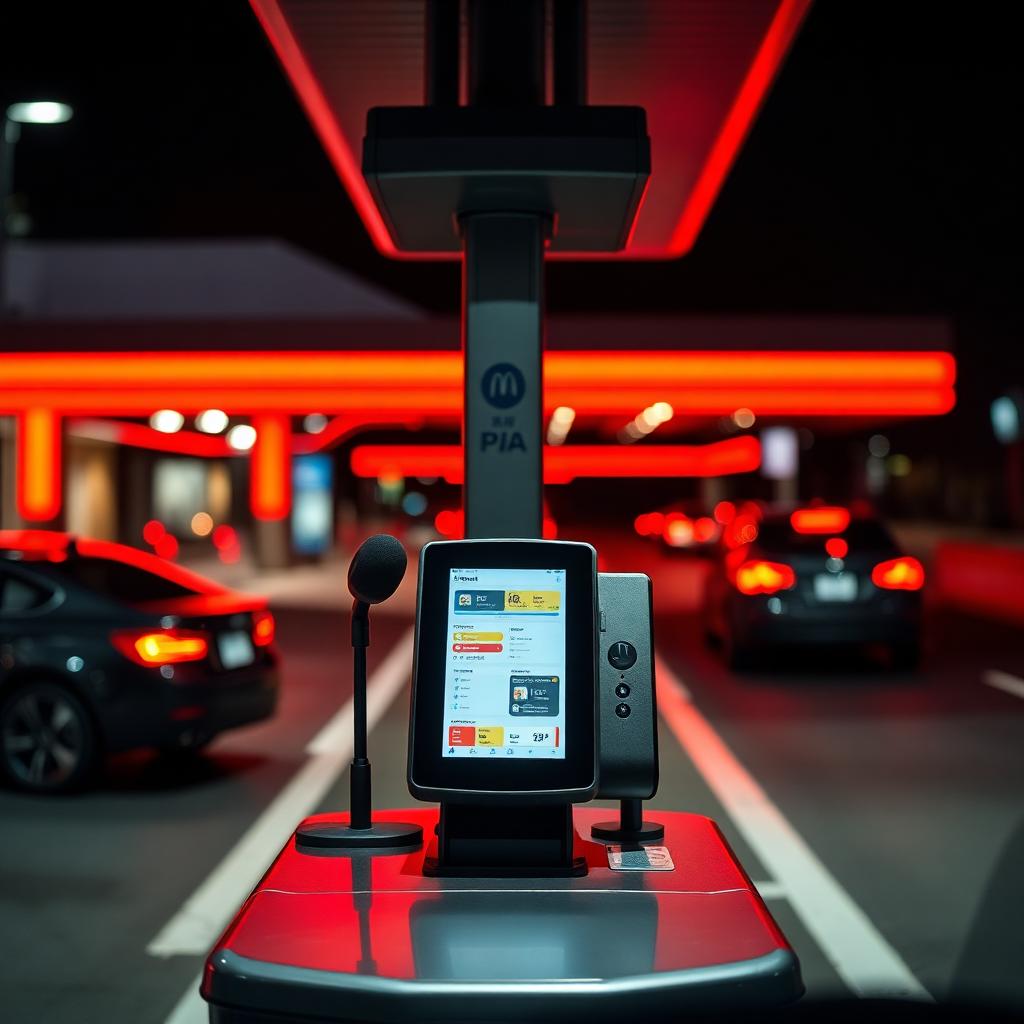
At its Worldwide Convention in Las Vegas, McDonalds unveiled McDonalds Next, a multi year operations strategy built around a new in restaurant AI platform called ArchIQ. ArchIQ is the result of a deepened partnership with Google Cloud and includes a drive thru voice assistant nicknamed Archy.
Archy is being piloted at a small number of U.S. restaurants and processes orders in English and Spanish using Google Edge Cloud hardware installed on premises rather than streaming audio to a remote data center. Early field reports put accuracy in the high 80 to low 90 percent range on standard orders, a major step up from the IBM pilot McDonalds wound down in 2024.
What ArchIQ actually is
ArchIQ is best understood as the new central nervous system for a McDonalds restaurant rather than as a single product. It is a stack that sits on top of in store Google Edge Cloud hardware and connects four operational layers.
- Customer voice and order taking. Archy handles initial greetings, order capture and upsell prompts at the drive thru speaker.
- Kitchen orchestration. Real time order routing across the grill, fry station and assembly line, with screens that adapt to live throughput rather than a fixed sequence.
- Equipment monitoring. Predictive maintenance signals from fryers, grills and HVAC units feed back into the platform so a manager sees a fryer thermostat drifting before it fails during the lunch rush.
- Demand forecasting. Local weather, event calendars and historical sales data combine to set par levels for proteins and produce on a rolling basis.
The customer facing piece is the voice assistant, but the operations facing pieces are where McDonalds expects most of the financial return.
Why this is not the IBM pilot again
McDonalds previously ran an automated order taking pilot with IBM at more than 100 U.S. drive thrus before quietly ending the program in 2024. That system became a social media punching bag after clips circulated of orders going sideways, including the now famous bacon McFlurry incident. Two architectural choices make ArchIQ a meaningfully different bet.
- Edge over cloud. Archy runs on Google Edge Cloud hardware installed in the restaurant. Audio is processed locally, which cuts latency, removes most network failure modes and keeps customer voice data on premises by default.
- Integration over bolt on. The IBM pilot was effectively a voice frontend grafted onto the existing point of sale. ArchIQ ties the voice layer directly into the kitchen and equipment systems, so the same platform that takes the order also decides when to fire the burger and flags the fryer that is about to fail.
How Archy handles accents, languages and noise
The most public failure of the IBM system was its inability to handle natural speech variation. Archy is being trained on a much larger and more diverse audio dataset, with explicit support for English and Spanish at launch. The local edge hardware lets the system run heavier acoustic models than a thin cloud client could, which materially helps with regional accents, code switching and noisy lanes with multiple cars idling.
Franchise operators in the pilot markets have reported that Archy handles standard combo orders, modifiers (no pickle, extra cheese) and basic substitutions with low intervention rates. Edge cases (very long custom orders, rapid speaker switching mid order, heavily impaired audio from a car with the windows down on the highway) still escalate to a human team member, which is the same model competing chains use.
The franchise economics
McDonalds has more than 40,000 restaurants worldwide and the overwhelming majority are run by independent owner operators. Any system rollout has to clear a financial test for those operators or it never reaches scale.
The ArchIQ pitch to franchisees rests on three numbers that are easier to measure than headline labor savings.
- Order accuracy. Every order that has to be remade is a direct food and labor cost. A few percentage points of accuracy improvement at peak hours compounds quickly across thousands of locations.
- Drive thru throughput. Time per car is the single biggest lever on lunch and dinner revenue in many stores. Even small reductions, in the range of 10 to 20 seconds, lift hourly throughput meaningfully.
- Equipment uptime. Predictive maintenance avoids unplanned closures of a single station during the busiest hours of the day, which is the most expensive failure mode for a McDonalds restaurant.
None of this is about removing the entire crew. The internal framing is that voice automation moves a person off the headset and onto the assembly line or the front counter, where the constraint usually is.
Privacy and data questions
Pushing voice processing to the edge addresses one of the loudest critiques of cloud based drive thru AI. Audio does not have to leave the restaurant to be transcribed, which simplifies the privacy story for both customers and regulators. Aggregated, anonymized order data still flows back to the central ArchIQ platform for model improvements, but the raw voice stream is not the default training feed.
The bigger open question is how McDonalds and Google handle joint data ownership. ArchIQ is the kind of system where the value compounds with scale, and the contract structure between McDonalds, Google and the franchisees will determine how much of that value sits with each party over time.
What the rollout schedule actually looks like
The pilot is limited to a handful of U.S. markets in 2026, with expansion expected through 2027 once the early data confirms accuracy and operational lift. McDonalds has not committed to a fixed global rollout date, which is consistent with how the company has historically approached technology deployment. The drink dispensing and self ordering kiosk rollouts both ran for years in pilot phases before becoming standard.
Other chains are running their own versions of this play. Wendy and Google have an ongoing FreshAI program, White Castle is using SoundHound, and Chipotle has been experimenting with order ahead automation. McDonalds is later than some competitors to a full deployment, but it has the franchise scale that makes a successful rollout reshape the entire category.
The takeaway
ArchIQ is the most credible attempt yet to wire AI through an entire McDonalds restaurant rather than bolt a voice bot onto the existing drive thru. The combination of Google Edge Cloud hardware on premises, English and Spanish voice support, kitchen orchestration and predictive maintenance addresses every specific failure mode that killed the previous IBM pilot. The early field accuracy numbers are encouraging, the franchisee economics line up around throughput and accuracy rather than headline layoffs, and the multi year rollout pace matches how McDonalds actually scales new tech. If ArchIQ works at 1,000 restaurants in 2027, it works everywhere.