Quick Answer
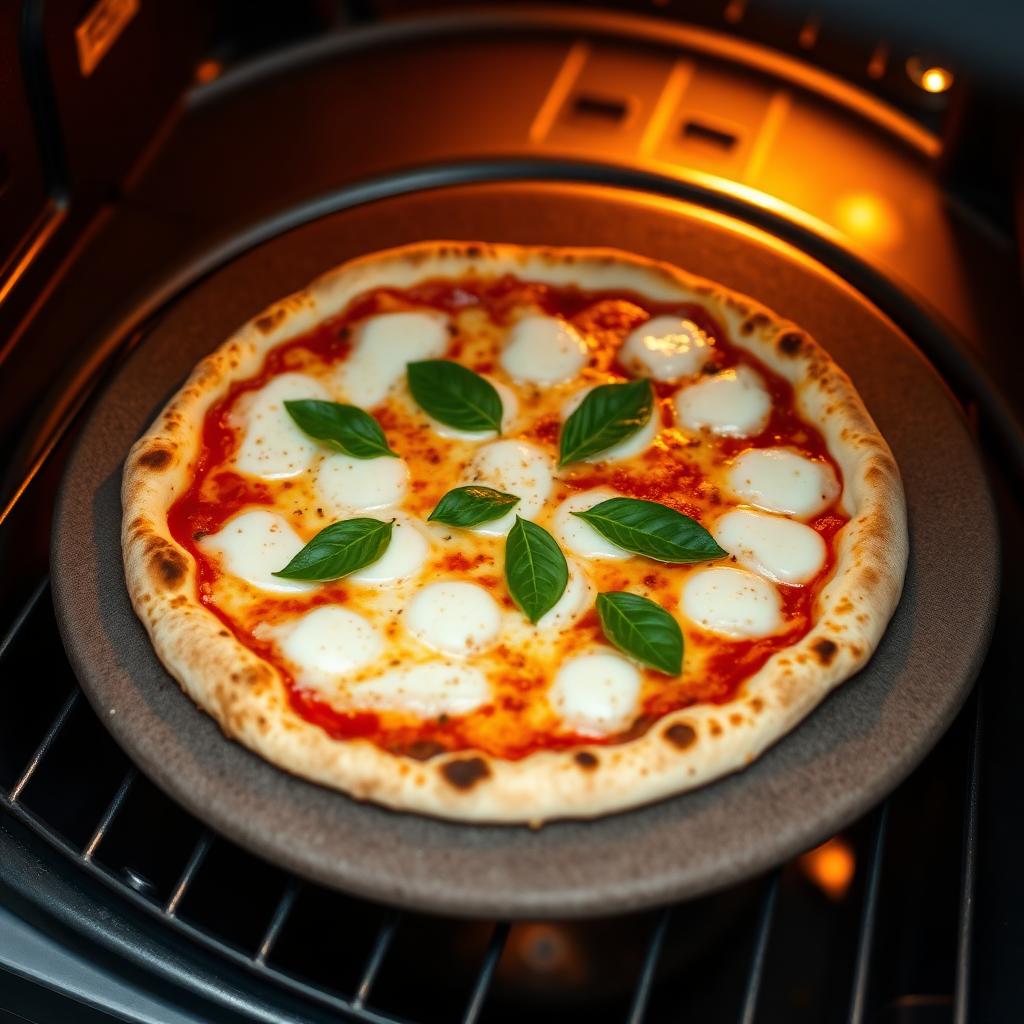
A pizza stone is a flat baking surface, usually made from cordierite, clay, or ceramic, that you preheat inside your oven to deliver an intense burst of conducted heat into raw pizza dough.
It mimics a wood fired brick oven by combining high thermal mass (it holds a lot of heat) with porosity (it pulls moisture out of the dough). The result is a blistered, crisp crust that a sheet pan cannot produce.
Always place it in a cold oven, preheat for 45 to 60 minutes, never wash it with soap, and never expose it to sudden cold.
What a pizza stone actually does
Home ovens top out around 550F (290C). Traditional Neapolitan ovens run at 800F to 900F. That gap is what makes home pizza frustrating: pale crusts, soggy centers, and toppings that overcook before the dough sets.
A pizza stone closes the gap in two ways:
- Thermal mass: once fully preheated, the stone holds a massive reservoir of heat. The moment cold dough hits it, that energy transfers directly through conduction, vaporizing surface water and creating dramatic oven spring (the rapid rise of the crust).
- Porosity: quality stones absorb moisture released by the bottom of the dough, which is what gives you a genuinely crisp under crust instead of a damp one.
The main material options
Cordierite
A manufactured ceramic blend of magnesium, aluminum, and silicon. Cordierite handles extreme temperature swings without cracking, which makes it the most durable and popular choice. Slightly pricier than basic clay, but worth it if you bake regularly.
Clay or ceramic
The original style. Cheap, lightweight, and naturally porous. The trade off is fragility: thermal shock from a splash of cold water or a sudden temperature change can crack the stone in half.
Baking steel
Not technically a stone, but worth mentioning. Steel conducts heat even faster than ceramic, is virtually unbreakable, and produces an extraordinarily crisp bottom. The downsides: it is heavy, lacks moisture absorbing porosity, and needs occasional seasoning to prevent rust.
Cast iron pizza pans
A middle ground option. Solid, durable, and excellent at heat transfer. Less porous than cordierite, so the underside is more fried than baked.
How to use a pizza stone properly
1. Cold oven start
Always place the stone on the lowest oven rack while the oven is completely cold. Putting a cold stone into a hot oven creates thermal shock and is the fastest way to crack it.
2. Preheat fully
Turn the oven to its highest setting, usually 500F to 550F (260C to 290C). Let it preheat for 45 to 60 minutes. The oven thermometer will register the target temperature long before the stone itself does. Skipping this step is the single most common reason home pizzas underperform.
3. Build the pizza on a peel
Dust a wooden pizza peel with semolina flour or fine cornmeal. Stretch your dough on the peel, top it quickly, and shake the peel to confirm the dough still slides freely. If it sticks, lift the edge and add more semolina.
4. Launch with confidence
Slide the pizza onto the stone in one decisive motion. Tilt the peel down at a slight angle, jerk it back, and let gravity do the rest. Hesitation is what causes pizzas to fold in half.
5. Bake hot and fast
Most pizzas finish in 5 to 8 minutes on a properly preheated stone. Use the broiler for the last 60 to 90 seconds to char the cheese and crust edges.
6. Cool slowly
When you are done, turn the oven off and let the stone cool inside the oven for several hours. Never pull a hot stone onto a cold counter.
Cleaning rules you cannot break
- Never use soap: the porous surface absorbs detergent. Heat it later and your next pizza tastes like dish soap.
- Never soak it: trapped water turns to steam inside the stone the next time you heat it, fracturing it from the inside.
- Scrape only: let the stone cool completely, then use a plastic bench scraper or stiff brush to remove burnt bits. A damp cloth wipe is fine, but dry it for 24 hours before the next use.
- Embrace stains: dark patches from baked on oil and char are a sign of a well used stone. They do not affect flavor or safety and actually season the surface.
What can go wrong
The stone cracks
Almost always caused by thermal shock: putting it in a hot oven, splashing water on it, or pulling it onto a cold counter. A crack does not necessarily ruin it: small cracks rarely affect function, but the stone is now structurally weaker.
Pizza sticks to the stone
The dough either lacks a semolina dusting under it or sat on the peel too long before launching. Build and launch quickly.
Pale crust on the bottom
The stone was not preheated long enough. Give it the full 45 to 60 minutes next time and bump the oven to its absolute maximum.
Pizza stone versus pizza steel: which should you buy?
- Choose cordierite stone if: you want classic Neapolitan style results, a moisture absorbing crust, and lower cost.
- Choose baking steel if: you want indestructible hardware, the fastest possible bake, and you are willing to season it and lift something heavy.
What else you can bake on it
A pizza stone is not just for pizza. Use it for:
- Artisan sourdough boules and baguettes (better oven spring and crust).
- Naan, pita, and other flatbreads.
- Cookies that benefit from a crisp bottom.
- Reheating leftover pizza without going soggy.
The takeaway
A pizza stone is the cheapest single upgrade you can make to a home oven if you bake bread or pizza regularly. Preheat it for a full hour, never soap it, never shock it with cold, and respect that the dark stains it earns over time are the mark of a good stone, not a dirty one.