Quick Answer
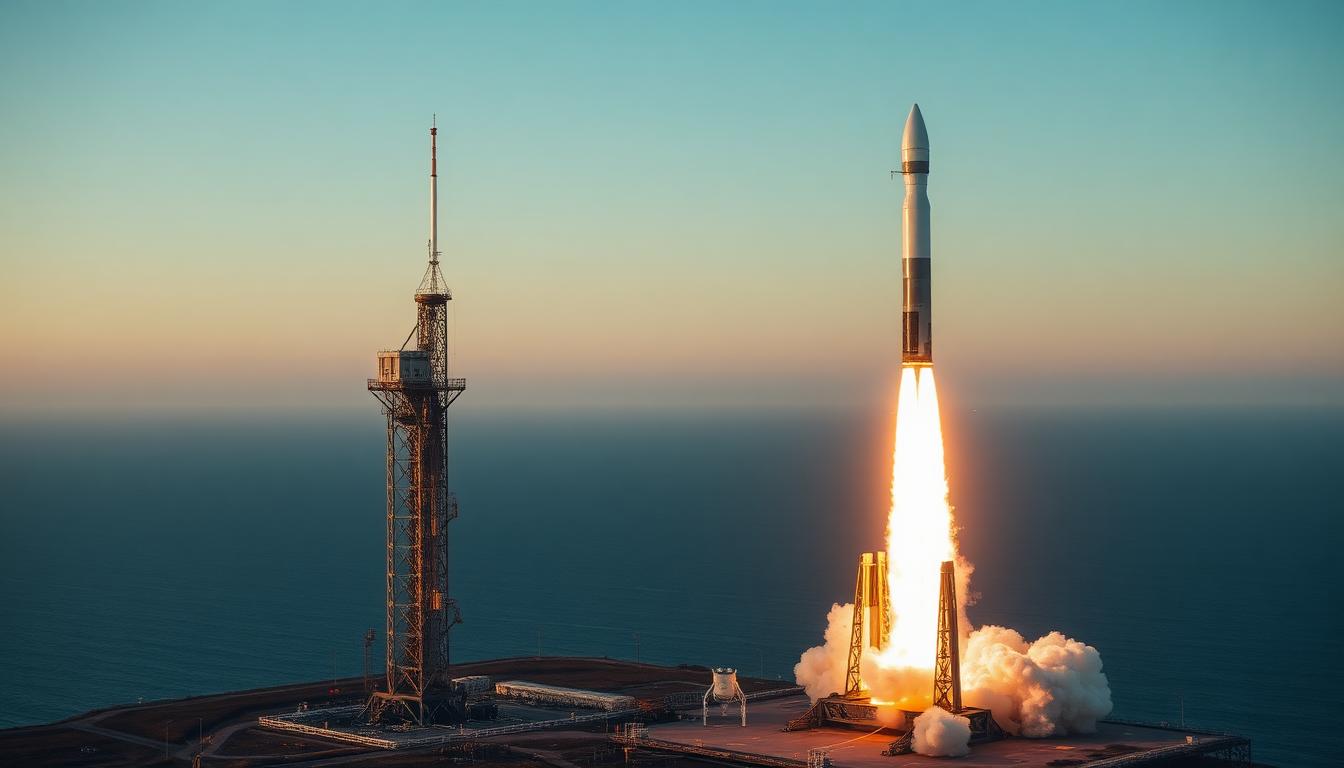
SpaceX successfully launched Starship Flight 12 from Starbase in Boca Chica, Texas, one day later than originally planned after a 24 hour hold to fix a hydraulic pin on the launch tower arm. The mission is the first flight of the Block 3 Starship architecture, the debut of the upgraded Raptor 3 engines, and the first launch from the newly completed second orbital launch pad (OLP-2).
The flight cleared every primary objective: clean ascent, successful hot staging, a controlled Super Heavy splashdown profile in the Gulf, an in-space Raptor relight, real-time thermal imaging of the heat shield from rear-facing cameras, and a high-angle flap stress maneuver that validated the new Block 3 control surfaces.
Why Block 3 Matters
Earlier Starship flights used Block 1 and Block 2 prototypes to prove out basic ascent, staging, and re-entry survival. Block 3 is the first version of the vehicle designed as something closer to an operational cargo system rather than a flying test article.
The three biggest changes in Block 3 are the Raptor 3 engines, a redesigned set of control flaps, and a launch flow that finally uses two pads in parallel. Each of those changes was on the critical path between Starship as a development program and Starship as a working transport platform.
| Upgrade | What changed | Why it matters |
|---|---|---|
| Raptor 3 engines | Internal 3D printed fluid channels replace external plumbing and shielding. Sea level thrust rises to about 280 tons per engine. | Lighter engine bay, fewer single point failures, more total thrust off the pad. |
| Repositioned flaps | Forward and aft control flaps are smaller and shifted toward the leeward side of the hull. | Protects the hinge joints from the worst plasma stream during re-entry. |
| Second launch pad | OLP-2 is now active alongside the original pad. | Enables parallel test campaigns without halting active launch flows. |
The Flight 12 Mission Profile
The vehicle for Flight 12 was Booster 19 paired with Ship 39. Liftoff happened from OLP-2 after a clean countdown. The 33 Raptor 3 engines on Booster 19 ignited together and produced roughly 17 million pounds of thrust off the pad, the largest figure of any Starship flight to date.
The booster executed a hot staging maneuver, separated cleanly, and flew a boostback and entry profile aimed at a controlled vertical touchdown over water in the Gulf, simulating a future tower catch. Ship 39 continued on its suborbital trajectory across the Indian Ocean.
The internal payload bay was loaded with 22 Starlink simulator pods. The final two pods were specialised: rear-facing high resolution thermal cameras designed to film the exterior heat shield tiles in real time as the ship plunged through the upper atmosphere.
The Flap Stress Test
Near the end of the suborbital arc, flight controllers deliberately commanded an aggressive banking maneuver. The point was to force the new, repositioned control flaps to articulate at extreme angles during peak deceleration, well past the loads expected on a normal landing profile.
The maneuver mapped the structural envelope of the Block 3 flap design. The telemetry feeds back into the autonomous control software that will eventually fly the ship through a tower catch profile back at Starbase.
Mission Results at a Glance
| Phase | Target | Result |
|---|---|---|
| Liftoff from OLP-2 | Clean pad clearance with the new flame deluge | Success |
| Hot staging | Ring separation and booster flip | Success |
| Super Heavy recovery profile | Soft vertical touchdown simulated over the Gulf | Success |
| In-space Raptor relight | Single vacuum engine restart in microgravity | Success |
| Thermal imaging scan | Rear-facing camera coverage of heat shield tiles | Success |
| Flap stress maneuver | High angle bank to load the new flap design | Success |
What This Unlocks for Artemis
SpaceX is contracted to provide a Starship-derived Human Landing System for NASA's Artemis lunar program. Two engineering items have been gating that work: a reliable in-space engine relight (needed for translunar injection and lunar orbit insertion) and a launch cadence that can support orbital propellant transfer between multiple Starship tankers.
Flight 12 demonstrated the relight cleanly. The activation of OLP-2 directly addresses the cadence problem, because the engineering team can now run static fire campaigns on upcoming vehicles without blocking the active pad. Production at the Starfactory facility is shifting to Block 3 vehicles only, which means future flights should look more alike and turn around faster.
What to Watch Next
Two milestones sit immediately downstream of Flight 12. The first is a tower catch attempt for a Block 3 booster, which would be the first time the new architecture is recovered intact. The second is the propellant transfer demonstration between two Starships in orbit, which is the actual gate for the Artemis lunar mission profile. Neither has a confirmed date yet, but the activation of the second pad makes both feasible within this calendar year.
The Bottom Line
Starship Flight 12 was the operational debut of the Block 3 vehicle, the Raptor 3 engines, and the second launch pad at Starbase. Every primary objective hit, including the high-stress flap maneuver that mapped the limits of the new control surfaces. It is the cleanest version of Starship that has flown so far, and it moves the Artemis lunar timeline meaningfully forward.