Quick Answer
Frozen food recalls in the United States are climbing for three concrete reasons: undeclared allergens introduced by formulation changes that do not make it onto the label, Listeria monocytogenes contamination that survives and grows in cold processing environments, and physical contamination from worn industrial machinery. Allergen mislabeling is the single largest category.
The freezer compartment does not stop contamination. It only pauses biological activity, and it does nothing at all for label accuracy.
Understanding the drivers helps consumers do two things: know which products to watch more carefully, and know what to actually do when an alert lands.
Why frozen food gets recalled in the first place
The intuitive assumption is that freezing kills problems. It does not. Freezing slows microbial growth dramatically but does not sterilize. A Listeria colony that was present on a slicing line before freezing will reactivate when the product thaws. A piece of metal from a worn conveyor belt does not care about temperature. And an allergen swapped into a recipe at the manufacturing stage stays in the product regardless of how cold it gets.
All three of those failure modes show up regularly in FDA and USDA recall data. The shape of the recall list has been consistent for a decade: allergens first, biological contaminants second, foreign objects third.
1. Undeclared allergens, the top category
Roughly a third of all FDA initiated food recalls in any given year are for undeclared allergens. The mechanism is almost always the same. A processor changes a supplier, swaps a spice blend, or rebalances a recipe to hit a new cost or texture target. The change goes through production. The consumer label, which lives in a different system maintained by a different team, does not get updated. Months later a state inspector or a quality auditor notices the mismatch.
The most commonly mislabeled allergens are soy, milk, wheat, and tree nuts. For an example of exactly this pattern in action this year, see the recent Power Plate Meals soy recall.

2. Listeria and the cold environment problem
Listeria monocytogenes is unusual among foodborne pathogens because it actually thrives at refrigeration temperatures and continues to grow slowly even in freezer adjacent storage. Once it establishes a biofilm on a slicing line, a packaging conveyor, or a drain in a wet processing area, it is difficult to eliminate with routine cleaning.
The pathogen is especially dangerous for pregnant women, newborns, older adults, and immunocompromised patients. A single Listeria outbreak can cost a processor tens of millions of dollars in recall costs and lost contracts, which is why facilities invest heavily in deep cleaning protocols, environmental swabbing, and product testing. Despite that, Listeria recalls hit the frozen vegetable, frozen seafood, and ready to eat meal categories every year without fail.
3. Foreign matter contamination
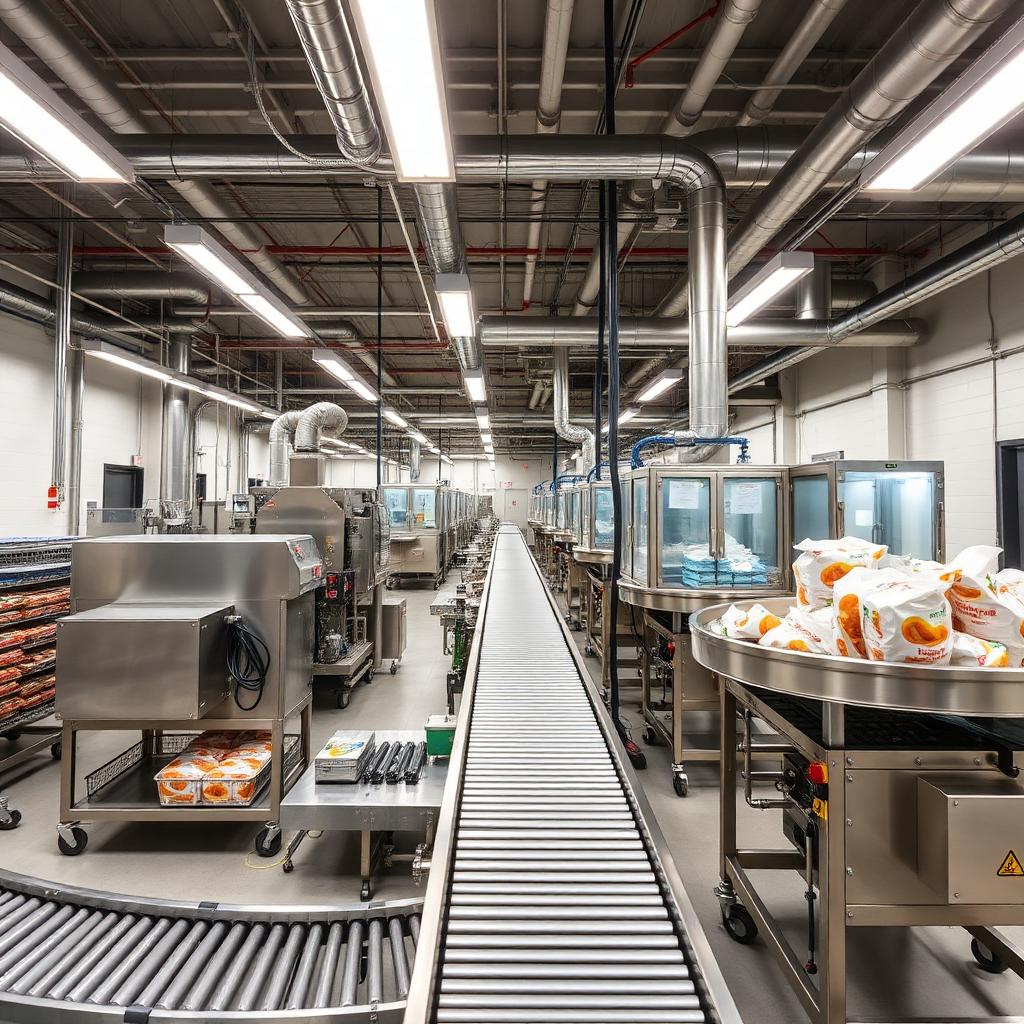
Modern food processing relies on heavy automated equipment. Metal detectors and X ray inspection at the end of the line catch most contamination, but they do not catch all of it. The recurring offenders are plastic shards from worn conveyor belts, metal fragments from blades and bearings, and occasionally glass from broken sight gauges or bulbs in production areas. Frozen products are particularly exposed because long production runs increase the wear and tear on every moving part.
Why supply chain pressure makes everything worse
The pandemic era reshaped frozen food production. Labor shortages pushed processors to automate faster, which moved more product through fewer hands and concentrated risk on a smaller number of high throughput lines. Ingredient sourcing got volatile, which led to more frequent supplier swaps, which is exactly the upstream change that ends up causing an undeclared allergen recall downstream.
Distribution also consolidated. A single regional cold storage facility can now hold product from dozens of brands. When that facility has a sanitation issue, the recall touches every brand stored there at the same time. That is one reason the multi state, multi brand recall has become a more common shape of news story over the last few years.
What practical safety habits actually move the needle
- Sign up for FSIS and FDA recall alerts. Both agencies email same day notifications. The signup takes under a minute and the emails are short and specific.
- Save the inspection mark. When you buy a frozen meat product, glance at the EST number inside the USDA shield. If a recall hits, that number tells you in seconds whether you are affected.
- Cook to internal temperature, not by clock. A frozen meal that reaches 165 degrees Fahrenheit internally has been heated enough to kill most biological pathogens, including Listeria. A clock based reheat in a microwave often does not get there.
- Date your freezer contents. A frozen meal lost in the back of a chest freezer for 18 months is the most likely candidate to be silently part of a recall.
- Do not refreeze thawed product. Once thawed, biological activity restarts. A second freeze does not undo the growth that happened during the thaw.
What to do when a recall affects you
- Confirm the product matches on every data point: brand, size, lot code, and inspection number. Partial matches are usually not part of the recall.
- Do not eat the product, even if it looks and smells fine. Most recalled products would taste normal.
- Return it to the store for a refund, or dispose of it by double bagging and tossing it.
- If anyone in the household ate the product before the alert, monitor for symptoms appropriate to the contaminant and call your doctor if anything unusual develops.
How the industry could do better
The two highest leverage changes would be tighter coupling between production formulation systems and consumer label systems (which would catch most allergen mislabeling automatically), and more aggressive environmental swabbing in cold processing facilities (which would catch Listeria colonies before they reach product). Both are cost intensive, both are well understood, and both are routinely deferred in favor of cheaper, after the fact testing.
For more on how the food safety system handles bigger contamination events, see our coverage of the Class I Alfredo sauce Salmonella recall.
The takeaway
Frozen food is generally safer than fresh, but it is not invincible. The recall categories are predictable, the affected products are usually identifiable in under a minute, and the consumer side of the response is simple: check the label, follow the alert, cook to temperature. The freezer pauses problems. It does not solve them.
Frequently asked questions
Are frozen foods riskier than fresh?
Generally no. Freezing slows pathogen growth and extends shelf life. But it does not sterilize the product or fix labeling errors.
What is the most common cause of frozen food recalls?
Undeclared allergens by a wide margin, particularly soy, milk, wheat, and tree nuts.
Can Listeria survive freezing?
Yes. It survives freezing and resumes growth when the product thaws. Cook to 165 degrees Fahrenheit internal to kill it.
How do I sign up for recall alerts?
Visit the FSIS and FDA recall pages and use their email subscription forms. Both are free and same day.