Quick Answer
The easiest no-kitchen dorm meals are microwave rice or grain bowls, overnight oats, tuna or bean wraps, mug eggs, instant noodle bowls upgraded with real protein and vegetables, and quesadillas made in a microwave.
All of them need only three things: a microwave, a kettle and a mini fridge. Most take under five minutes and cost less than a campus sandwich.
The trick is not recipes, it is stocking a small pantry that can be recombined, so you never need a specific shopping trip to eat.
The Three Appliance Rule
Before buying anything, read your housing rules. Microwaves and mini fridges are usually permitted, often only as a combined microfridge unit supplied or approved by the university. Kettles with automatic shut off are typically allowed; hot plates, toasters, air fryers and induction rings usually are not.
Those three appliances cover more than students expect. A kettle does oats, couscous, instant soup and pasta if you are patient. A microwave does eggs, rice, vegetables and melted cheese. A fridge is what makes leftovers and real protein possible at all.
A Pantry That Builds Meals
Stock components, not meals. Ten items in the cupboard produce far more dinners than ten ready meals.
| Category | Keep on hand |
|---|---|
| Base | Microwave rice pouches, instant oats, couscous, tortillas, instant noodles |
| Protein | Tinned tuna, tinned beans, peanut butter, eggs, pre-cooked chicken, Greek yoghurt |
| Vegetables | Frozen mixed vegetables, tinned sweetcorn, baby spinach, cherry tomatoes |
| Flavour | Soy sauce, hot sauce, stock cubes, olive oil, salt, pepper, garlic powder |
| Extras | Shredded cheese, salsa, lemon juice, honey |
Any base plus any protein plus any vegetable plus a flavour is a meal. That is roughly a hundred combinations from one small shelf.
Six Meals That Actually Work
- Rice bowl. Microwave rice pouch, tinned black beans, frozen sweetcorn, salsa and cheese. Three minutes total.
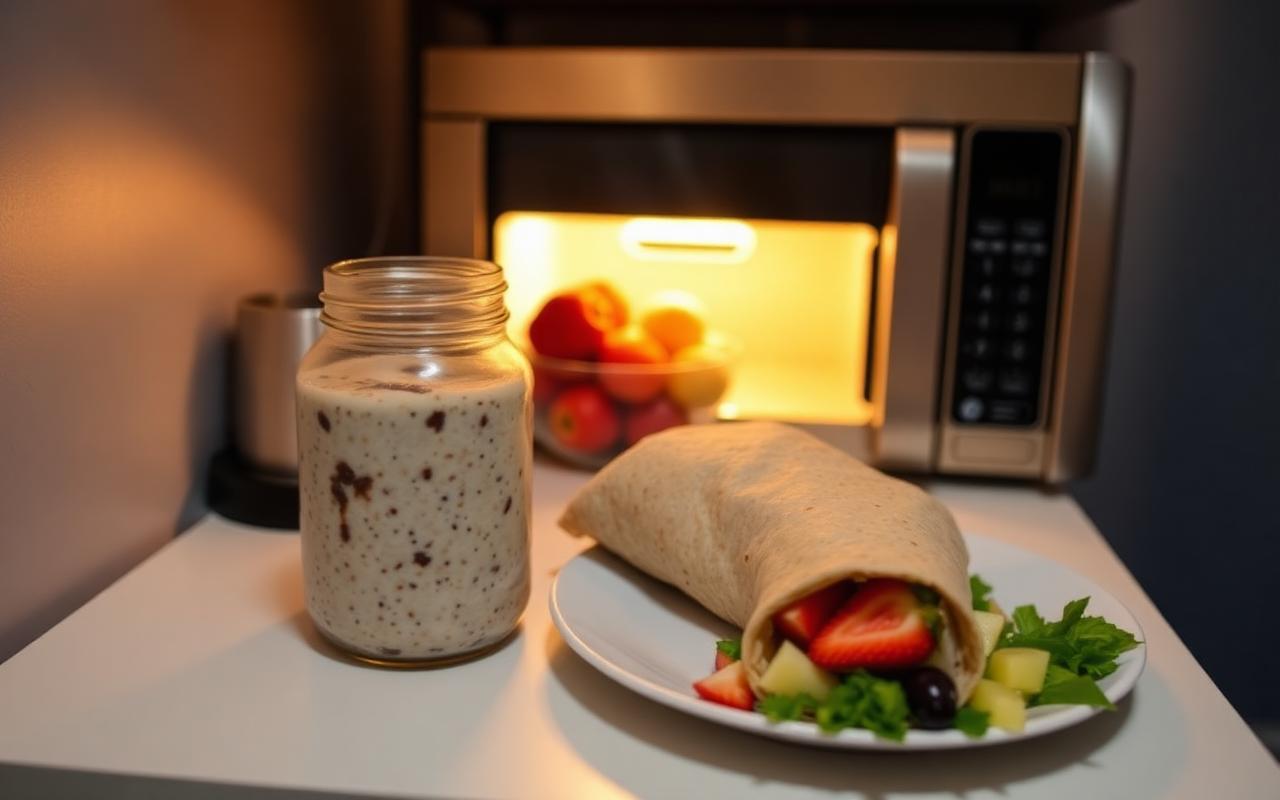
- Overnight oats. Oats, yoghurt or milk, and fruit in a jar the night before. No cooking at all.
- Mug eggs. Two beaten eggs in a greased mug, microwaved in 30 second bursts, stirring between. Add cheese and spinach.
- Upgraded instant noodles. Cook the noodles, throw away half the seasoning sachet, add an egg, frozen peas and a splash of soy sauce.
- Tuna wrap. Tinned tuna, yoghurt instead of mayonnaise, sweetcorn and hot sauce in a tortilla. No appliance needed.
- Microwave quesadilla. Tortilla, cheese, beans, folded and microwaved for 60 seconds, then pressed under a plate to firm up.
Every one of these can absorb leftovers from the dining hall, which is where most of your protein should come from if you are on a meal plan.
Food Safety in a Room With No Sink
This is the part dorm cooking guides skip, and it is the part that sends students to health services.
- Keep the fridge at or below 40 degrees Fahrenheit. Mini fridges run warm when packed full; a cheap fridge thermometer is worth buying.
- Two hours is the limit for cooked food left at room temperature, and one hour if the room is above 90 degrees Fahrenheit.
- Leftovers last three to four days refrigerated, not a week.
- Reheat to steaming throughout, stirring halfway, since microwaves heat unevenly and cold spots are where bacteria survive.
- Wash dishes in the bathroom only if your hall allows it, and never leave them soaking in a communal sink.
Buy a small stack of disposable-free options instead: two bowls, one plate, one mug, a knife, a fork, a spoon and a washing-up bowl you can carry.
Keeping the Cost Down
A component pantry restocked twice a month typically runs $30 to $50 and covers breakfasts and several dinners a week. Compare that with $9 for a single campus sandwich and the maths is immediate.
Shop the frozen aisle for vegetables. They are cheaper, they do not rot in a mini fridge, and the nutrition is essentially equivalent to fresh. Buy tinned protein in multipacks, and keep one emergency meal that needs nothing but hot water for the week everything goes wrong.
Eating Well, Not Just Eating
The failure mode of dorm eating is not hunger, it is monotony and a diet built entirely of refined carbohydrates. Two habits fix most of it: add a protein to every base, and add something green or coloured to every plate, even if it comes from a tin or a freezer bag.
Keep fruit visible on the desk and yoghurt in the fridge. Convenience decides what students actually eat far more than intention does.
A Week of Meals Without Repeating Yourself
Rotation is what keeps no-kitchen eating sustainable. One workable week from the same small pantry looks like this.
| Day | Breakfast | Evening meal |
|---|---|---|
| Monday | Overnight oats with banana | Rice bowl with beans and salsa |
| Tuesday | Yoghurt and honey | Tuna wrap with sweetcorn |
| Wednesday | Overnight oats with peanut butter | Upgraded noodles with egg and peas |
| Thursday | Mug eggs on a tortilla | Couscous with tinned chickpeas and lemon |
| Friday | Yoghurt and frozen berries | Microwave quesadilla |
| Weekend | Whatever is left | Dining hall or shared cooking in the common kitchen |
Two of those meals use the same rice pouches and two use the same tortillas, which is exactly the point. Overlapping ingredients keep the shopping list short and the fridge from filling with half-used packets.
Cleaning Up in a Room With No Sink
Wash up immediately rather than later. A small plastic washing-up bowl, a bottle of washing-up liquid and a drying mat turn a bathroom sink into a workable kitchen for two minutes a day.
Dry everything properly before it goes back on the shelf, because damp bowls in a warm cupboard grow exactly what you would expect. Wipe the microwave interior weekly; shared microwaves in common rooms are worse, so cover food with a plate or vented lid every time.
Frequently Asked Questions
Can I cook pasta with just a kettle?
Yes, though it takes longer. Pour boiling water over pasta in a heatproof bowl, cover, and top up with fresh boiling water once.
Are air fryers allowed in dorms?
Usually not. They draw high wattage and most housing contracts ban open-element and high-draw cooking appliances.
How long does opened tinned tuna keep?
Move it to a covered container and use it within two days in the fridge.
Is a microwave rice pouch expensive per meal?
Around a dollar a serving, which is cheaper than any campus option and faster than cooking dry rice without a hob.
What is the single best appliance to add?
If your hall allows it, an electric kettle with automatic shut off, because it unlocks oats, soups, couscous and pasta.