Quick Answer
The best travel packing tips for carry-on only trips are: pick a bag that genuinely meets IATA carry-on sizing (55 x 40 x 23 cm), build a 5-piece capsule wardrobe in one colour family, roll soft items and fold structured ones, and use 3 packing cubes to compress everything into roughly half its loose volume.
Stick to the TSA 3-1-1 liquids rule (100 ml bottles, one quart-size bag, one bag per passenger) and you can fly carry-on for one to two weeks without checking anything.
Buy the Right Bag First
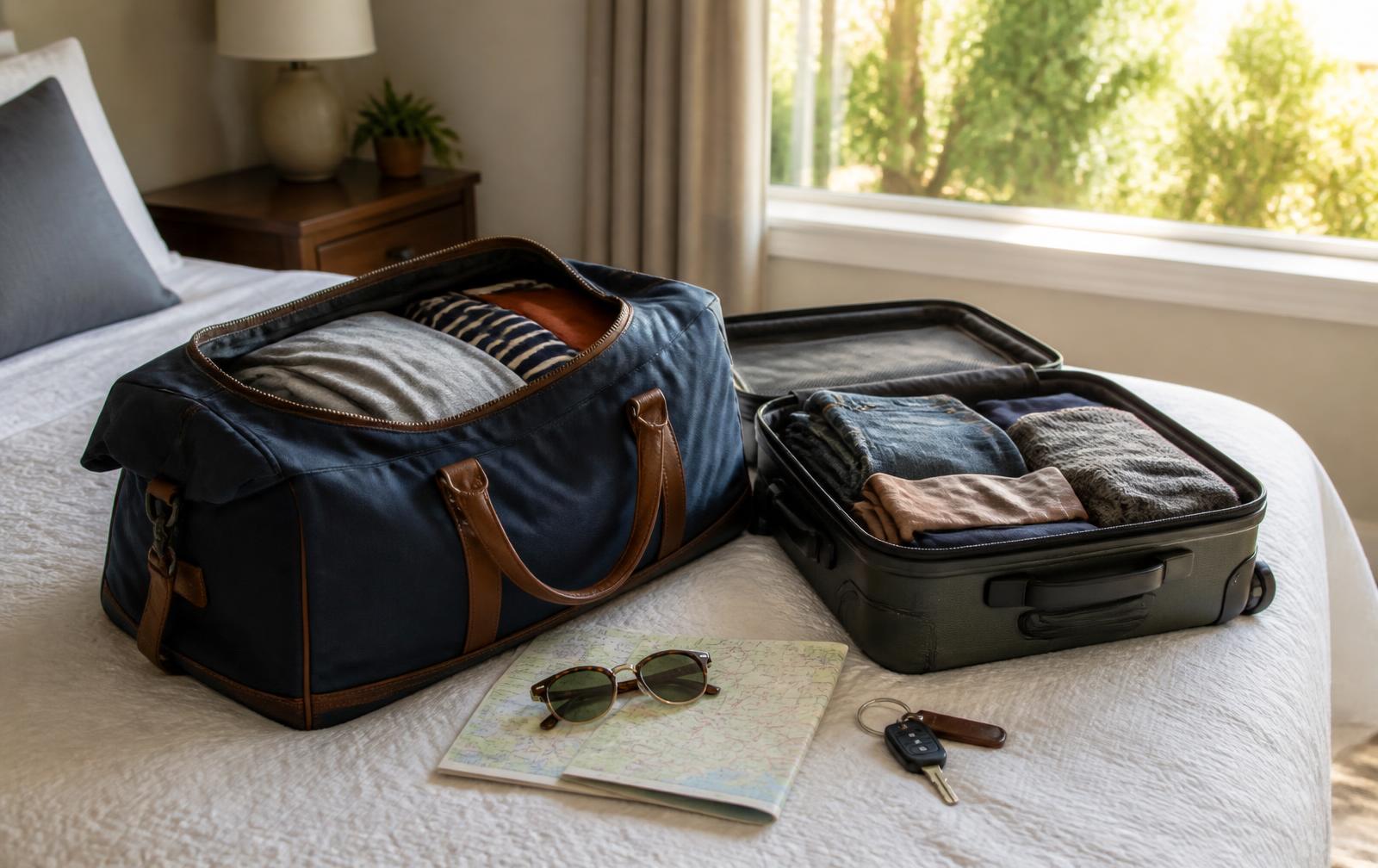
Most disasters start with a bag that is not actually carry-on legal. IATA's recommended cabin baggage limit is 55 x 40 x 23 cm (22 x 16 x 9 in) and most full-service carriers match it. Low-cost carriers in Europe (Ryanair, Wizz Air, easyJet) enforce stricter dimensions for free overhead bags. Check your specific carrier before you buy.
Soft-sided spinners pack more cleanly than hard cases when you are at the size limit, because the panels flex into the overhead bin. A 40 litre travel backpack with a clamshell opening (Tortuga, Cotopaxi Allpa, Peak Design) gives you the same volume with hands-free transit between airports.
Build a Capsule Wardrobe
Pick one colour anchor (navy, black or olive) and one secondary (white, beige or grey). Every top has to work with every bottom. A working one-week kit looks like:
- 3 tops (one merino, two cotton)
- 2 bottoms (one trousers, one jeans or shorts)
- 1 layer (cardigan, light jacket or sweater)
- 1 dressier piece (button-down, blouse or simple dress)
- 5 to 7 pairs of underwear and socks (wash mid-trip)
- 1 pair of comfortable walking shoes + 1 packable flat or sandal
Wear the heaviest items on the plane: boots, jacket, jeans. Whatever is on your body is not in your bag.
Rolling, Folding and Cubes
The packing forums argue about this forever. The honest answer is hybrid:
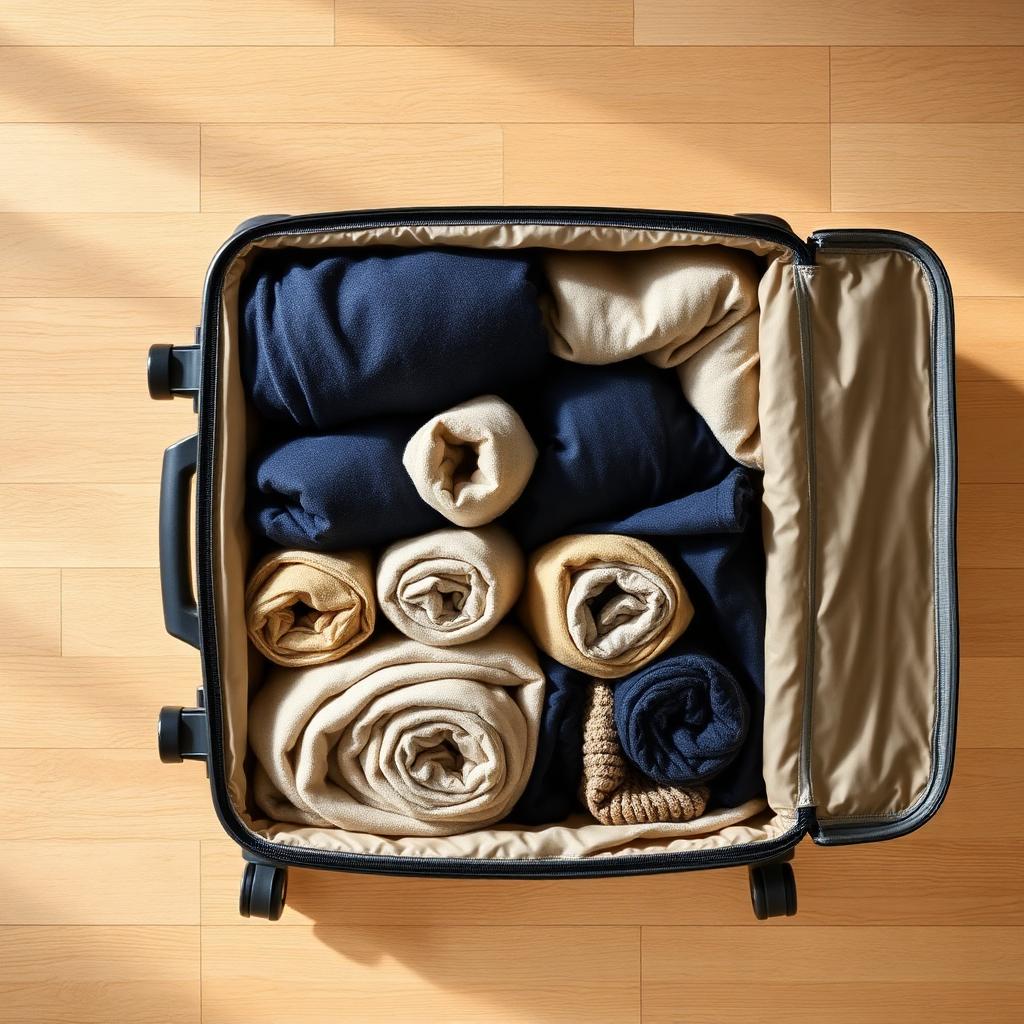
- Roll soft, knit items: t-shirts, underwear, gym clothes, jeans. Rolling compresses them and saves space.
- Fold structured items: button-downs, blazers, dresses with pleats. Folding preserves the shape.
- Bundle wrap if you genuinely have one fancy outfit you cannot afford to wrinkle.
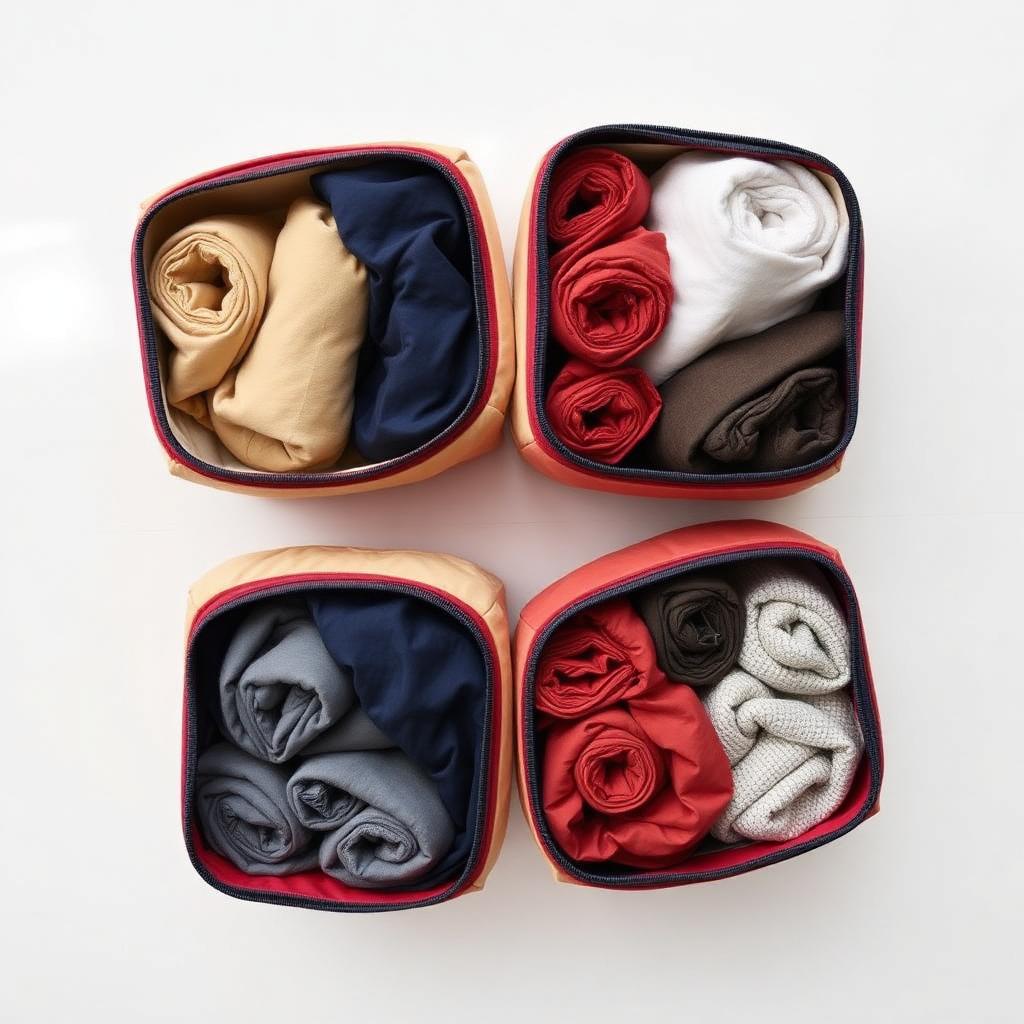
Three packing cubes is the sweet spot: one for tops, one for bottoms and layers, one for underwear and socks. Add a flat compression cube if you need to carry a second pair of shoes.
Liquids and Toiletries the Smart Way
TSA's 3-1-1 rule is the cap that determines what fits. One quart-size (roughly one litre) clear bag, individual bottles of 100 ml or less, one bag per passenger. EU and U.K. airports use the same 100 ml limit; some airports with newer CT scanners no longer require you to take liquids out, but pack as if they will.
Switch to solids where you can: shampoo bars, bar soap, solid deodorant, toothpaste tablets. Each one frees a slot in the quart bag. Decant your skincare into reusable silicone bottles; you almost never need a full retail size for a one-week trip.
The 24-Hour Test
Pack the bag, put it on, walk the block, then unpack on a bed and look at every item. Anything you did not think about while you were walking is probably optional. Anything you struggled to fit is probably too much.
The classic rule still holds: lay out everything you think you need, then take half the clothes and twice the money.
What Not to Pack
Skip: a second pair of jeans (one is fine), more than one book (Kindle exists), a full hairdryer (every hotel has one), large bath towel (microfibre travel towel is one-third the size), and "just in case" outfits. They never come out of the bag.
Bottom Line
The carry-on packing system that works in 2026 is a properly sized 40-55 litre bag, a one-colour capsule wardrobe, three packing cubes, the 3-1-1 liquids rule and the willingness to wear your heaviest layer on the plane. Master those and you can fly anywhere with no checked bag, no baggage carousel and no surprise fees.
Frequently Asked Questions
Are packing cubes really worth it?
Yes, for two reasons that have nothing to do with compression. They keep your bag organised so you stop unpacking everything to find one item, and they make hotel-room living possible because each cube becomes a drawer. The compression is a bonus.
Can I bring food in a carry-on?
Solid food yes, in most countries. Liquids and gels (yogurt, hummus, soup, sauces) follow the 100 ml rule. Meat, dairy and fresh produce face customs limits when crossing borders, so check the destination's import rules separately from the airline's cabin rules.
What about my prescription liquids?
Prescription medications above 100 ml are allowed under TSA and EU rules but you have to declare them at the security checkpoint and they may be screened separately. Carry the original labelled bottle and a copy of the prescription.
Will I really not need a second pair of shoes?
For most trips of a week or less, no. One pair of comfortable walking shoes plus a packable flat or sandal covers casual, smart-casual and beach. Two pairs of bulky shoes is the single most common reason carry-ons exceed weight limits.
How do I do laundry on the road?
Sink-wash with a small tube of travel detergent, hang on a clothesline in the bathroom, dry overnight on a towel. Merino tops and quick-dry underwear are dry by morning. For a 10 to 14 day trip, one mid-trip wash means you only need 7 days of clothing.