Quick Answer
The best beginner air fryer recipes are the ones where the machine genuinely beats an oven: chicken wings, salmon fillets, cubed potatoes, roasted chickpeas, bone-in chicken thighs and anything that comes out of the freezer breaded.
All six work on the same method. Dry the food, use a small amount of oil, cook in a single layer, shake or flip halfway, and check the internal temperature rather than the clock.
Cooking times below assume a preheated basket at the stated temperature. Every machine runs slightly differently, so treat the first attempt as calibration and write down what worked.
The Rules That Make Every Recipe Work
Air fryers are small convection ovens. Hot air is blasted past the food, so anything that blocks airflow ruins the result.
- Single layer, always. Overcrowding steams food instead of crisping it. Two batches beat one sad crowded batch.
- Dry the surface. Pat meat and washed vegetables with paper towel. Surface water has to boil off before browning starts.
- Use some oil, but little. A teaspoon or two tossed through is enough. Skip aerosol sprays, which can damage the non-stick coating over time.
- Preheat for three to five minutes. It shortens cook time and improves the crust.
- Shake or flip halfway. The heating element is at the top, so the upward-facing side browns first.
- Trust a thermometer. Colour is not doneness. An instant-read probe is the single best accessory you can buy.
Recipe 1: Chicken Wings
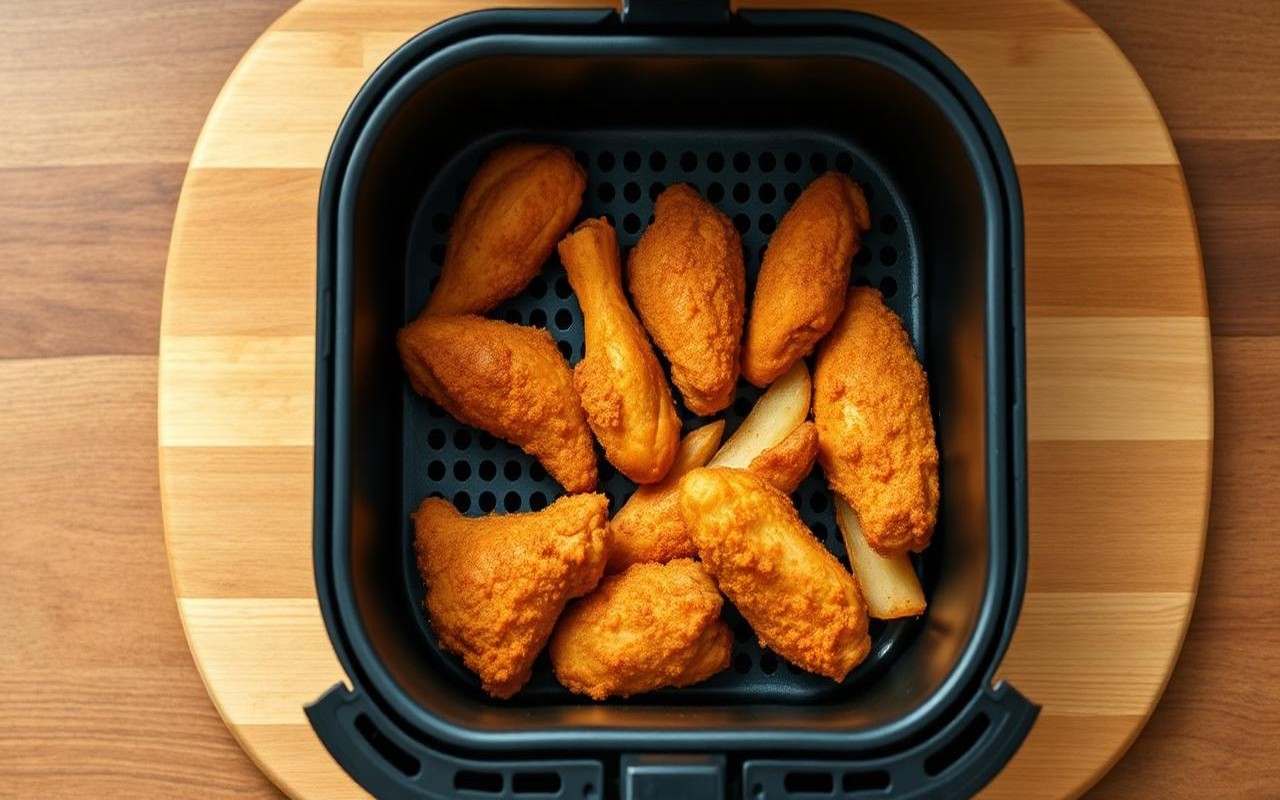
Wings are the reason a lot of people buy an air fryer, and they genuinely come out better than an oven for a fraction of the effort.
Pat two pounds of wings very dry, toss with a teaspoon of oil, half a teaspoon of salt and, if you want extra crunch, two teaspoons of baking powder (not baking soda). Cook at 380F for 12 minutes, flip, then raise to 400F for 8 to 10 minutes more.
Poultry is safe at an internal temperature of 165F measured in the thickest part away from the bone, per USDA guidance. Wings are more pleasant a little past that, around 175F to 185F, where the connective tissue has rendered. Toss in sauce after cooking, never before.
Recipe 2: Salmon Fillets
Salmon is the fastest weeknight win in the machine, and it is very hard to get wrong.
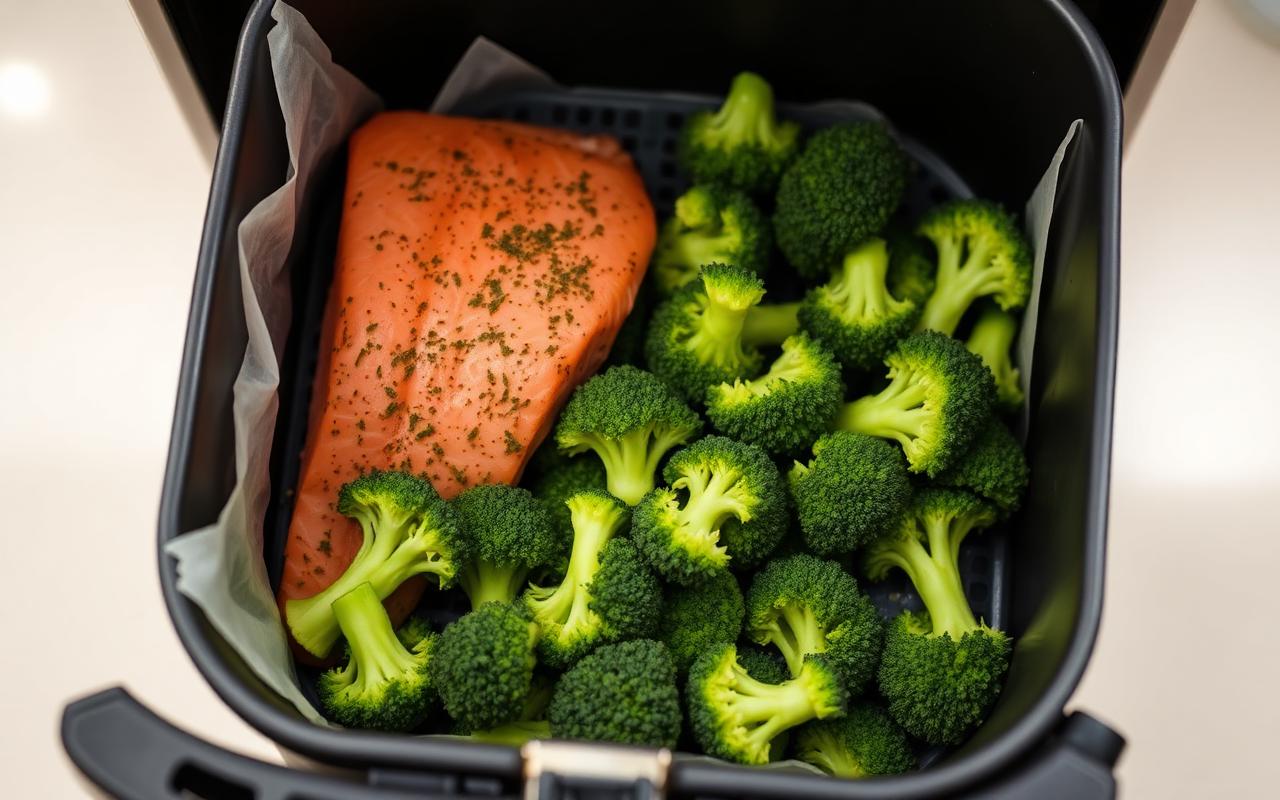
Pat the fillets dry, brush lightly with oil, then season with salt, pepper and either dill or smoked paprika. Cook skin side down at 390F for 7 to 10 minutes depending on thickness. A one inch fillet lands at about 8 minutes.
The safe internal temperature for fish is 145F, and the flesh should flake with gentle fork pressure. Many cooks prefer salmon pulled at 125F to 130F for a softer centre, which is a personal risk decision rather than the official guidance.
Recipe 3: Crispy Potatoes
Cut two large potatoes into three quarter inch cubes. Soak them in cold water for 20 minutes to pull out surface starch, then dry thoroughly, which is the step most people skip and then wonder why the outsides are soft.
Toss with a tablespoon of oil, salt, garlic powder and paprika. Cook at 400F for 18 to 22 minutes, shaking the basket every 6 to 7 minutes. They are done when the corners are dark gold and a fork slides in with no resistance.
Sweet potatoes work identically but need about two minutes less and burn faster because of the sugar content.
Recipe 4: Roasted Chickpeas
Drain and rinse a can of chickpeas, then dry them properly on a towel, rubbing off any loose skins. Toss with a teaspoon of oil and salt only, holding back the spices.
Cook at 390F for 12 to 15 minutes, shaking twice. Add cumin, chilli or curry powder in the last two minutes, because ground spices burn and turn bitter over a full cycle.
They crisp further as they cool. Store them uncovered, since a sealed container traps steam and softens them overnight.
Recipe 5: Bone-In Chicken Thighs
Thighs are more forgiving than breasts and cost less. Pat dry, rub with oil, salt, pepper and any dry rub, then cook skin side up at 380F for 22 to 26 minutes.
Check at 22 minutes for an internal temperature of 165F. Thighs stay juicy well past that, so 175F is fine and often produces better texture. Rest for five minutes before cutting.
Boneless thighs need roughly 16 to 18 minutes at the same temperature.
Recipe 6: Frozen Food, Done Properly
Frozen breaded food is where an air fryer beats an oven on time by a wide margin, and it needs no oil at all because the coating already carries fat.
| Item | Temperature | Time |
|---|---|---|
| Frozen fries | 400F | 15 to 18 minutes, shake twice |
| Frozen breaded chicken | 375F | 12 to 15 minutes, flip once, cook to 165F |
| Frozen spring rolls | 380F | 8 to 10 minutes, flip once |
| Frozen fish fillets | 390F | 12 to 14 minutes, cook to 145F |
Do not thaw first. Breaded coatings go soggy as they defrost and never fully recover their crunch.
What Not to Cook in an Air Fryer
A few things fail reliably, and knowing them saves a cleanup.
- Wet batter. It drips through the basket and bakes onto the element. Use a dry breading instead.
- Loose leafy greens. The fan sends them into the heating element. Weigh them down or skip it.
- Whole roasts. Too big for the airflow to circulate, so the outside burns before the centre is safe.
- Cheese on its own. It melts straight through the basket.
Cleaning and Storage
Let the basket cool, then soak it in hot soapy water for ten minutes rather than scrubbing hard, which wears the coating. Wipe the heating element with a damp cloth once it is cold, since burnt-on splatter there is the main cause of smoke on the next run.
Cooked leftovers should be refrigerated within two hours and used within three to four days. Reheating in the air fryer at 350F for three to five minutes restores crispness far better than a microwave.
Frequently Asked Questions
Do you have to preheat an air fryer?
Not always, but a three to five minute preheat gives a better crust and more consistent times.
Can you put aluminium foil or parchment in an air fryer?
Yes, if it is weighed down by food and does not block the airflow holes. Never run the machine with loose paper inside.
Why is my food not crisping?
Almost always overcrowding or surface moisture. Cook in two batches and dry the food first.
What internal temperature is chicken safe at?
165F measured at the thickest point, per USDA guidance.
Is air frying healthier than deep frying?
It uses far less oil, so the fat and calorie content of the same food drops substantially. It does not change what the food itself is.