Quick Answer
Snapchat Specs are Snap Inc.'s first consumer augmented reality glasses, unveiled by CEO Evan Spiegel on June 16, 2026 at the Augmented World Expo in Long Beach, California. They cost $2,195 with a $200 refundable preorder deposit and are scheduled to ship later in 2026.
Unlike Snap's earlier camera-only Spectacles, Specs are true see-through AR glasses with stereoscopic displays in each lens, six cameras, on-device AI, and a custom operating system called Snap OS. They run apps in the user's field of view rather than on a phone screen.
Specs are positioned as a premium developer-friendly consumer product, not a mass-market phone replacement. They compete most directly with the Meta Ray-Ban Display and the rumored Apple Vision smart glasses, but at a far higher price than camera glasses and well below full mixed-reality headsets.
What Snap actually announced

Spiegel walked on stage at AWE 2026 in Long Beach wearing the new Specs and led the keynote with the product on his face the entire time. The pitch was simple: "Almost 20 years since the launch of the iPhone, people are ready to think about computing differently."
Snap framed the launch around four pillars: AI assistance, work tools, entertainment, and shared experiences. The on-stage demos included real-time language translation overlaid on a speaker's face, a collaborative whiteboard app shared between two people in the same room, a Niantic-style spatial game, and a hands-free Snapchat capture flow.
Preorders opened the same day on the official Specs site, with the $200 deposit refundable until the shipping window opens.
The hardware
Snap has not published every spec sheet number publicly, but the AWE keynote, the company's developer documentation, and reporting from TechCrunch and BBC give a clear picture:
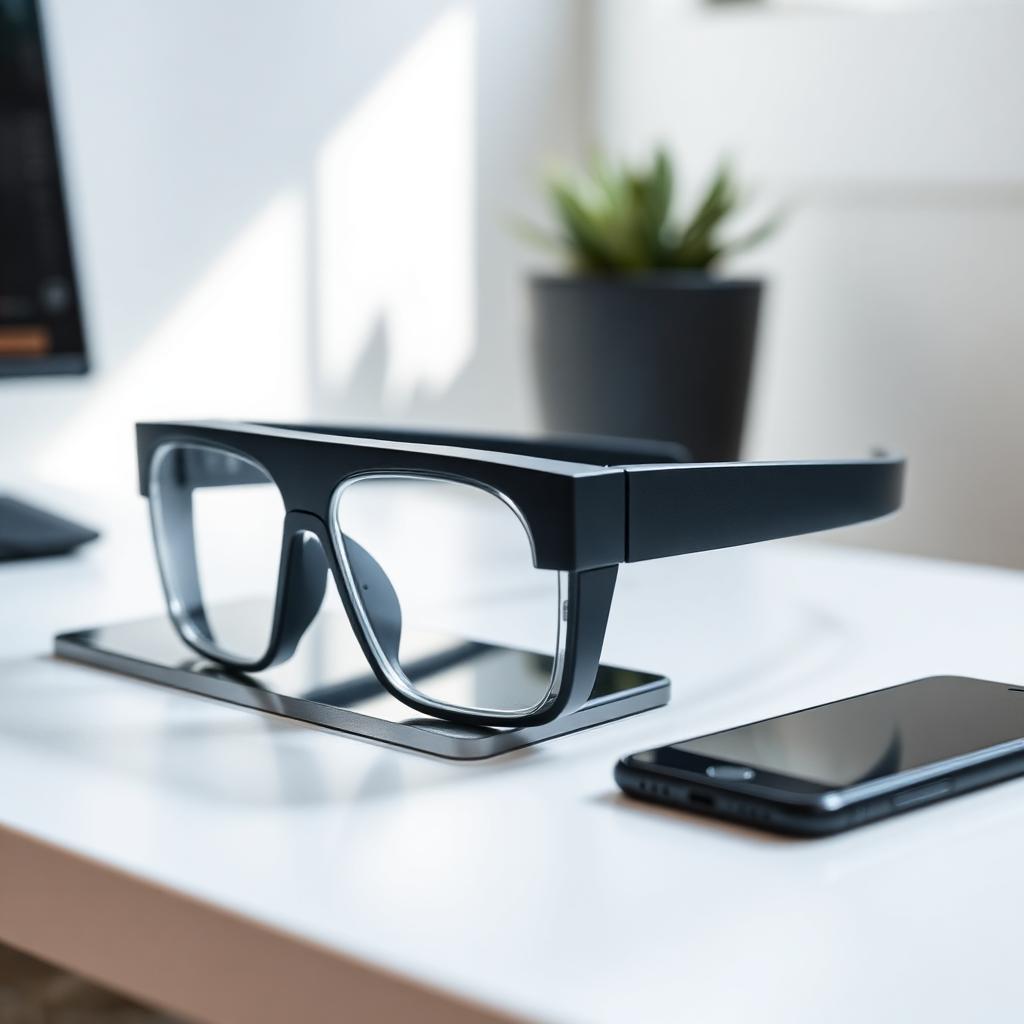
- Form factor. Thick black frames closer to oversized sunglasses than a pair of Ray-Bans. Weight has been reported in the 70 to 80 gram range, heavier than normal glasses but far lighter than a Vision Pro.
- Displays. Dual see-through micro-projector displays, one per eye, capable of stereoscopic 3D overlays.
- Cameras. Six cameras combining RGB capture, depth sensing, and hand tracking.
- Compute. Custom on-device silicon from Qualcomm tuned for spatial computing, paired with a Snap-built runtime. Most processing happens on the glasses themselves rather than streamed from a phone.
- Battery life. Roughly 45 minutes of continuous active AR use, according to Snap, with passive sit-and-listen scenarios lasting longer.
- Audio. Open-ear speakers in the temples, no earbuds required.
Snap OS and the developer story
The real strategic bet is software. Snap OS is the company's purpose-built operating system for spatial computing, with a Lens-style developer model that lets creators publish AR experiences the same way they already publish Lenses on Snapchat.
Snap is also opening the platform to third-party app developers with a full Spectacles SDK, sample projects, and integration with familiar tools like Unity. The pitch to developers is that anything built on Snap OS reaches both Specs hardware owners and the much larger Snapchat user base through Lens experiences on phones.
Why $2,195 is the headline number
The price is the part of the launch that drew the most attention. At $2,195, Specs are roughly five times more expensive than Meta's Ray-Ban camera glasses and about three times the cost of the Meta Ray-Ban Display. They are also notably cheaper than the $3,499 Apple Vision Pro, but Vision Pro is a different category of fully enclosed mixed-reality headset.
Spiegel was direct about the positioning in his CNBC interview: this is not Snap's bid for the mass market this year. It is a premium platform launch aimed at early adopters, creators, and developers who will build the apps that justify a lower-priced sequel.
How Specs compare to the competition
- Meta Ray-Ban Display. Cheaper, lighter, dependent on a Meta AI assistant model, and limited to a single in-lens display rather than true stereoscopic AR.
- Apple Vision Pro. Far more powerful but ski-goggle sized, designed for indoor use, and not glasses in any meaningful sense.
- Google Android XR partners. Samsung's Project Moohan and the new XREAL Beam Pro line target a similar space but launch later in 2026.
- Magic Leap 3. Enterprise focused, even more expensive, and not aimed at consumers.
What you can actually do with them
The launch software lineup includes AI assistance through a built-in My AI agent, real-time translation overlays, multiplayer AR mini games, shared spatial whiteboards, a fitness tracking lens, and the full hands-free Snapchat capture and messaging experience. Snap also showed off integrations with Spotify, OpenAI, and Niantic on stage.
Where the catch is
The 45 minute active battery life is the biggest practical limit. Specs will not replace a phone today, and they are not meant to. The other real friction is the thick frame profile, which is fine on a stage and on a TechCrunch reviewer but is visibly larger than a typical pair of glasses, which limits social comfort in public for many users.
How this fits into Snap's bigger story
Snap has been chasing real AR hardware since the original camera-only Spectacles launched in 2016. The 2024 developer Spectacles were the first prototype with true displays but were never sold to consumers. Specs are the first model offered for sale to the general public with full AR capabilities, and Spiegel has framed them as the start of a multi-year roadmap toward smaller, cheaper, mass-market glasses.
Frequently asked questions
When do Snapchat Specs ship?
Snap says shipments will begin later in 2026, with preorder deposits refundable until that window opens.
How much do Snapchat Specs cost?
$2,195 with a $200 refundable deposit at preorder.
Are Specs the same as the old Spectacles?
No. The original Spectacles were camera-only sunglasses. Specs are true see-through AR glasses with on-device displays and Snap OS.
Do you need a Snapchat account to use Specs?
You need a Snap account to sign in and run Snap OS, but Specs are positioned as a general spatial computing platform rather than a Snapchat-only accessory.