Quick Answer
The US military community and families back home have been holding their breath since early May following a tragic incident off the coast of Morocco.
The US Army has officially confirmed the recovery of one of the two American soldiers who went missing during the African Lion 2026 joint military exercises.
As search and rescue operations continue for the second missing service member, here is a comprehensive breakdown of what we know so far.
The Incident at Cap Draa
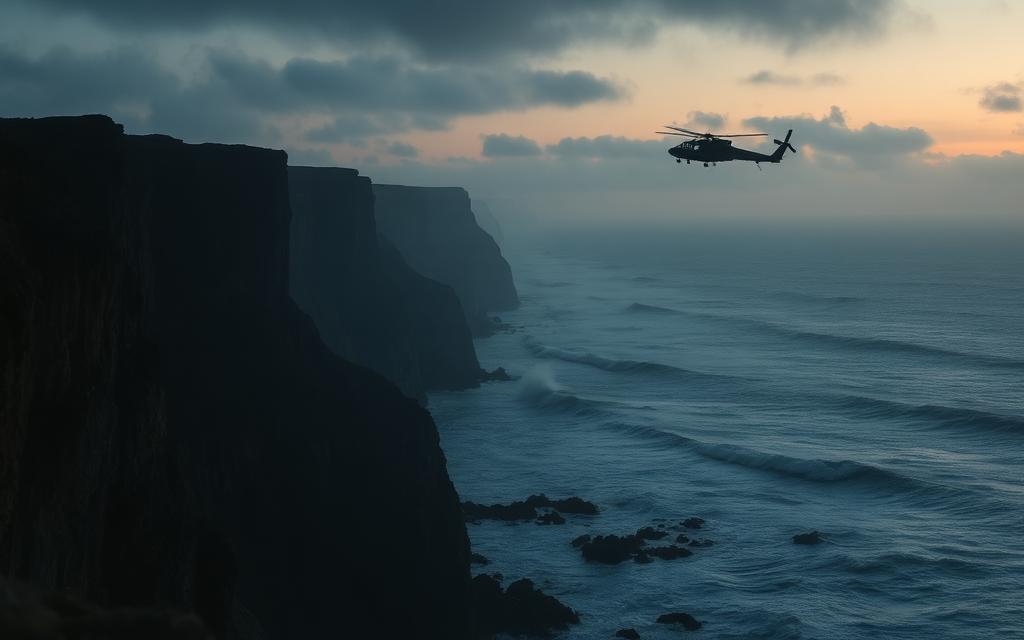
On May 2, 2026, two US service members disappeared near the Cap Draa Training Area, located outside of Tan-Tan in southern Morocco.
According to preliminary reports, the tragedy occurred when one soldier, who reportedly could not swim, fell into the ocean from the sea cliffs. A second soldier bravely jumped into the treacherous waters in a rescue attempt, but both were quickly overwhelmed by the surf.
It is important to note that military officials have clarified this accident was entirely unrelated to the active military training exercises taking place nearby.
Recovery and Identification of 1st Lt. Kendrick Lamont Key Jr.
On May 9, 2026, roughly a week after the incident, a joint Moroccan military search team recovered a body from the water along the shoreline, approximately one mile from where the soldiers initially entered the ocean.
The soldier has been positively identified as 1st Lt. Kendrick Lamont Key Jr., 27, hailing from Richmond, Virginia.
Key was a dedicated leader assigned to Charlie Battery, 5th Battalion, 4th Air Defense Artillery Regiment, under the 10th Army Air and Missile Defense Command. Serving as a 14A Air Defense Artillery officer, his loss has deeply impacted his unit.
Following standard procedures, his body was transported to the morgue at Moulay Hassan Military Hospital in southern Morocco, awaiting repatriation to the United States.
The Context: African Lion 2026
The soldiers were stationed in Morocco as part of African Lion 2026. Running from April 13 to May 8, this operation is one of the largest annual joint military exercises held on the African continent, co-led by the United States and Morocco.
It involves thousands of troops and focuses on enhancing interoperability and readiness among allied nations.
Ongoing Search Efforts
While the recovery of Lt. Key brings a somber closure to his family, the search is far from over.
The US Army, working in tandem with the Royal Moroccan Armed Forces and civil defense teams, continues a massive, multi-domain search effort. This includes utilizing ground patrols, aerial surveillance, and maritime assets to locate the second missing American soldier.
Frequently Asked Questions
Who was the soldier recovered in Morocco?
The recovered soldier was identified as 1st Lt. Kendrick Lamont Key Jr., 27, of Richmond, Virginia. He was an Air Defense Artillery officer.
Are the missing soldiers in Morocco related to a combat incident?
No. The military has confirmed that the soldiers went missing in a tragic drowning accident during their downtime, which was entirely unrelated to the African Lion 2026 training exercises.
Is the search for the second missing US soldier still active?
Yes. As of mid-May 2026, US and Moroccan naval, air, and ground forces are actively continuing their search operations near the Cap Draa coastline.
What African Lion 2026 Actually Is
African Lion is the US Africa Command's largest annual joint exercise, run in partnership with Morocco, Tunisia, Senegal, Ghana and a rotating list of NATO allies. The 2026 edition pulled in more than 8,000 troops across multiple training sites, focusing on combined-arms manoeuvres, medical evacuation drills and counter-terror scenarios in mountain and desert terrain.
The exercise has become a fixture of US security cooperation in North Africa. It is also a logistical beast, which makes accountability for every participant a serious daily exercise of its own.
The Timeline of the Incident
- The soldiers were last accounted for at a forward staging area outside Tan-Tan during a night manoeuvre window.
- An initial head count flagged the discrepancy within two hours.
- Search and rescue assets, including Moroccan Air Force helicopters, were airborne by daylight.
- US public affairs confirmed the missing status the following morning, withholding names pending next-of-kin notification.
What the Pentagon and Moroccan Authorities Are Saying
Africa Command's statement called it a coordinated search and rescue operation, with full Moroccan government cooperation. Moroccan officials confirmed they had cleared the search corridor of civilian air traffic and tasked ground units to support.
Neither side has, at the time of writing, attributed the incident to hostile action. The early indications point to a navigation or vehicle issue during the night phase of the manoeuvre rather than enemy contact.
What This Means for Future Exercises
Any incident on a US-led exercise triggers an after-action review and, in serious cases, a procedural lessons-learned process that can change how future iterations are run. Expect tighter requirements around night-time tracking devices, more conservative manoeuvre distances and an expanded medevac posture during high-tempo phases.
None of that is unusual. African Lion has matured precisely because each year's incidents feed back into the planning of the next.
Why Morocco Matters as a Partner
Morocco is one of the United States' oldest treaty partners, with diplomatic ties stretching back to 1786. The Royal Moroccan Armed Forces are also among the most capable in North Africa, and their hosting of African Lion gives Washington a reliable, politically stable platform from which to train across the Sahel periphery.
That partnership matters more, not less, as instability in the broader Sahel region pushes US engagement north.
How Families Are Being Supported
Casualty assistance officers have been assigned to the affected families, and the soldiers' parent units have stood up family support meetings on the home installation. The Department of Defense holds back identities until next-of-kin notification is complete, which is standard practice and exists to protect families from learning of an incident through the press.
Family liaison continues through the resolution of the incident, regardless of outcome.
What Will Be Released Publicly
Once the search is concluded and family notifications are complete, the Department of Defense typically issues a brief identifying the personnel and the circumstances. A formal report follows weeks or months later, redacted for operational security but usually clear about the cause of the incident.
Until then, the disciplined approach is to wait for verified updates and avoid amplifying speculation. The soldiers, their families and the partner force have earned that patience.