Quick Answer
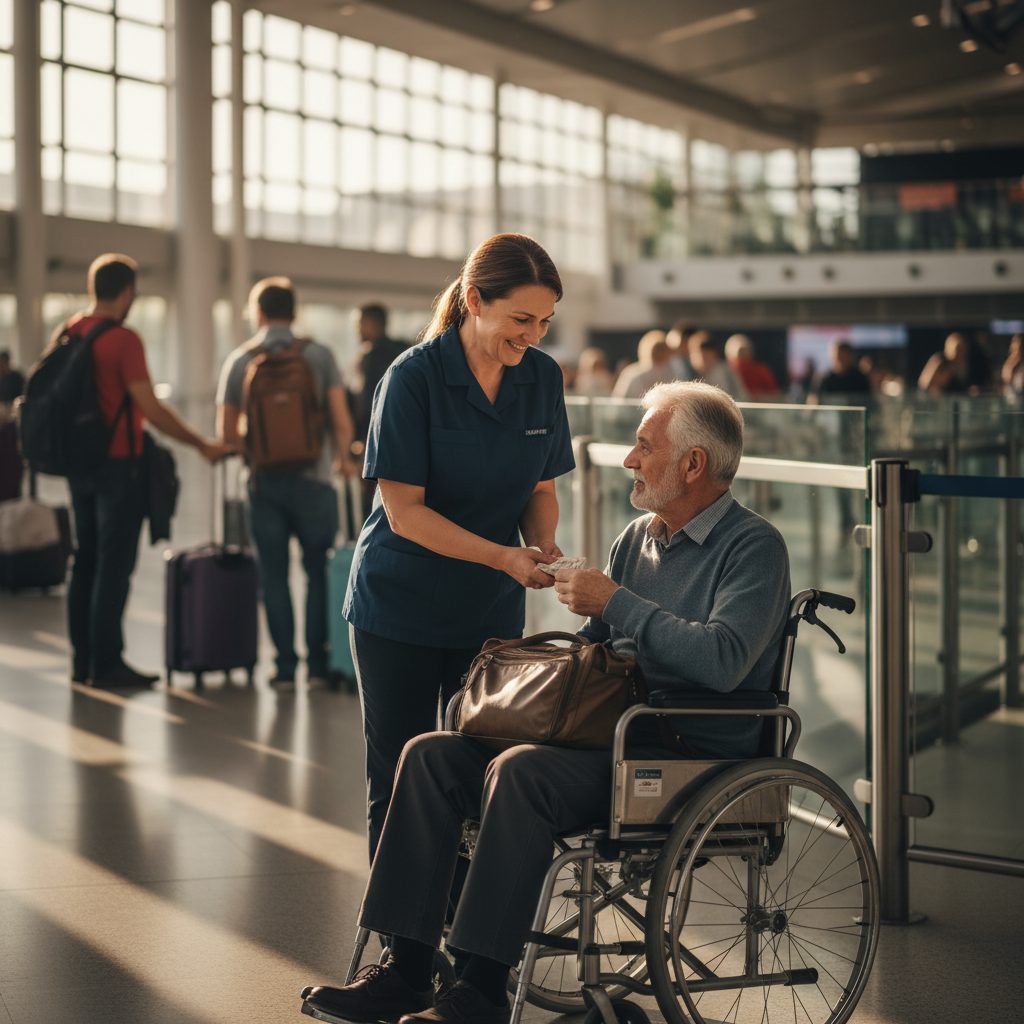
The standard tip for an airport wheelchair attendant is between 5 and 10 dollars per person. If the attendant provides extensive help like navigating through security, stopping for food, or assisting with luggage, a tip of 10 to 20 dollars is more appropriate.
I always recommend carrying small bills because most wheelchair assistants are not employees of the airline. They usually work for third party contractors and rely on tips to supplement their hourly wages.
Keep in mind that while tipping is not mandatory, it is the industry standard for good service. If you are traveling through a large, busy hub with multiple terminals, your attendant is likely working very hard to keep you on schedule.
Why You Should Tip Your Attendant
I have spent a lot of time watching the logistics of major airports. Wheelchair attendants are the unsung heroes of the terminal. They do more than just push a chair. They act as navigators, baggage handlers, and timekeepers.
Many people assume these workers are well paid airline employees. In reality, they often work for minimum wage or slightly above it. They deal with heavy lifting and tight deadlines all day long. A few extra dollars makes a massive difference in their daily take home pay.
I also find that a small tip up front or the promise of one at the end often results in better service. If you need a specific favor, like a bathroom break or a quick stop at a newsstand, showing your appreciation with cash is the polite thing to do.
Standard Tipping Rates for 2026
For a standard trip from the check-in desk to the gate, I suggest tipping 5 dollars. This is for a straightforward walk where you do not have extra bags or special needs. It covers the basic service of getting you to your plane safely.
If the attendant has to navigate you through a high stress environment like an international customs hall or a massive terminal transfer, I bump that up to 10 dollars. These routes often take 30 minutes or more of their time.
For exceptional service, such as helping you transfer from the wheelchair into your seat or managing multiple heavy carry-on bags, 15 to 20 dollars is a generous way to say thank you. I always base the amount on the level of physical effort and time involved.
Factors That Increase the Tip Amount
Individual circumstances often dictate when you should reach for a larger bill. I always consider the following factors before reaching into my wallet:
- The weight and number of your carry-on bags.
- The distance from the entrance to the furthest gate.
- Whether they had to wait with you at an accessible restroom.
- If they helped you order food or navigate a duty free shop.
- The friendliness and patience of the attendant.
If an attendant stays with you during a long flight delay or helps you rebook a ticket at a customer service desk, they have gone far beyond their job description. In these cases, a 20 dollar tip is very fair. These workers are often under high pressure to return to the dispatch area, so taking extra time for you is a big deal.
How to Tip If You Have No Cash
I know it is becoming rarer to carry physical cash these days. However, the airport wheelchair service is one of the few places where cash is still king. Most of these workers do not have mobile payment readers or official ways to accept digital tips.
If you find yourself without paper money, you can ask if they have a Venmo or CashApp QR code. Many attendants now keep these on their phones. It is a quick and easy way to transfer five or ten dollars without needing an ATM.
If you cannot use a digital app, I suggest stopping at an airport ATM or a small shop to get change. You can buy a pack of gum or a bottle of water to break a larger bill. I always try to plan ahead and keep five-dollar bills in my passport holder just for this purpose.
Common Tipping Etiquette and Timing
When is the best time to hand over the tip? I prefer to tip at the very end of the service. This is usually when you have reached the gate or when they have handed you over to the flight crew at the aircraft door.
Make sure to have the money ready so you are not fumbling with your wallet while people are trying to board. I like to fold the bills and hand them over with a firm thank you. It makes the transaction discreet and professional.
If you have two different people helping you, one for the initial drop off and another for a terminal transfer, you should tip both. Do not assume the first person will share the money with the second. Each leg of the journey is usually handled by a different staff member.
Dealing With Poor Service
Sometimes you might encounter an attendant who is rude or seems to be in a massive rush. While this is rare, it does happen. In these cases, I do not feel obligated to give a large tip. A 2 or 3 dollar tip is still a polite gesture for the physical labor, but you do not need to go higher.
If the service was truly unsafe or unacceptable, I recommend skipping the tip and speaking with a supervisor at the airline's special assistance desk. Tips are for service rendered, and you are never forced to pay someone who treated you poorly.
However, I always try to remember that these workers are often juggling multiple passengers at once. If they seem stressed, it usually is not personal. I try to be as patient with them as I hope they will be with me.
Booking Your Assistance in Advance
To ensure you have an attendant ready when you arrive, you should always request wheelchair service at least 48 hours before your flight. You can usually do this on the airline website or mobile app. This helps the dispatching company manage their staff levels.
When you arrive at the airport, look for the special assistance signs or go directly to the check-in counter. Even if you have booked in advance, there might be a short wait during peak travel hours. Being prepared to wait a few minutes is just part of the process.
I find that being organized and having my boarding pass ready helps the process go much faster. The easier you make the attendant's job, the smoother your transition through the airport will be. It is a partnership that works best when both sides are prepared.
Frequently Asked Questions
Is tipping wheelchair attendants required by the airline?
No, tipping is not a requirement and your service should not be denied if you do decline to tip, but it is a widely accepted social custom in the United States. Wheelchair attendants are service workers who significantly benefit from these small gratuities.
Can I tip with a credit card at the gate?
Most airlines and third party contractors do not have a system to add a tip to a credit card transaction for wheelchair services. It is best to use cash or digital payment apps like Venmo if the attendant has an account.
Do I tip the person who helps me off the plane?
Yes, you should tip the attendant who meets you at the arrival gate and takes you to baggage claim or your ground transportation. This is often a different person than the one who helped you board, so they deserve a separate tip.
How much should I tip if they only push me a short distance?
If the distance is very short, such as moving between two gates that are right next to each other, a 3 or 5 dollar tip is perfectly acceptable. It acknowledges their time and effort without being excessive for a quick task.
What if I am traveling internationally?
Tipping customs vary by country, but in the United States, it is expected. If you are flying into a US airport from abroad, try to have some small US dollar bills ready for your arrival attendant, as they will appreciate it greatly.
Final Thoughts on Airport Assistance
Navigating an airport can be one of the most stressful parts of traveling, especially if you have mobility challenges. Having an attendant to help you through the crowds is a massive relief. I always view the tip as a small price to pay for the peace of mind they provide.
I suggest keeping your cash in an easy to reach pocket so you are not searching through your bags at the gate. If you travel frequently, keeping a small envelope of five-dollar bills in your carry-on is a great habit to start. It eliminates the stress of finding change at the last minute.
Ultimately, a little kindness goes a long way. These workers spend their whole day on their feet in a loud, crowded environment. A smile and a fair tip ensure that this vital service continues to be available for everyone who needs it. Safe travels and enjoy your flight.