Quick Answer
The standard tip for hotel housekeeping in the United States is between 3 dollars and 5 dollars per night. If you are staying at a luxury resort or have a large suite with multiple occupants, increasing that amount to 10 dollars per night is a thoughtful gesture.
I always recommend tipping daily rather than leaving one lump sum at the end of your stay. Housekeeping staff often rotate schedules, so leaving a daily tip ensures that the specific person who cleaned your room that day receives the money.
Always leave your tip in a visible spot, such as the desk or a nightstand, and place it in a clearly marked envelope or under a note that says "Thank You" or "For Housekeeping." This prevents any confusion about whether the money was meant for the staff or was simply left out by the guest.
Why Tipping Housekeeping Matters
I have spent a lot of time in hotels over the years, and I have learned that housekeeping is one of the most physically demanding jobs in the hospitality industry. These staff members are responsible for scrubbing bathrooms, changing heavy linens, and vacuuming high traffic areas in a very short amount of window time.
Unlike servers at restaurants, you rarely see your housekeeper face to face. This makes it easy to forget about the work they do to keep your space hygienic and comfortable. Because many housekeeping roles pay near the minimum wage, these tips represent a significant portion of their actual take home pay.
Tipping is also a way to build a rapport if you are staying for more than a night or two. I find that when I leave a consistent daily tip, the staff is often more attentive to my specific needs, such as providing extra towels or replenishing the coffee station without me having to call the front desk.
Standard Tipping Amounts by Hotel Type
The amount you choose to leave should generally reflect the level of service and the price point of the hotel. Here is an easy guide I follow when I am planning my travel budget:
- Budget Motels or Roadside Inns: 2 dollars to 3 dollars per night.
- Mid Range Hotels (Hyatt Place, Marriott, Hilton): 3 dollars to 5 dollars per night.
- High End Resorts and Luxury Suites: 5 dollars to 10 dollars per night.
- Large Groups or Families in One Room: Add an extra 1 dollar or 2 dollars per person.
If you leave a significant mess, such as confetti from a celebration or a lot of food trash, you should definitely lean toward the higher end of these ranges. If the room requires extra deep cleaning because of a spill or heavy tracking of dirt, an extra 10 dollars or 20 dollars is appropriate as a one time gesture.
The Daily Tipping Strategy
I used to make the mistake of leaving a 20 dollar bill at the end of a five day stay. I realized later that this likely went to whichever staff member happened to be working the Friday morning I checked out, even if a different person had done all the hard work the previous four days.
Hotel staff schedules are rarely Monday through Friday. They often work staggered shifts or have midweek days off. By tipping every morning before you head out for the day, you guarantee that the person doing the labor gets the reward. It also ensures that if the quality of service drops one day, you can adjust your tip for the following day.
I like to keep a stash of 1 dollar and 5 dollar bills in my travel wallet specifically for this purpose. I make it a habit to set the money out right after I brush my teeth in the morning. This way, I never forget it in the rush of checking out or heading to a morning meeting.
Where to Leave the Money
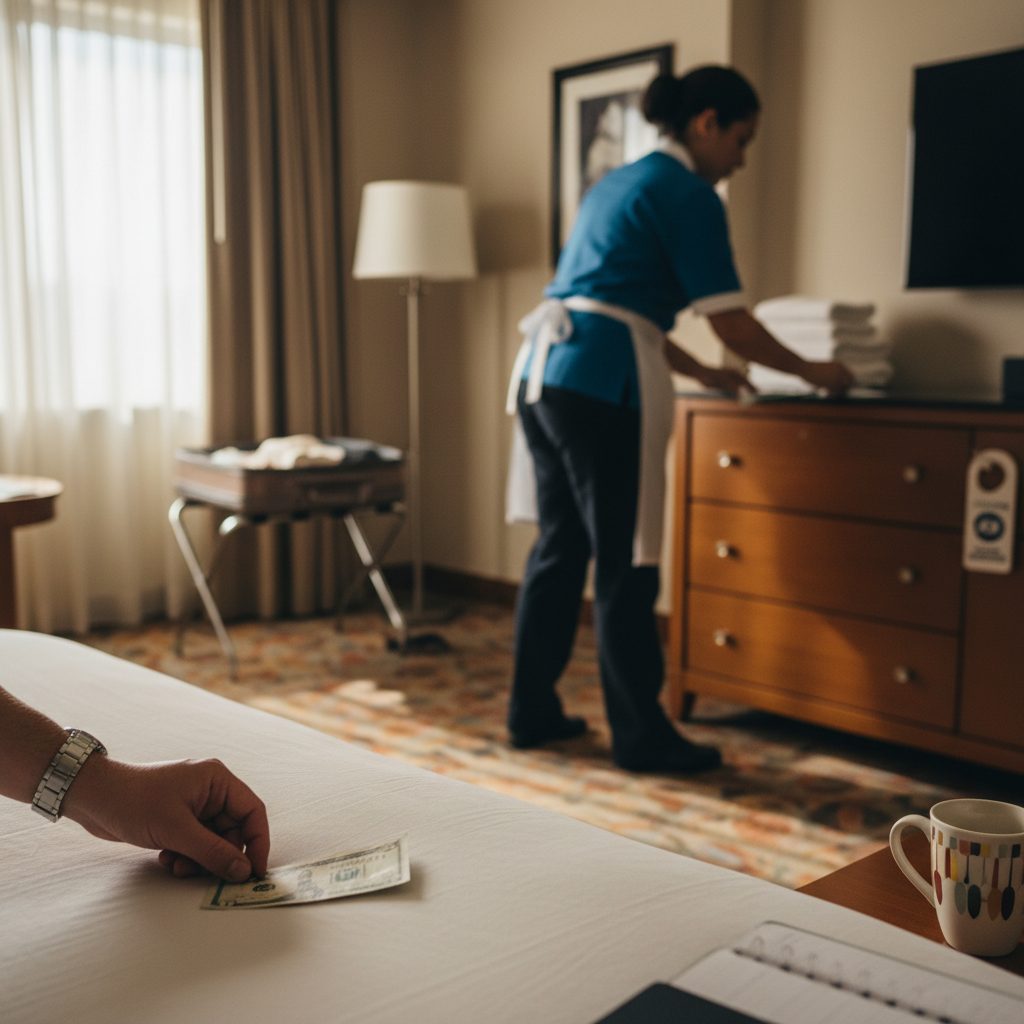
You should never just leave loose change or crumpled bills on the bed. Housekeepers are often instructed not to touch money unless it is clearly intended as a tip, to avoid accusations of theft. If you leave a 5 dollar bill on the bedsheets, they might just move it to the nightstand and leave it there.
The best place to leave a tip is on the desk or the bedside table. If the hotel provides a notepad and pen, I always write a quick "For Housekeeping, Thank You!" and place the cash on top. This makes your intention crystal clear.
Another great option is to use the small envelopes often provided in the room stationery kit. If you do not have an envelope, you can fold the money inside a piece of paper. This keeps the cash clean and prevents it from blowing away if the staff opens a window or uses a high powered vacuum nearby.
Handling Special Requests and Extra Messes
Sometimes you need more than just a standard cleaning. If you call down for extra pillows, a mountain of fresh towels, or a cot for a child, it is polite to tip the person who brings those items to your door. I usually give 2 dollars per delivery roughly at the time the items arrive.
If you have an accidental spill or your pet makes a mess in a dog friendly hotel, you should proactively tip more. Housekeepers have a strict schedule and an unexpected deep clean can throw off their entire day. A 10 dollar or 20 dollar "hazard" tip is a kind way to acknowledge the extra labor involved.
During a long stay, you might choose to skip stay over service by hanging the "Do Not Disturb" sign. If you skip cleaning for three days and then finally ask for a full service, remember that the room will be much dirtier than usual. I recommend doubling the daily tip on the day you finally have the room cleaned.
What to Do if You Don't Have Cash
In our increasingly cashless society, this is a common dilemma. While cash is still the preferred method for tipping hotel staff, some modern hotels are starting to implement digital tipping via QR codes found on the desk or the television screen.
If there is no digital option and you have no cash, you can stop by the front desk. I have often asked the receptionist to "break a twenty" into smaller bills so I can tip the staff properly. They are usually happy to help because they know how important those tips are to their colleagues.
If you genuinely have no way to tip in cash during the stay, you can sometimes add a tip to your final bill at checkout, but this is less common for housekeeping than it is for room service. Always check to see if a "service charge" or "resort fee" is already included. Be aware that these fees often go to the hotel management rather than directly to the individual cleaning your room.
International Tipping Customs
While these rules apply specifically to the United States, tipping culture varies wildly once you cross the border. In many European countries, a small tip of one or two Euros per night is appreciated but not necessarily expected. In places like Japan, tipping can actually be seen as confusing or even offensive.
I always do a quick search for the local customs of my destination before I leave. In the U.S., Canada, and Mexico, housekeeping tips are a standard part of the travel experience. In Australia and New Zealand, tipping is less common, though still welcomed for exceptional service in high end hotels.
If you are staying at an all inclusive resort in the Caribbean or Mexico, check the hotel policy. Some "ultra all inclusive" resorts actually forbid staff from taking cash tips, while others have a culture where tipping is the only way to get prompt service. When in doubt, I ask the concierge about the local preference.
Frequently Asked Questions
Should I tip if I only stayed for one night?
Yes, you should still leave a tip for a one night stay because the housekeeper still has to perform a full turnover of the room, which is actually more work than a standard daily refresh. I usually leave 5 dollars for a single night stay in a standard hotel.
Is it okay to leave coins as a tip?
I generally avoid leaving loose change unless it is in addition to paper bills. Standard quarters or dimes can feel dismissive or like you are just emptying your pockets, so try to stick to 1 dollar or 5 dollar bills whenever possible.
Do I need to tip if the room was not cleaned well?
Tipping is for service provided, so if the room was genuinely dirty or the staff ignored your requests, you are not obligated to tip. However, I usually still leave a small amount and instead report the cleanliness issues to the front desk so they can fix the underlying problem.
Should I tip more for a suite with multiple rooms?
Yes, if you are occupying a two bedroom suite or a room with a kitchenette, you should increase your tip to at least 10 dollars per day. These rooms take double or triple the time to clean compared to a standard king room.
Does the "Service Charge" on my bill go to the housekeeper?
Not necessarily. Many hotels charge a daily resort fee or service charge that covers pool maintenance, gym access, or internet. Unless it specifically says "Housekeeping Gratuity," assume the cleaning staff does not see that money and tip them separately.
Final Thoughts on Hotel Etiquette
Tipping is just one part of being a good guest. I also try to make the housekeeper's job a little easier by tidying up before I leave. This doesn't mean you need to scrub the tub, but piling used towels in one spot and bagging your trash shows respect for the person entering your private space.
I also make sure to leave the "Do Not Disturb" sign on the door if I am sleeping in late. There is nothing more awkward for a staff member than accidentally walking in on a guest. Clear communication through door hangers helps them plan their workflow and ensures you aren't interrupted.
At the end of the day, a few dollars might not seem like much to a traveler, but it makes a massive difference to the people who work behind the scenes. Being a generous and mindful traveler is one of the best ways to ensure that the hospitality industry continues to thrive and provide great experiences for everyone.