Quick Answer
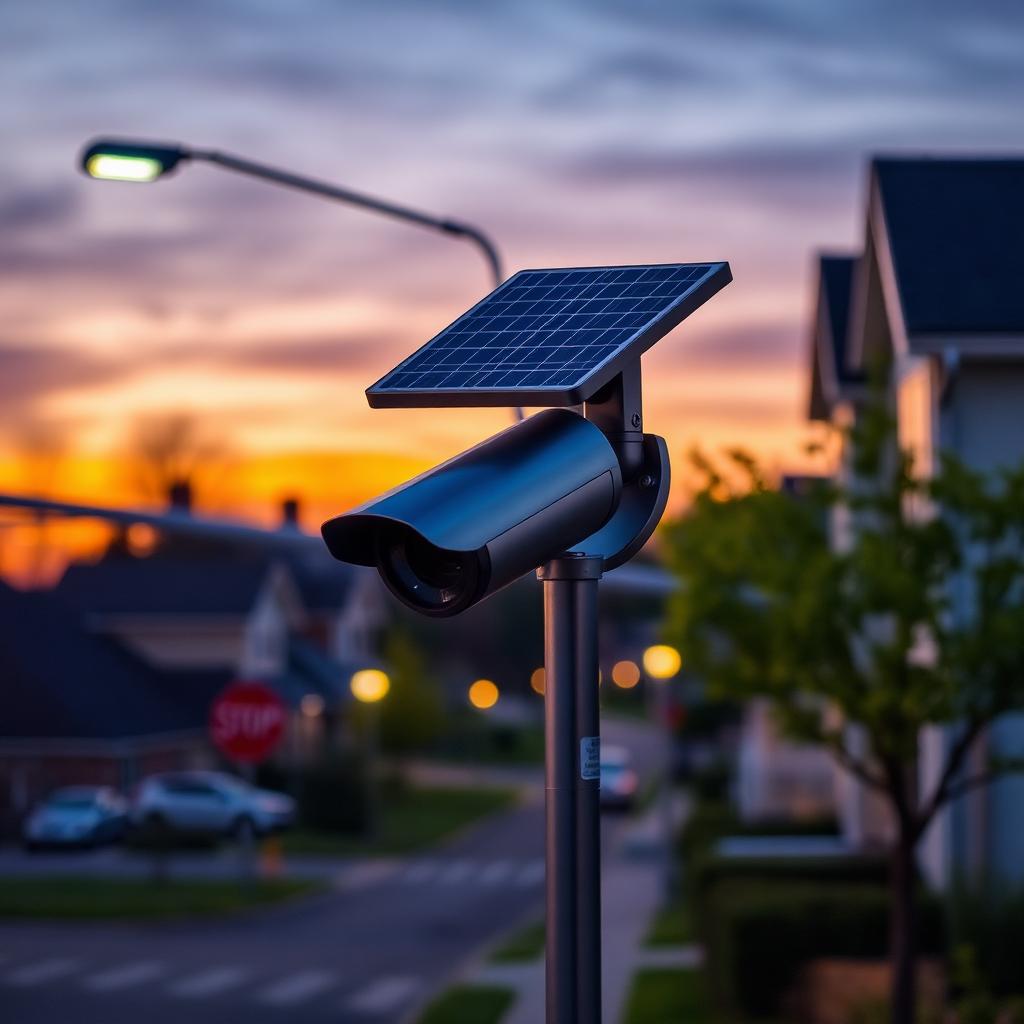
Flock Safety is a US technology company that builds solar powered, wireless surveillance cameras using Automated License Plate Recognition (ALPR) and a proprietary AI engine called Talon. The system reads every license plate that passes, captures dozens of secondary vehicle features (colour, make, model, scratches, roof racks, decals), and runs each capture against police hotlists in real time. If a vehicle matches, an alert reaches local law enforcement within seconds.
Flock cameras are now deployed in more than 5,000 communities and 2,000+ police departments across the US.
How a Flock camera works in real time
A Flock Falcon camera mounts on a metal pole at the entry of a neighbourhood, parking lot, or main road. The camera is solar powered, runs on cellular LTE, and operates without any wired infrastructure, which is why suburban HOAs and small towns can deploy them quickly.
The processing chain is the interesting part.
- Vehicle approaches. The camera triggers on motion in its field of view.
- Capture. A still image is taken at the moment of best angle, optimised for plate legibility under varied lighting.
- Talon AI extraction. The proprietary engine reads the plate characters, then extracts a "vehicle fingerprint" including colour, make, model, body type, the presence of roof racks, bumper stickers, distinctive damage, and aftermarket modifications.
- Hotlist comparison. The plate and fingerprint are checked against the FBI's NCIC database, Amber Alerts, Silver Alerts, stolen vehicle lists, and locally added watchlists.
- Notification. If there is a match, a real time alert lands in the dispatch software of the local agency, including the camera location, time, and a still image.
The entire chain typically completes in under 5 seconds.
Why "vehicle fingerprint" matters
The first generation of ALPR systems read the plate and stopped there. The problem is that plates get switched, stolen, or covered in dirt. By also capturing colour, make, model, and physical features, Flock can identify a vehicle even when its plate is unreadable. A stolen blue Honda Civic with a roof rack and a dented rear bumper still leaves a recognisable fingerprint in the system.
This is why investigators have used Flock data to solve hit and run incidents where only a partial plate was visible.
What else Flock builds
- Raven gunshot detection. Acoustic sensors that triangulate the location of gunfire and forward an alert to police, similar to ShotSpotter.
- Wing live video. Integration with municipal CCTV so officers can stream footage of an in progress incident.
- Flock OS. The platform that ties cameras, gunshot sensors, and live video into one investigation workspace.
The data retention rules
Flock's default retention policy is 30 days. After that window, plate reads and images are automatically deleted unless they have been flagged as evidence in an active investigation. Communities can shorten this window further in their contract.
Flock also publishes a Transparency Portal for participating agencies, which lets residents see how many searches were performed against the local network and what hotlists those searches checked.
The privacy debate
Civil liberties groups including the ACLU and EFF have raised three specific concerns about the model.
- Mass passive collection. Cameras read every plate, not just those associated with suspects. That means a record of where you drove, when, gets created whether or not you have done anything wrong.
- Cross jurisdiction sharing. Police departments can opt into a national lookup network, which means a search in one city can pull data from cameras in another, sometimes without the originating community's knowledge.
- Private installations. HOAs and businesses also install Flock cameras and can share their data with law enforcement. The legal framework for that consent is still being tested in court.
Flock's response is the 30 day deletion default, the public transparency portal, and a published code of conduct. Some cities (Sedona, AZ and others) have banned or restricted Flock deployments after public hearings.
What Flock has actually been used for
| Case type | How Flock helped |
|---|---|
| Amber Alerts | Real time notification when the suspect vehicle passes any camera in the network |
| Stolen vehicles | Flock has been credited in recovering tens of thousands of stolen cars annually |
| Silver Alerts (missing seniors) | Vehicle tracking to locate confused or wandering drivers |
| Hit and run investigations | Vehicle fingerprint matching when only a partial plate is visible |
| Cargo theft | Identifying suspect trucks moving between distribution centres |
FAQs about Flock Safety
Can I opt out of being captured?
Not in any practical sense. If you drive past a Flock camera on a public road, your plate is read. The only "opt out" is requesting that a captured image be expunged, which most agencies will not do without a legal basis.
Is Flock the same as red light or speed cameras?
No. Flock cameras do not issue tickets and are not connected to traffic enforcement. They are designed for investigative work, not revenue.
Who owns the data?
The agency or community that deployed the camera owns the captured data. Flock provides the platform but contractually does not sell or share customer data with third parties.
Does Flock use facial recognition?
No. Flock cameras are deliberately positioned and angled to capture vehicles, not faces, and the Talon AI engine does not include facial recognition.
The takeaway
Flock Safety is the most aggressive build-out of automated license plate recognition the US has ever seen. The technology is genuinely useful for amber alerts, stolen vehicles, and hit and run cases. The privacy concerns about mass passive collection and cross jurisdiction sharing are also genuine. The 30 day retention rule is the company's main concession; whether it is enough is the conversation every community installing Flock should be having before the camera goes up.
How communities decide to deploy Flock
Most Flock installations begin with a local HOA, business district, or city council vote. The contract pricing runs roughly 2,500 to 3,000 dollars per camera per year, including the hardware, software, and data hosting. A typical small town deploys 8 to 20 cameras at high traffic entry points. The decision usually comes after a wave of car break-ins or a single high profile incident.
What residents can do
If your community is considering Flock, the most useful questions to ask at the public hearing: what is our retention period (default 30 days, can be shorter), who in the community has access to the search portal, do we participate in the national lookup network, and what hotlists do we check by default. Each answer materially changes the privacy posture of the deployment.
The legal landscape
US courts have generally held that license plate reads on public roads do not violate the Fourth Amendment because plates are publicly visible. However, the aggregation of millions of plate reads into a searchable database has prompted active litigation in several states, with cases challenging both the duration of data retention and the cross jurisdiction sharing model. Expect the legal framework to evolve significantly between 2026 and 2028.
The future of the platform
Flock has signalled expansion into drone-based aerial surveillance, integration with private home security cameras (Ring, Nest), and deeper partnership with state DMV databases. Each of these moves expands the platform's investigative power and the privacy footprint at the same time. The conversation about where to draw the line is just getting started.