Quick Answer
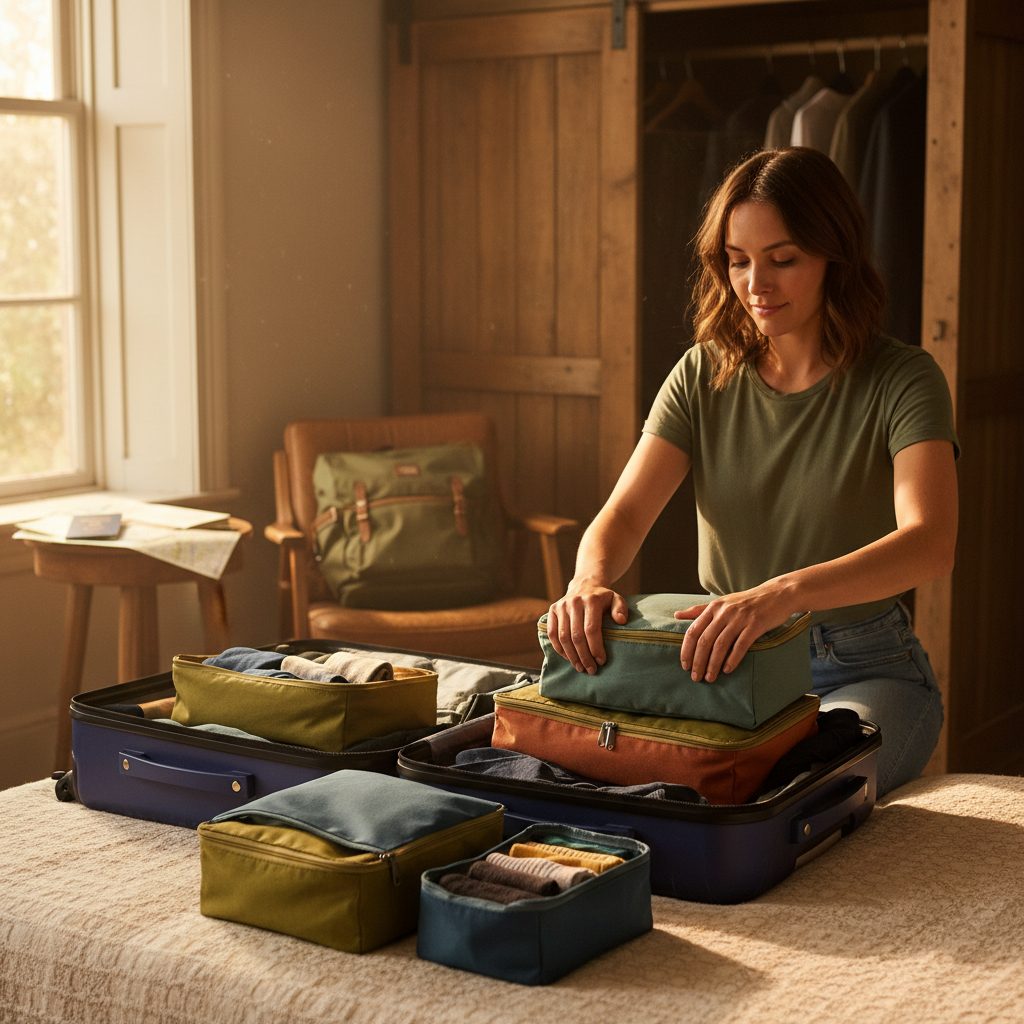
To use packing cubes effectively, you should assign each cube a specific category of clothing, such as tops in one and undergarments in another. I recommend rolling your clothes instead of folding them before placing them inside to maximize space and reduce wrinkles.
The goal is to treat each cube like a temporary drawer. When you arrive at your hotel, you simply lift the cubes out of your suitcase and place them directly into the dresser or onto a shelf. This system keeps your bag organized throughout your entire trip and prevents the dreaded suitcase explosion.
Choosing the Right Cube Sizes
The most common mistake I see travelers make is buying a set of cubes that are all the same size. For a standard carry on bag, you generally want a mix of one large, two medium, and two small cubes. A large cube is perfect for bulky items like sweaters or jeans, while small cubes are essential for socks and electronic cables.
I personally find that slim, long cubes are the best for filling the gaps between the handle rails at the bottom of a suitcase. Using a variety of sizes allows you to play a game of Tetris with your gear, ensuring every square inch of your luggage is utilized. Avoid oversized cubes that span the entire width of your bag, as they become heavy and difficult to manage.
Categorization Strategies for Better Organization
I have experimented with several ways to sort my gear, but two methods stand out as the most effective. The first is sorting by item type. This means all shirts go in one cube, all pants in another, and all gym wear in a third. This is ideal if you are staying in one location for a long time.
The second method is sorting by outfit or activity. If I am going on a hiking trip, I pack one cube with everything I need for the trail. If I have a formal event, I keep the suit, tie, and dress socks together. This prevents me from having to open every single cube just to find one pair of specific socks.
Rolling vs Folding Inside the Cubes
There is an ongoing debate about whether to roll or fold, but after years on the road, I am firmly on team rolling. Rolling your clothes tightly allows you to see every item at a glance when you unzip the lid. It also compresses the air out of the fabric, which lets you fit more into each container.
For items that wrinkle easily, like linen shirts or silk dresses, a flat fold is sometimes better. In those cases, I place the folded item at the very top of the cube after everything else is rolled. This creates a stable base and keeps the delicate items from shifting around during transit.
Compression Cubes vs Regular Cubes
Compression cubes feature an extra zipper that wraps around the side to squeeze out excess air. I use these when I am traveling with bulky winter gear or when I am trying to fit two weeks of clothes into a small backpack. They are incredible for saving physical space, but they do nothing to reduce the weight of your bag.
Regular cubes are better for organized travelers who are not worried about space. They are typically made of lighter mesh and help keep clothes breathable. If you overstuff a compression cube, your clothes will come out with deep creases, so I only use them for soft items like t-shirts, socks, and leggings.
Managing Dirty Laundry on the Move
One of the best ways to use packing cubes effectively is to designate one specifically for laundry. Many brands now sell dual sided cubes with a clean side and a waterproof dirty side. As you wear your clothes, move them from the clean cubes into the laundry cube.
This keeps your fresh clothes smelling good and makes it incredibly easy to do laundry mid trip. When I get home, I just take the laundry cube straight to the washing machine and dump it in. It eliminates the need for plastic grocery bags that often rip or leak odors into the rest of your luggage.
Using Cubes for Non Clothing Items
Do not limit yourself to just clothes. I use small cubes to organize my tech gear, including charging bricks, international adapters, and battery banks. Having a dedicated tech cube means I never have to fish around the bottom of my bag for a lightning cable.
- Toiletries: Small water resistant cubes are great for snacks or toiletries that might leak.
- First Aid: I keep a tiny cube with bandaids, aspirin, and prescriptions.
- Documents: A flat, small cube can hold a passport, printed reservations, and a pen.
- Shoes: Specialized shoe cubes keep the dirt from your soles away from your clean shirts.
Color Coding for Multiple Travelers
If you are traveling with a partner or children, color coding is a total game changer. I assign each person a specific color. For example, my cubes are all blue, and my partners are all red. Even if we share one large suitcase to save on checked bag fees, we never mix up our belongings.
This system also works well for solo travelers who want to separate their gear by function. I might use black cubes for everyday clothes and neon green cubes for my swimming and beach gear. The visual cue helps me find what I need in seconds, even in a dimly lit hotel room.
How to Pack the Suitcase
Once your cubes are filled, the way you place them in the bag matters. I put the heaviest cubes, usually containing jeans or shoes, near the wheels of the suitcase. This keeps the bag stable when it is standing upright and prevents it from toppling over.
Lighter cubes and soft items like jackets should go toward the top of the bag near the handle. If there are gaps between the cubes, I tuck in small items like a rain shell or a pair of flip flops. The goal is a snug fit where nothing moves when you shake the bag. A tight pack prevents the contents from shifting and creates fewer wrinkles.
Frequently Asked Questions
Do packing cubes actually save space?
Standard cubes primarily help with organization and visibility, but compression cubes can actually reduce the volume of your clothes by up to thirty percent by squeezing out air. If you use regular cubes, you might not save much space, but you will find that you can fit items more efficiently like a puzzle.
How do I stop my clothes from wrinkling in cubes?
The best way to prevent wrinkles is to roll your clothes tightly and ensure the cube is full enough that items cannot slide around. However, do not overstuff them to the point where the zippers are straining, as this creates deep pressure creases that are hard to remove without an iron.
Can you wash packing cubes?
Most cubes are made of nylon or polyester and can be hand washed in a sink with mild soap and hung to dry. I avoid putting them in the washing machine or dryer because the high heat can damage the zippers or the mesh panels over time.
Are expensive packing cubes worth the money?
While budget cubes work for occasional trips, premium brands often use better zippers and more durable, lightweight fabrics. If you travel frequently, investing in a set with high quality YKK zippers is worth it because cheap zippers are usually the first thing to break on a trip.
How many cubes do I need for a week long trip?
For a typical seven day trip, I usually recommend a four piece set consisting of one large, two medium, and one small cube. This allows you to separate your tops, bottoms, undergarments, and a laundry bag without adding too much weight to your luggage.
Final Tips for Success
Always leave a little bit of breathing room in at least one cube. You will likely pick up a souvenir or a new shirt during your travels, and having that extra bit of flex space makes packing for the return journey much less stressful. I also recommend labeling your cubes if they do not have mesh windows.
Using packing cubes effectively is all about creating a system that works for your specific travel style. Once you start using them, it is very hard to go back to a messy suitcase. They bring a sense of order to the chaos of travel and let you focus on the experience rather than searching for a clean pair of socks.