Quick Answer
To use a hotel safe correctly, you first need to clear any previous codes by hitting the reset or clear button with the door open. Enter your own four to six digit code, close the door, and press the lock or pound button to secure it. Always test the code one time while the door is still open to ensure the mechanism engages and retracts as expected.
I recommend using a unique code that is not your birthday or room number for better security. If the safe fails to open, you must call the front desk to have security or maintenance use a master override key or electronic device to bypass the lock.
Checking the Safe Before Use
The first thing I do when I walk into a hotel room is check the safe for any items left behind by the previous guest. You would be surprised how often people forget a passport or a stack of cash in the dark corners of these small metal boxes. If the door is locked when you arrive, call the front desk immediately so they can reset it for you.
Inspect the interior to make sure it is clean and that the keypad buttons are not sticky or damaged. I also check the mounting of the safe. A safe is only useful if it is bolted to the wall or the floor. Give it a firm tug to ensure it is not just sitting loosely on a wooden shelf, which would allow a thief to simply carry the entire unit out of the room.
Finally, look for a low battery indicator on the digital display. If the screen flashes a warning or the motor sounds sluggish, ask for a battery change before you lock your valuables inside. You do not want the batteries to die right when you are rushing to catch a flight to the airport.
Setting Your Personal Combination
Most modern hotel safes use a digital keypad that allows you to set a fresh code every time you lock it. To start, keep the door open and press the clear or reset button. This clears any lingering temporary memory from the system. Decide on a code that you can remember easily but that is not obvious to others.
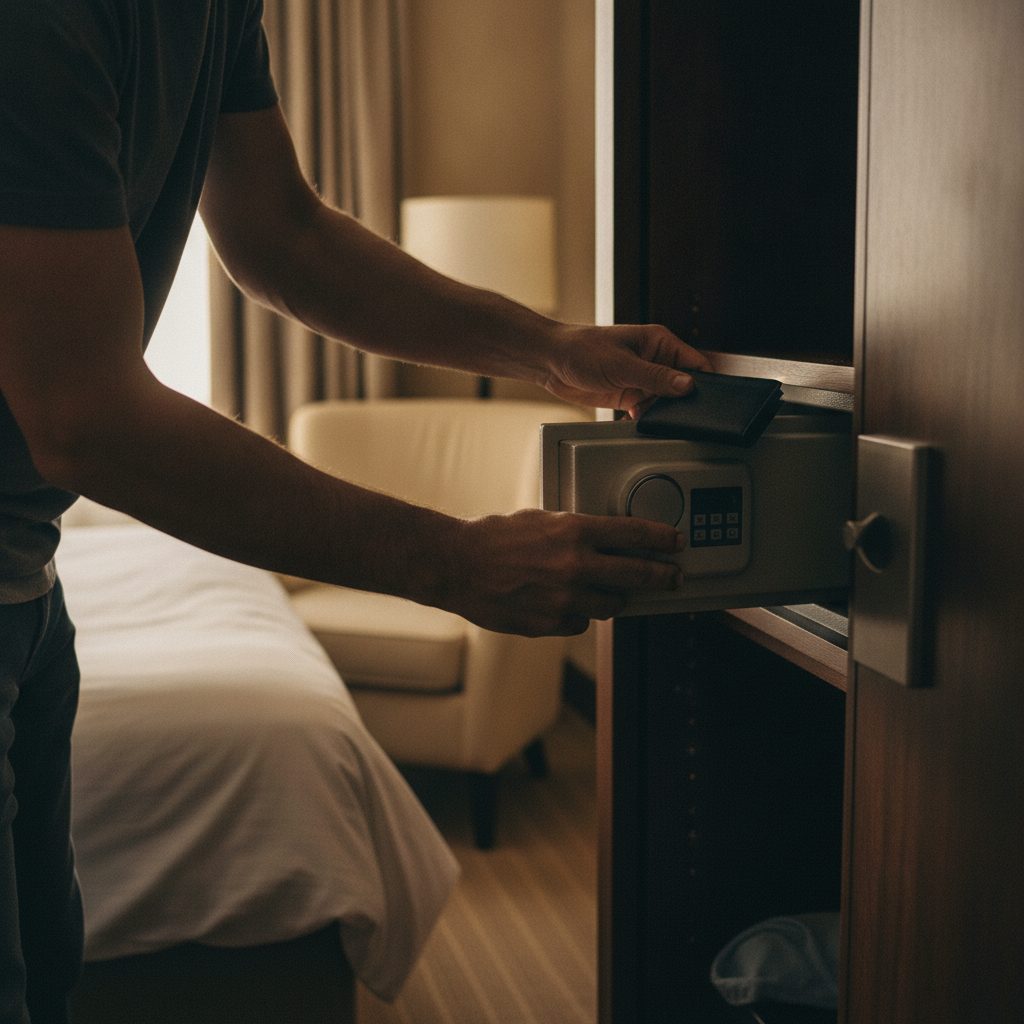
Type in your code, which is usually four or six digits long. Some models require you to press a lock button or the pound sign after entering the numbers. I always perform a dry run. With the door still wide open, I enter my code to see if the locking bolts extend. Then I enter the code again to see them retract. Doing this once while the door is open prevents an accidental lockout due to a keypad malfunction.
Avoid using numbers like 1234, 0000, or your actual room number. These are the first things a dishonest person will try. I personally use a combination of digits from a phone number I have known since childhood. It is permanent in my memory but has no connection to the hotel where I am staying.
What to Store Inside
The hotel safe is the best place for small, high value items that you do not need to carry with you during the day. I generally prioritize things that are difficult to replace. While a hotel is not liable for most losses, keeping items out of sight reduces the temptation for anyone entering your room while you are out.
- Passports and extra travel documents.
- Spare cash and emergency credit cards.
- Expensive jewelry or watches you are not currently wearing.
- Small electronics like tablets or backup hard drives.
- Physical keys to your home or car back at the airport.
If you are traveling with a large laptop, it might not fit in a standard room safe. In that case, I use a high quality laptop cable lock to secure the device to a piece of heavy furniture. Do not try to force a large item into the safe because you might jam the locking mechanism from the inside.
Proactive Tips for Security
I never leave my safe code written down on the notepad provided by the hotel. If you are worried about forgetting it, store the number in a secure, password protected app on your phone. However, avoid naming the entry hotel safe code. Use a fake name like gym locker or old phone number to keep it discreet.
Take a quick photo of the items you place inside the safe. This serves as a mental inventory for when you are packing to leave. It also provides a record of what was there in the unlikely event of a security breach. I find that a quick snap of my passport and wallet inside the safe gives me peace of mind throughout the trip.
Before you close the door for the final time, double check that nothing is blocking the path of the bolts. A stray strap from a camera or a thick jewelry box can prevent the door from sealing correctly. If the safe detects an obstruction, it might enter an error mode that requires a technician to fix.
Handling a Lockout Situation
Getting locked out of your safe is a stressful experience, but it happens more often than you might think. Whether the batteries died or you simply forgot the code, the solution is the same. You must contact the hotel front desk or guest services. Do not try to pry the door open with a tool, as you will likely be charged for the damage to the unit.
The hotel will send a security officer or a maintenance worker to your room. For security reasons, they will usually ask to see your identification to prove you are the registered guest for that room. They use a master code, a physical override key, or a specialized handheld computer to bypass your personal combination.
I always stay in the room while they open the safe. Once it is open, verify that all your belongings are still there. If the lockout was caused by a mechanical failure, ask for a different room or have them replace the safe unit entirely. I usually offer a small tip to the staff member who helps, as this task often takes them away from other duties.
Leaving the Safe at Check Out
The biggest mistake travelers make is forgetting their valuables in the safe on the day they check out. Because the safe is often tucked away in a closet or under a desk, it is easy to overlook. I have a specific routine to prevent this. I place one of my shoes inside the safe or right next to it. Since I cannot leave the room without both shoes, I am forced to check the safe.
Another trick I use is setting a calendar reminder on my phone for thirty minutes before my scheduled departure. This reminder specifically tells me to check the safe for my passport and remaining cash. It takes away the last minute rush that causes most people to forget their most important items.
When you finally empty the safe, leave the door wide open. This signals to the housekeeping staff that the safe is empty and ready for the next guest. It also prevents the next traveler from arriving to a locked safe that requires a maintenance call. Double check the very back corners of the safe one last time before you walk out the door.
Frequently Asked Questions
Is a hotel safe actually secure against theft?
While no safe is completely impenetrable, a hotel safe provides a strong deterrent against casual theft and keeps your items out of sight from anyone entering your room. It is much safer than leaving cash or a passport lying on a nightstand or hidden under a mattress.
Can the hotel staff open my safe without me?
Yes, designated management and security personnel have access to master keys or digital override codes for emergencies or lockouts. However, reputable hotels have strict protocols and logs to track whenever an override is used to ensure guest privacy and security.
What should I do if the safe does not work when I arrive?
If the safe is locked or the keypad does not respond when you first check in, notify the front desk immediately. They will send a technician to reset the system so you can set your own code, as the previous guest likely forgot to leave it open.
Will my laptop fit inside a standard hotel safe?
Most modern hotel safes are designed to fit a standard thirteen inch or fifteen inch laptop, but older units may only be large enough for a tablet or small electronics. If your laptop is too large, I recommend using a cable lock or asking the front desk to use the hotel main floor secure vault.
Do hotels charge a fee for using the in room safe?
Some hotels, particularly in high traffic tourist areas, may charge a daily safe fee that is often bundled into the resort fee or listed as a separate line item. I always check my final bill to see if this charge is included, as some hotels will remove it if you declare you did not use the safe.
Final Thoughts on Safe Usage
Using a hotel safe is a simple habit that goes a long way in protecting your trip. It only takes a minute to set a code and lock away your documents, but it can save you days of headache if your wallet or passport were to go missing. I always make it a priority once I drop my bags in a new room.
Remember to stay organized and keep a mental note of everything you put inside. By testing the code before you lock the door and using the shoe trick to remember your items, you will be ahead of most travelers. Safe travels and keep your valuables tucked away securely.