Quick Answer
Plan on roughly a third of a pound of cooked protein per adult, two sides per person, and one and a half drinks per person per hour. For twenty guests that is about eight pounds of raw meat, two large sides, one salad and a cooler of ice you will underestimate.
Cook to temperature, not to time: 165F for poultry, 160F for ground beef, 145F with a three minute rest for whole cuts and fish.
The single rule that prevents a bad ending is the two hour window. Perishable food left out longer than two hours, or one hour when it is above 90F outside, goes in the bin rather than back in the fridge.
How Much Food to Actually Buy
The way to plan a Labor Day cookout for a crowd without stress is to settle the quantities first, because every other decision follows from them.
Most cookout stress comes from guessing quantities in the shop and then panic-buying a second round. Work from per-person numbers instead.
| Item | Per adult | For 20 guests |
|---|---|---|
| Raw protein (burgers, chicken, sausage) | 6 to 8 oz | 8 to 10 lb total |
| Buns and rolls | 1.5 | 30 |
| Cold salad or slaw | 4 oz | 5 lb |
| Starchy side (potato salad, pasta) | 4 oz | 5 lb |
| Drinks | 1.5 per hour | Plan by event length |
| Ice | 1 to 2 lb | 30 lb |
Two things almost everyone under-buys: ice and buns. Ice does double duty, chilling drinks in one cooler and keeping raw meat cold in another, and it disappears fastest on the hottest afternoon of the year.
Children count as roughly half an adult for protein but a full adult for drinks and dessert. Teenagers count as one and a half of everything.
The Timing Plan That Keeps the Grill Sane
A grill can only hold so much at once, so the order of cooking matters more than the recipes.
- Two days out. Shop, and make anything that improves overnight: slaw dressing, marinades, dips, dessert bases.
- The night before. Trim and season the meat, chill drinks, freeze extra water bottles to use as cooler ballast that becomes drinking water later.
- Three hours out. Cook the slow items first: bone-in chicken, ribs, anything that needs indirect heat. They hold well covered in a low oven.
- One hour out. Set up the drinks station away from the grill so people stop crowding the cook.
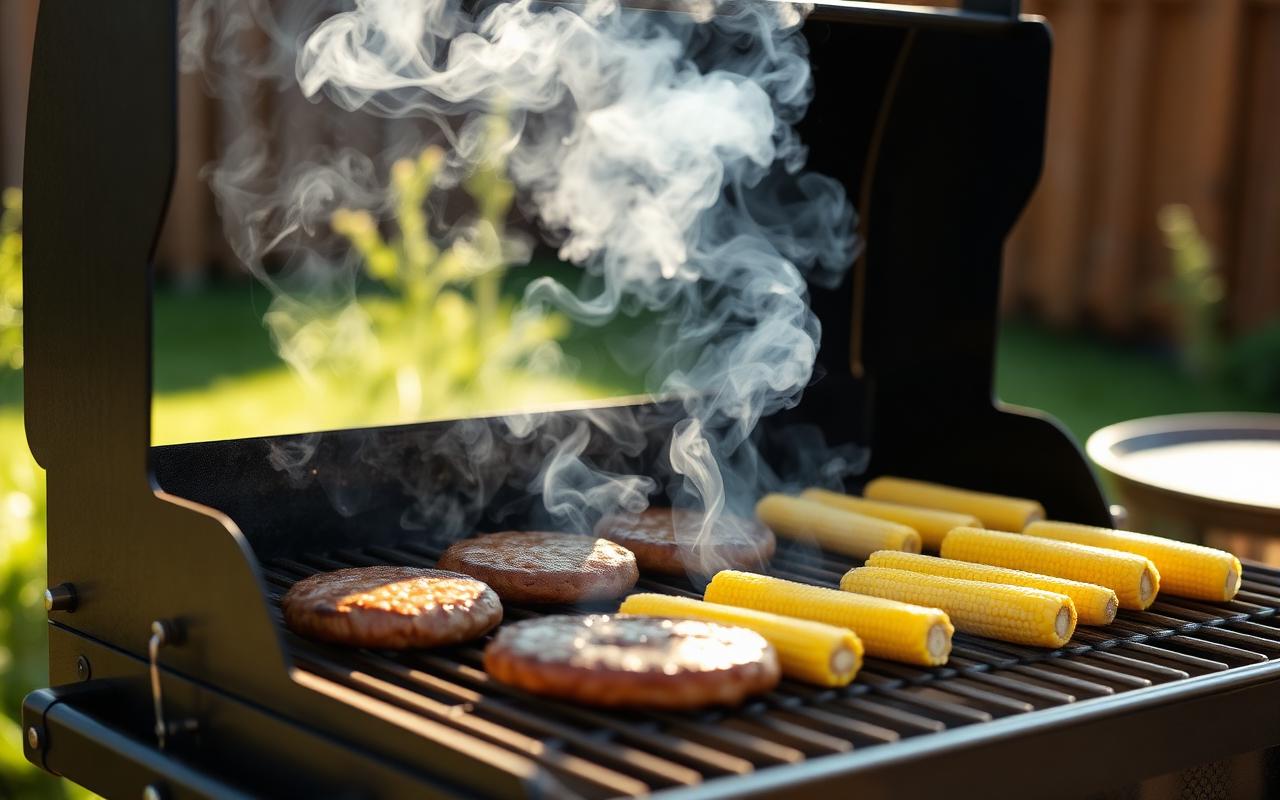
- Fifteen minutes out. Sear the fast items: burgers, sausages, vegetables, shrimp.
Set the grill up with two zones, one directly over the heat and one without. Thick cuts start on the cool side and finish over the flame, which is the difference between a charred outside with a raw middle and something people go back for.
The Temperatures That Matter
Colour is not doneness. A burger can brown at 135F and stay pink at 170F depending on the meat, so an instant-read thermometer is the cheapest insurance at any cookout.
| Food | Safe internal temperature | Note |
|---|---|---|
| Chicken and turkey, all cuts | 165F | Measure the thickest part, away from bone |
| Ground beef, pork, lamb | 160F | Applies to burgers and sausage patties |
| Steaks, chops, roasts | 145F plus 3 minute rest | Rest time is part of the safety step |
| Fish and shellfish | 145F | Or until flesh is opaque and flakes |
| Hot dogs and precooked sausage | 165F or steaming hot | Reheating, not cooking |
| Leftovers reheated | 165F | Reheat once only |
Use a clean plate for cooked food. The plate that carried raw chicken to the grill is the most common cause of a cookout that ends badly two days later.
The Two Hour Rule and Late Summer Heat
Bacteria multiply fastest between 40F and 140F. Outdoors on a hot afternoon, a bowl of potato salad passes through that range within minutes of leaving the fridge.
The practical version is simple. Put out half of each cold side and keep the rest chilled, then swap the bowls halfway through rather than topping up a bowl that has been sitting out. Nest cold dishes in a shallow tray of ice. Keep hot dishes covered and above 140F, or bring them out in waves as people eat.
After two hours out, or one hour when it is above 90F, that food is done. Not fridge-worthy, not tomorrow's lunch. Cooking a slightly smaller amount and serving it in two rounds wastes less than making a huge batch you have to throw away.
Drinks, Coolers and the Ice Problem
Run at least two coolers. One holds raw meat, sealed and packed at the bottom, and is opened rarely. The other holds drinks and gets opened every ninety seconds by guests, which is exactly why raw protein should never share it.
Cool drinks before they go into the cooler. A warm case of cans dumped onto ice melts most of that ice within the hour, whereas pre-chilled drinks hold for most of the afternoon. Add a bag of ice to the drinks cooler mid-afternoon rather than all at the start.
For non-drinkers and children, one large dispenser of something interesting, iced tea with citrus or a lightly sweetened lemonade, does more for the atmosphere than a dozen bottles nobody opens.
Setting Up the Space
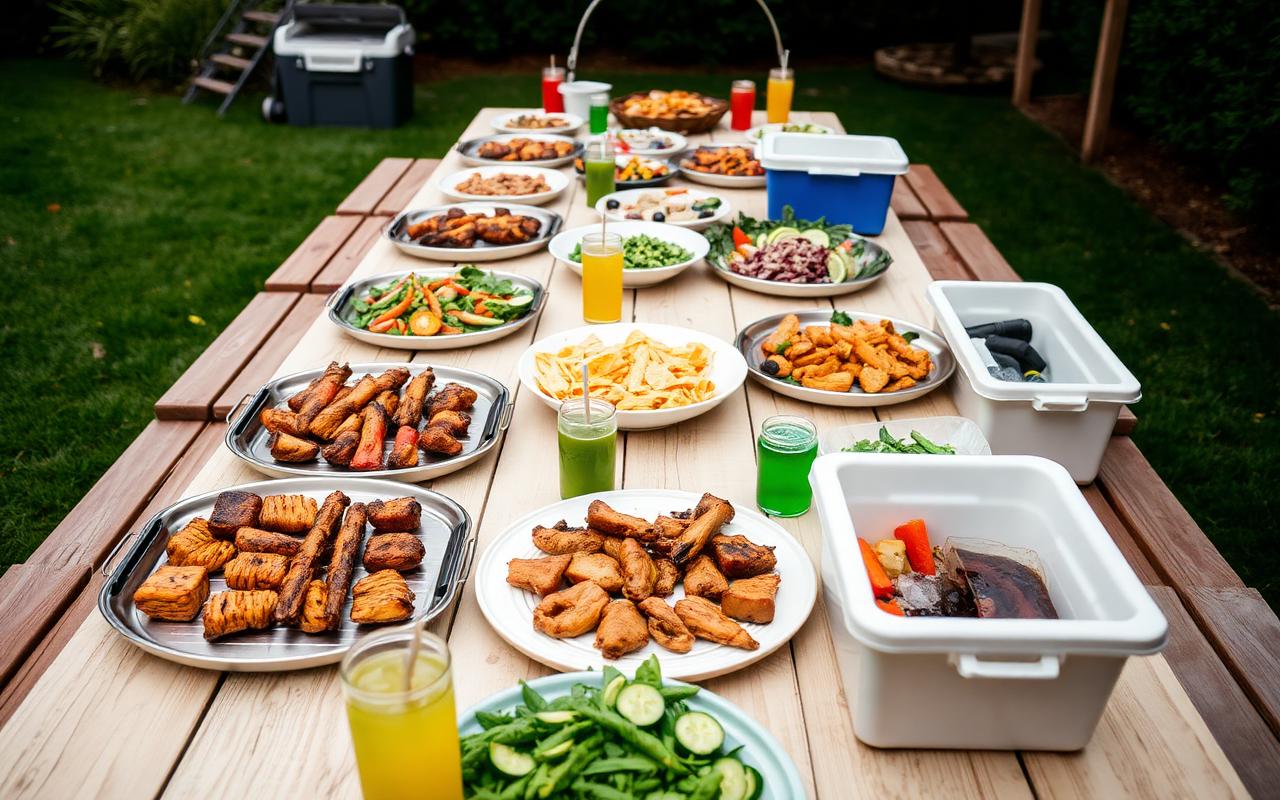
Traffic flow is what separates a relaxed party from a scrum in the kitchen. Put the drinks at the far end of the garden, the food table in the middle, and the grill somewhere people can talk to the cook without standing in the smoke.
Have a shaded seating area if the forecast is hot. Late August sun at midday is punishing, and a single canopy or a cluster of chairs under a tree keeps people outside instead of drifting indoors.
Set out a bin and a recycling bin where people can see them, plus a small bowl of hand sanitiser near the food table. Both save the host an hour of clean-up.
Making It Cheaper Without Making It Worse
Protein is where the money goes. Chicken thighs, pork shoulder cut into steaks and good sausages all cost far less per person than steak and forgive being cooked for a crowd. Bulk out the table with grilled vegetables, corn and a large grain salad, which cost pennies and disappear.
Ask guests to bring a drink or a dessert rather than a main. Most people want to contribute, and the two categories that scale worst for a host are exactly the two guests can handle easily.
Frequently Asked Questions
How much meat do you need per person at a cookout?
Roughly six to eight ounces raw per adult, which is about half a pound of cooked food once shrinkage is accounted for.
How long can food safely sit out at a cookout?
Two hours, or one hour if the temperature is above 90F, according to FoodSafety.gov guidance.
What temperature should burgers be cooked to?
160F internal for ground beef. Colour is not a reliable indicator of doneness.
Can you reuse the plate that held raw meat?
No. Use a separate clean plate for cooked food, and wash utensils that touched raw protein.
How much ice should you buy?
Plan one to two pounds per guest, split across a drinks cooler and a cold-storage cooler.
What can you make ahead?
Slaws, marinades, dips, dressings and desserts all hold or improve overnight, which leaves only grilling for the day itself.