Quick Answer
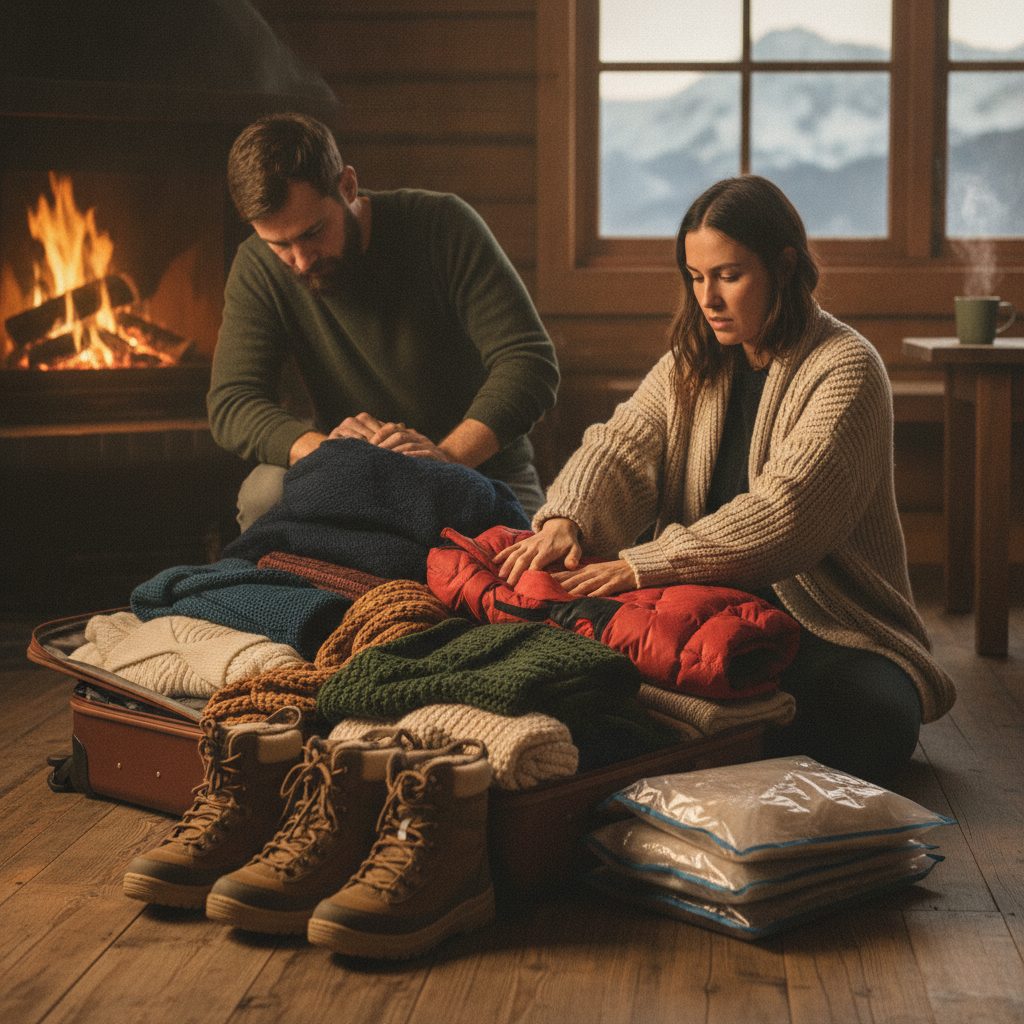
To pack bulky winter clothes without blowing your luggage weight limit, you need a combination of compression tools and strategic layering. I always use vacuum sealing bags for puffer jackets and heavy sweaters because they can reduce the volume of those items by up to 70 percent.
The "wear your heaviest items" rule is the most important tip I can give you. I always wear my thickest parka, heaviest boots, and a scarf on the plane to keep my suitcase light and open for other essentials. This trick alone can save you five to ten pounds of packing space.
The Magic of Compression Bags and Cubes
I swear by vacuum compression bags for any trip involving deep winter gear. These are different from standard packing cubes because they actually remove the air trapped within the fibers of your down jackets and fleece layers. You do not always need a vacuum, as many brands now make "roll-up" style bags that push air out through a one-way valve.
Standard packing cubes are still useful for mid-weight items like thermal leggings and wool socks. I find that rectangles are easier to stack than loose piles of clothes. If you use cubes, try the "ranger roll" method to fit more items into each small pouch.
Be careful not to overstuff these bags though. Just because you can fit four heavy sweaters into one compressed bag does not mean the weight of those sweaters disappears. I always keep a small luggage scale handy so I do not get surprised at the check-in counter.
Mastering the Art of Down and Puffer Jackets
Down jackets are incredibly warm but they are essentially big bags of air. To pack them, I look for "packable" versions that come with their own tiny stuff sack. If yours does not have one, you can use a large rubber band or a gallon-sized freezer bag to keep it tightly coiled.
I recommend rolling puffer jackets from the bottom up toward the hood. Once you have a tight cylinder, tuck it into the hood and pull the drawstrings tight. This creates a compact bundle that behaves like a small pillow in your suitcase.
If your puffer is too high-end to be crushed for long periods, consider carrying it over your arm during boarding. Most airlines do not count a jacket held in your hand as a personal item or a carry-on. Once you get to your seat, you can usually tuck it into the overhead bin on top of the suitcases.
How to Pack Heavy Winter Boots
Boots are the biggest space-killers in any suitcase. My first rule is to never pack them if you can help it. If I am heading to a snowy climate, I wear my waterproof hiking or snow boots through security, even if they are a bit annoying to take off. It is worth the extra room in the bag.
If you must pack a second pair of boots, use the "nested" method. I stuff my socks, gloves, and even small electronics inside the boots. This prevents the boots from getting crushed and utilizes every square inch of dead space inside the footwear.
I always place boots at the very bottom of the suitcase near the wheels. This keeps the center of gravity low so the bag stays upright when you are standing in line. Make sure to put them in a plastic grocery bag or a shoe bag to keep salt and slush from ruining your clean clothes.
Selecting the Right Fabrics for Warmth
I have learned that packing less is often about packing smarter materials. I avoid thick cotton hoodies because they are heavy, bulky, and do not provide much warmth if they get damp. Instead, I focus on merino wool and synthetic blends.
Merino wool is my secret weapon for winter travel. It is thin, moisture-wicking, and naturally odor-resistant. I can wear a merino base layer for several days without it smelling, which means I only need to pack two instead of five. This significantly cuts down on the physical volume of my luggage.
Fleece is another great option, but it can be surprisingly bulky. I look for "high-loft" fleece which offers more warmth for less thickness. When folding these, I use the flat fold method rather than rolling, as rolls of fleece tend to become too thick for standard suitcase depths.
The Layering System Strategy
I never pack "one big outfit" for each day. Instead, I pack three distinct layers that I can mix and match. This reduces the number of heavy items I need to bring. My standard winter kit includes a silk or wool base layer, a thin cardigan or fleece, and a windproof outer shell.
- Base Layers: Pack at least three sets of thermal tops and bottoms. These take up almost no room.
- Mid-Layers: Bring two sweaters that look good enough for dinner but are warm enough for hiking.
- Outer Layer: One high-quality jacket that you wear on the plane.
- Accessories: Two hats, two pairs of gloves, and one heavy scarf.
By using this system, I can stay warm in sub-zero temperatures without needing a massive trunk. I prioritize items that can be worn in multiple settings, like a black down vest that works under a coat or over a long-sleeved shirt.
Dealing with Heavy Accessories
Gloves, hats, and scarves may seem small, but they add up. I like to tuck my gloves inside my hats to keep sets together. If I am really tight on space, I use the "dead space" trick where I tuck these small items into the gaps between the structural bars of my rolling suitcase.
Scarves are particularly tricky because they can be very long and thick. I recommend wearing your thickest scarf as an infinity loop on the plane. It doubles as a great travel pillow when you are trying to sleep on a long flight. If you pack it, lay it flat across the top of everything else right before you zip the bag shut.
I also suggest bringing "tech" gloves that have touch-screen fingertips. This prevents you from having to take them off and risk losing them in the snow or on public transit. I always keep a spare pair of cheap liners in my pocket just in case I lose one of my primary gloves.
Utilizing the Personal Item Bag
When my suitcase is full, I turn to my backpack or tote. I use this space for the "dense" items that might make my main suitcase over the weight limit. I find that heavy sweaters or a laptop can go in the personal item bag since these are rarely weighed by gate agents.
I also keep my most important winter accessories in my backpack. If the airline loses my checked bag, I still have my hat, gloves, and a fresh pair of wool socks. It is a small insurance policy that makes a big difference if you land in a blizzard without your luggage.
Make sure your personal item is still comfortable to carry. If you fill a backpack with three heavy wool sweaters, it can become quite heavy for a long walk through terminal transitions. I try to balance the weight so I am not struggling while navigating the airport.
Frequently Asked Questions
Will vacuum bags damage my expensive down jacket?
Generally, no, but you should not leave the jacket compressed for months at a time. I only keep mine sucked flat for the duration of the flight and the trip back, then I hang it up as soon as I get home to let the feathers loft up again.
Should I roll or fold my thickest winter sweaters?
I find that folding is actually better for very thick knits. Rolling creates a "log" that is often too tall for the suitcase lid to close over. Lay them flat and use the "interlocking" method where the sleeves hold the next sweater in place.
How many pairs of wool socks do I really need for a week?
I usually pack four pairs of high-quality merino wool socks for a seven-day trip. Since wool does not hold odors like cotton, you can easily wear each pair twice, especially if you let them air out overnight between uses.
What is the best way to pack a heavy winter coat if I do not want to wear it?
If you absolutely refuse to wear it, use a compression sack. If that is not an option, lay the coat flat at the very bottom of the suitcase with the arms folded inward. This creates a cushioned base for the rest of your items.
Is it better to use a hard-side or soft-side suitcase for winter gear?
I prefer soft-side luggage for winter travel. Soft-side bags usually have a bit more "give" and external pockets, which is helpful when you are trying to squeeze in that one last bulky fleece or an extra pair of gloves.
Summary of Pro Packing Tips
Packing for cold weather is all about managing volume. I focus on wearing the heaviest pieces, using compression technology, and sticking to high-performance fabrics like wool over bulky cotton. If you follow these steps, you can easily fit a full winter wardrobe into a standard carry-on or a medium checked bag.
Remember to always check the weather for your specific destination. Sometimes "winter" in London is just chilly and damp, while "winter" in Montreal is a different beast entirely. Tailor your layers to the actual forecast so you do not pack more bulk than you really need.
Finally, do not forget to leave a little room for souvenirs. I often find that I buy a local scarf or sweater on my trips, so I try to leave at least ten percent of my suitcase empty when I head out. Happy travels and stay warm out there!