Quick Answer
If you are traveling internationally, the quick rule is that a power adapter changes the shape of the plug, while a voltage converter changes the electrical current. You need an adapter for almost every foreign trip to ensure your electronics physically fit into the wall. You only need a converter if your device is not dual voltage and cannot handle the higher local electricity without burning out.
Most modern electronics like iPhones, MacBooks, and Kindle readers are dual voltage. This means you only need a cheap, plastic plug adapter. However, high heat items like hair dryers or older kitchen appliances often require a heavy voltage converter to prevent the internal wiring from melting or catching fire. When in doubt, always check the tiny print on your device power brick for the input range of 100 to 240 volts.
Checking Your Device Voltage
Before you pack a single thing, you must look at your power labels. I always grab my phone charger and laptop brick first to check the fine print. You are looking for the word Input. If it says something like 100V to 240V, your device is dual voltage. This is standard for almost all portable tech sold in the United States today. These items do not need a voltage converter.
If your device only lists a single number, like 110V or 120V, it is a single voltage device. These are risky to bring abroad to places like Europe or Asia where the standard is 230V. Plugging a 110V hair straightener into a 230V socket without a converter will likely result in a pop, a puff of smoke, and a broken tool. I generally recommend leaving single voltage items at home and buying a cheap version at your destination instead.
The Simple Role of the Power Adapter
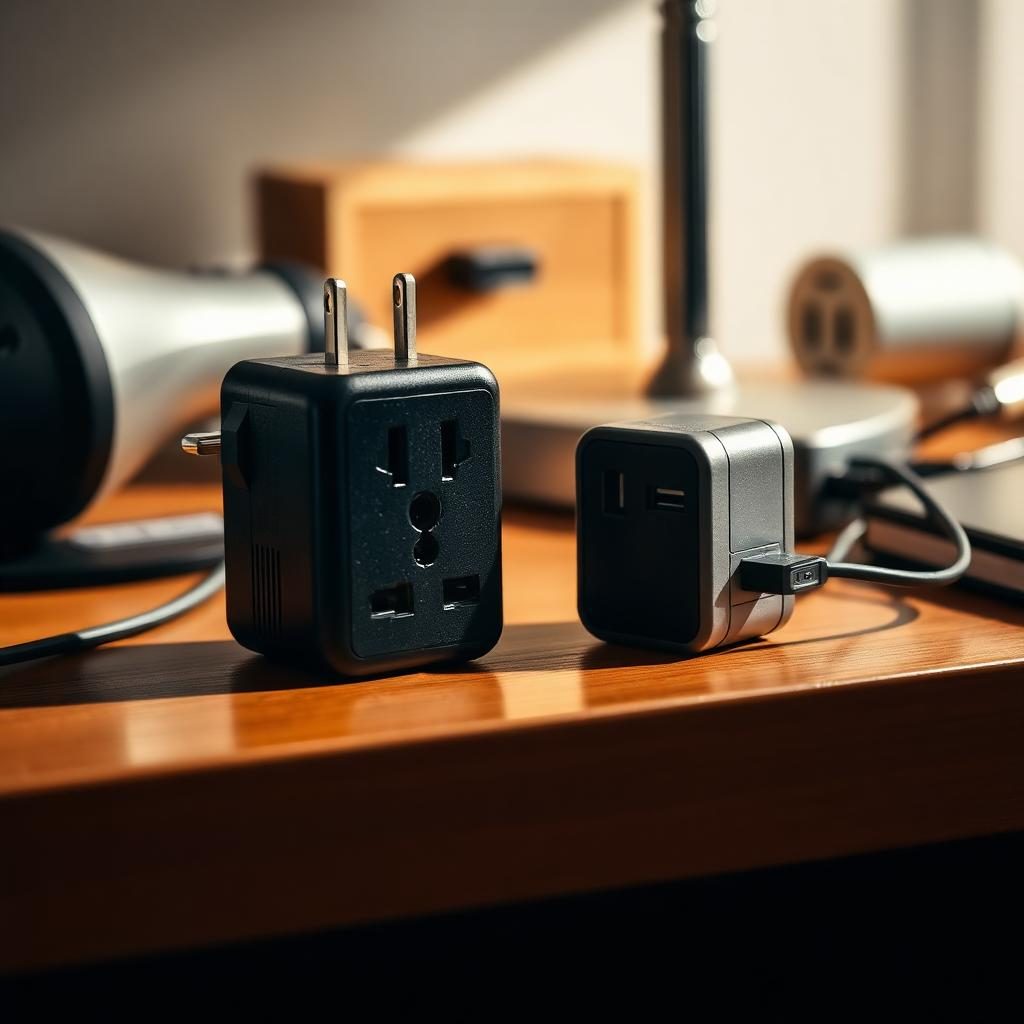
Think of a power adapter as a physical bridge. It does not do anything to the electricity itself. Its only job is to move the pins on your plug so they match the shape of the holes in the wall. Different regions use different letters for these shapes. For example, North America uses Type A and B, while most of Europe uses Type C, E, or F. The UK uses a bulky three prong Type G plug.
Since adapters are just plastic and metal pins, they are very lightweight. I usually pack a small kit that includes three or four different shapes. You can also buy universal adapters that have sliding components to fit multiple countries. These are my favorite for multi country trips because they take up less space in my carry on bag than four individual plugs. Just remember that putting an adapter on a US hair dryer does not make it safe for 230V power.
Understanding Voltage Converters and Transformers
Voltage converters are much more complex and heavy than adapters. They use internal components to step down the electricity from 230V to 110V so your American gear thinks it is still at home. There are two main types: converters and transformers. Converters are usually used for short periods with high heat items, while transformers are for long term use with electronics. Transformers are incredibly heavy and I almost never recommend packing them for a vacation.
If you decide you absolutely must bring a non dual voltage item, you need to check the wattage. A converter must be rated high enough to handle the power draw of your device. A hair dryer might pull 1800 watts, which requires a very large and expensive converter. In my experience, these devices are prone to failing. I have seen many hotel rooms lose power because a guest tried to use a cheap converter on a high wattage styling tool.
Common Trap: Hair Dryers and Curling Irons
I cannot stress this enough: hair tools are the number one cause of electrical issues for travelers. Even if a curling iron says it is dual voltage, the high heat can sometimes behave differently on foreign power grids. I have had friends melt their expensive styling wands in London even with the correct adapter. If your tool has a physical switch to toggle between 110 and 240, make sure you flip it before you plug it in.
The best solution I have found is to buy a dedicated travel hair dryer that is designed for global use. Alternatively, most hotels provides a hair dryer for free. If you are staying at an Airbnb, message the host to confirm. It is much easier to spend twenty dollars on a local curling iron at a pharmacy in Paris than it is to lug a heavy voltage converter across the continent.
What to Pack for Different Regions
- For the UK and Ireland: You need a Type G adapter with three rectangular prongs. It is chunky and often has a built in fuse.
- For most of Europe: You need the Type C Europlug. It has two round prongs and fits into almost every European socket.
- For Australia and New Zealand: These countries use Type I, which features two flat pins set in a V shape and a vertical grounding pin.
- For Japan: They use Type A, which looks like the North American plug but usually lacks the round grounding pin.
The One Universal Adapter I Recommend
I have switched almost entirely to a high wattage GaN (Gallium Nitride) universal adapter. These are modern devices that act as both a plug adapter and a multi port USB charger. Because they use GaN technology, they stay cool even when charging a laptop and a phone at the same time. The best versions have sliding toggles that cover the UK, Europe, Australia, and the US in one single block.
When you pack one of these, you can often leave your individual phone charging bricks at home. Just bring the USB cables. This saves a massive amount of space in your tech pouch. Just keep in mind that even these fancy universal adapters do not convert voltage for the AC outlet on the front. They only convert the voltage for the USB ports. You still need to be careful with whatever you plug into the main three prong socket.
Packing Tips for Electrical Gear
I always pack my adapters in a clear mesh pouch. This makes it easy for TSA to see what the electronics are without digging through my bag. I also keep one adapter in my personal item rather than my checked luggage. You never know when you will have a long layover in a foreign airport and need to charge your phone before you reach your hotel. An adapter is useless if it is sitting in the cargo hold of the plane.
Another trick I use is bringing a small US power strip. If you have five things to charge but only one foreign adapter, you can plug the adapter into the wall, the power strip into the adapter, and then all your US plugs into the strip. Just make sure the power strip does not have surge protection. Surge protectors designed for 110V can actually catch fire when plugged into 230V outlets, even with an adapter.
Frequently Asked Questions
Does an iPhone need a voltage converter in Europe?
No, every iPhone charger made by Apple is dual voltage and only requires a physical plug adapter to fit the wall.
Can I use a US power strip with a plug adapter?
Only if the power strip is not a surge protector, as surge protectors can overheat on 230V systems; a basic, non protected strip is generally safer but still carries risks.
How do I know if my hair straightener is dual voltage?
Look for the label near the base of the cord or on the handle; it must say 100 to 240V to be safe for international use.
Is a transformer the same thing as a converter?
Not exactly, as transformers are designed for continuous use with sensitive electronics while converters are intended for short bursts with simple heating appliances.
Where can I buy an adapter if I forgot one?
Most international airports sell them at a premium, or you can find them at local electronics stores and large pharmacies once you land.
Final Checklist Before You Go
To wrap things up, your preparation should start with a look at every device you plan to bring. Sort them into two piles: those that are dual voltage and those that are not. If it is dual voltage, you just need a cheap adapter for the specific country you are visiting. If it is not, leave it behind or prepare to buy a voltage converter. I highly suggest reaching for the former option whenever possible to keep your suitcase light.
I also recommend testing your adapters before you leave. Sometimes cheap ones from the internet can have loose pins that fall out of the wall. Stick with reputable brands to ensure your electronics stay safe. Once you have your tech kit organized, you can focus on the fun parts of the trip without worrying about frying your favorite gadgets. Safe travels and enjoy the journey.