Quick Answer
To pack a dress shirt in a carry on without creating a mess of wrinkles, you should use the professional fold method or the rolling method. I personally recommend the professional fold using a stiff piece of cardboard or a dedicated packing folder because it keeps the collar structure intact during transit.
Once you arrive at your destination, immediately hang the shirt in the bathroom while you take a hot shower. The steam helps release any minor creases that developed while the shirt was compressed in your luggage.
The Professional Fold Method
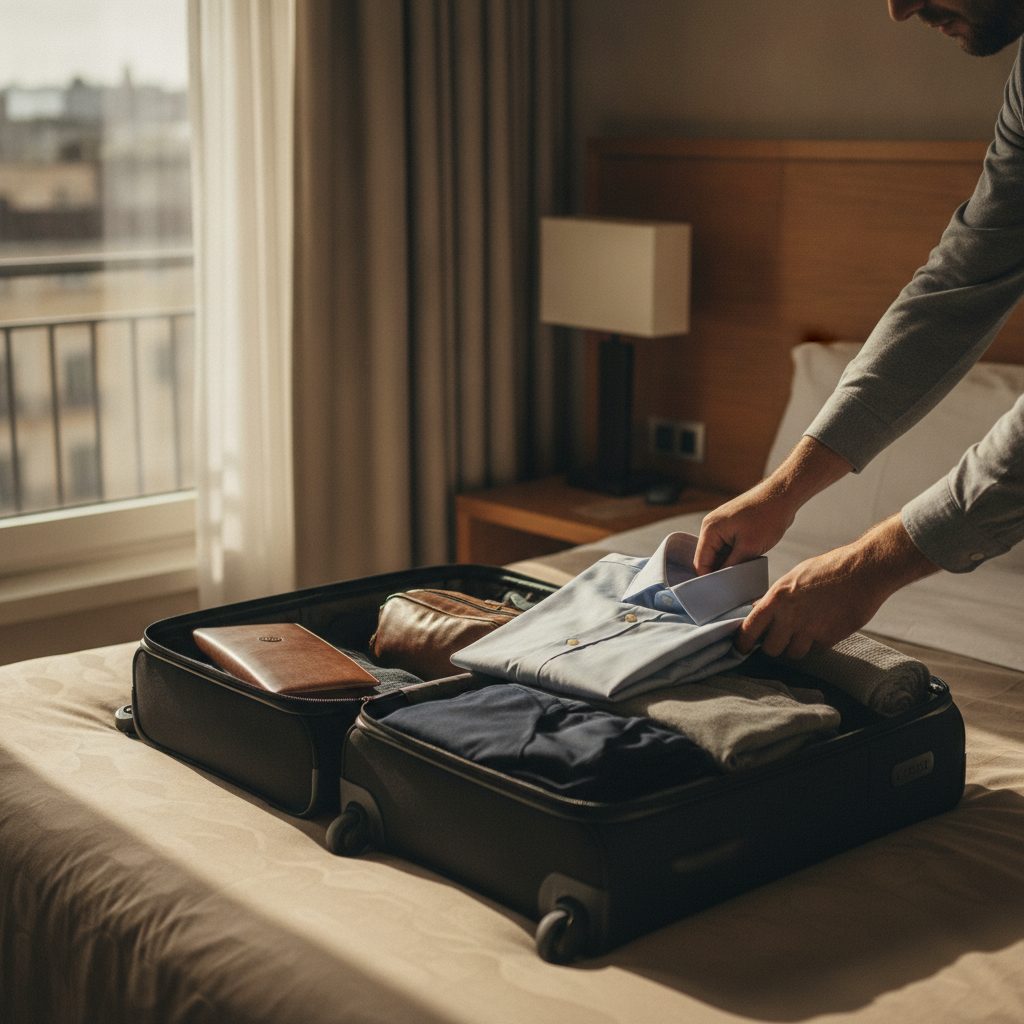
I find that the classic square fold is the most effective way to mimic how shirts are packaged at high end retail stores. Start by buttoning every other button on your shirt and laying it face down on a flat surface like a bed or a desk. Make sure the sleeves are spread out wide and the fabric is smoothed out to avoid trapping any small ridges.
Fold one side toward the center, about a third of the way across the back. Lay the sleeve straight down along the new edge you just created. Repeat this on the other side so you have a long, narrow rectangle with the collar at the top. Finally, fold the bottom third up and then fold it again so the bottom edge meets the collar. This creates a compact square that fits perfectly into the middle of your suitcase.
If you want extra protection, place a thin piece of cardboard or a magazine on the back of the shirt before you start folding. This provides a rigid internal frame that prevents the shirt from bending or collapsing when other clothes shift around in your bag. It is a simple trick that makes a massive difference in how the shirt looks when you unpack it.
The Rolling Technique for Casual Fabrics
While I usually prefer folding for stiff cotton shirts, the rolling method works wonders for travel shirts made of synthetic blends or knits. Button the shirt completely and lay it flat on its back. Fold the sleeves inward toward the center of the chest so they overlap slightly. This turns the shirt into a long vertical strip.
Start from the bottom hem and roll upward toward the collar. Be careful not to roll too tightly, as excessive tension can actually cause deep vertical wrinkles. The goal is a soft, cylindrical shape. This method is a great space saver if you are traveling with a small backpack or a weekender bag instead of a standard rolling suitcase.
When you reach the top, the collar will act as a natural stopper. I suggest placing the rolled shirt at the very top of your bag or tucked into a corner where it will not be crushed by heavier items like shoes or jeans. This helps maintain the circular shape and prevents the fabric from getting pleated under pressure.
Using Packing Folders and Cells
I never travel with dress clothes without using a packing folder. These are specialized polyester envelopes that come with a plastic folding board. They are designed specifically to keep shirts compressed and immobile. Because the shirts cannot move against each other, friction is minimized, which is the primary cause of wrinkling.
Typical packing folders can hold between three and seven shirts. You stack them one on top of the other after folding each one around the plastic guide. The velcro straps then cinch the stack down tightly. This is my go to method for business trips where I need to look sharp every single day.
If you do not want to buy a specialized folder, a large plastic zip top bag can work as a budget alternative. Place your folded shirt inside the bag and seal it almost all the way. Press out most of the air and then seal it completely. The trapped air bubble acts as a cushion that protects the shirt from being flattened by the weight of your other gear.
Protecting the Collar Structure
The collar is the most important part of the shirt because it frames your face. If the collar gets crushed in your carry on, the whole shirt looks sloppy regardless of how smooth the sleeves are. I always use plastic collar stays to keep the points sharp and straight during my flights.
You can also use a rolled up belt to protect the collar. Simply coil your leather belt and tuck it inside the neck opening of the folded shirt. The belt provides internal support that prevents the collar from being flattened by the lid of your suitcase. It is a double win because it also saves space by storing your belt in an otherwise empty spot.
Alternatively, you can purchase inexpensive plastic collar protectors. These are circular inserts that wrap around the inside of the neckband. If you are packing multiple shirts, staggering them (placed head to toe) can also help distribute the bulk of the collars so they do not all pile up in one thick corner of your luggage.
Strategic Layering in Your Suitcase
Where you place your shirts in the bag is just as important as how you fold them. I always follow the heavy to light rule. Put your heavy items like shoes, toiletry kits, and denim at the bottom of the bag near the wheels. This ensures that the weight does not crush your delicate items when the bag is standing upright.
Your dress shirts should be among the last things you pack. Place them on top of a flat layer of clothes to ensure they have a level foundation. If your suitcase has internal compression straps, do not pull them too tight over your shirts. You want them to be secure but not strangled.
Avoid overpacking your carry on. If you have to sit on your suitcase to zip it shut, your dress shirts will inevitably be ruined. Compressed fabric creates sharp creases that are very difficult to remove without a high powered iron. Keep a little bit of breathing room in your bag to maintain the integrity of your hard work.
The Hotel Bathroom Steam Trick
Even with perfect packing, you might find a few tiny lines on your shirt. I rarely ask for an iron at the front desk because the hotel irons are often dirty or leaky. Instead, I use the steam from the shower. Hang your shirt on a sturdy hanger and place it on the back of the bathroom door or the towel rack.
Turn the shower to the hottest setting and let the room fill with steam for about ten minutes. Make sure the shirt is not directly under the water spray. Once the room is misty, I gently tug on the bottom of the shirt and smooth out the fabric with my hands. The humidity relaxes the fibers and allows the wrinkles to drop out naturally.
After the steaming session, leave the shirt hanging in a dry area with good airflow. Do not put it on immediately while it is still damp from the steam, as your body movements will just create new wrinkles. Let it dry completely for at least twenty minutes before you get dressed for your event or meeting.
Essential Supplies for Crisp Shirts
- Plastic or metal collar stays to keep the collar points from curling.
- A travel sized wrinkle release spray for quick touch ups.
- Tissue paper to place between folds to reduce friction.
- A clean dry cleaner bag to wrap around the shirt for extra sliding.
- A dedicated packing folder for maximum compression and organization.
Frequently Asked Questions
Should I button the shirt before folding it?
Yes, you should at least button the top, middle, and bottom buttons to keep the fabric aligned. I prefer buttoning every button because it prevents the placket from shifting and creating diagonal creases across the chest during travel.
How do I remove wrinkles if I do not have an iron?
You can use a dedicated wrinkle release spray which works by relaxing the fabric fibers. Simply spray the wrinkled areas, pull the fabric taut, and let it air dry. The bathroom steam method mentioned earlier is also a very reliable alternative for travelers.
Can I pack a dress shirt in a backpack?
You can, but it is much more difficult to keep it crisp. If you must use a backpack, I highly recommend using the rolling method or a stiff packing folder to prevent the shirt from sinking to the bottom of the bag and being crushed by the weight of other items.
Does the fabric type matter for packing?
Absolutely, as 100 percent linen or lightweight cotton will wrinkle almost instantly no matter how careful you are. If you travel often, look for shirts labeled non iron or wrinkle resistant. These fabrics are treated to hold their shape and are much more forgiving in a carry on.
Is it better to fold or roll a dress shirt?
For formal cotton dress shirts, folding is generally superior because it preserves the collar and prevents the wide horizontal creases that can occur with rolling. Rolling is better suited for polo shirts, t-shirts, and casual button downs made of thicker or synthetic materials.
Final Thoughts on Packing Performance
Packing a dress shirt in a carry on does not have to be a stressful experience. I have found that a combination of a careful professional fold and the use of a packing folder yields the best results every time. It saves me from the frustration of hunting down an ironing board at midnight in a strange hotel room.
Remember that the goal is to minimize movement inside your bag. If your shirt stays exactly where you put it, it will arrive in great condition. Take the extra two minutes to fold it properly before you leave, and you will save yourself twenty minutes of steaming or ironing on the other end of your journey.