Quick Answer
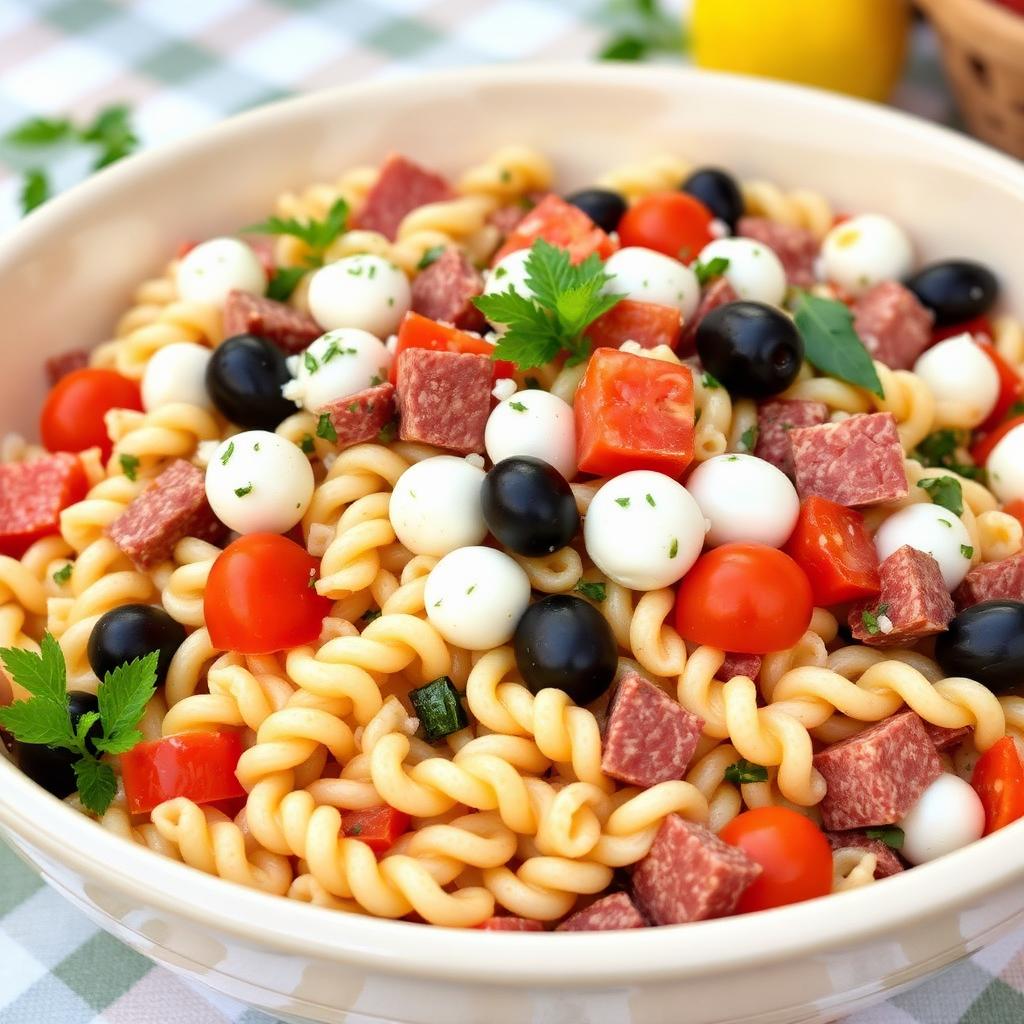
The best Italian American pasta salad uses a ridged pasta like rotini, fusilli, or cavatappi cooked 1 to 2 minutes past al dente, dressed with a bold high acid red wine vinegar and olive oil vinaigrette, then loaded with salami, fresh mozzarella, kalamata olives, cherry tomatoes, and pepperoncini.
Toss the pasta with half the dressing while it is still warm so it absorbs the vinaigrette into the noodle, then fold in the mix ins and the remaining dressing once it has cooled.
Chill for at least 2 hours before serving so the flavours marry and the dressing settles into the grooves of the pasta.
Why most pasta salad is boring
Cold pasta is uniquely difficult. When pasta cools, the starches retrograde, the noodles firm up, and they reabsorb any moisture in the bowl. A dressing that tasted bright when warm ends up muted and a bowl of pasta that felt seasoned ends up bland.
The fix is structural, not just culinary. You need a sturdier noodle shape, an aggressively acidic dressing, a deliberate dressing schedule, and a slightly overcooked pasta that stays tender once chilled.
Pasta shape and cook time
Use a ridged or twisted shape. Rotini, fusilli, and cavatappi all have deep grooves that physically trap the vinaigrette and the chopped herbs. Smooth shapes like penne lisce shed the dressing and leave it pooling at the bottom of the bowl.
Cook the pasta 1 to 2 minutes past the al dente time on the box. This is the opposite of what you want for a hot pasta dish, but cold pasta firms up considerably as the starches retrograde in the fridge. A slightly overcooked noodle ends up perfectly tender once chilled.
Salt the cooking water heavily, about a tablespoon per litre. The pasta picks up its baseline seasoning from the water and you cannot fix unseasoned pasta with surface dressing.
The ingredient matrix
| Component | Amount | Why it is here |
|---|---|---|
| Rotini pasta | 1 lb (450 g) | Grooves hold the dressing |
| Cherry tomatoes | 1 cup, halved | Acidic juice and pop |
| Persian cucumber | 1 cup, half moons | Crunch and freshness |
| Genoa salami | 0.75 cup, cubed | Salt, fat, and umami |
| Fresh mozzarella pearls | 0.75 cup | Creamy bite |
| Kalamata olives | 0.5 cup, pitted and halved | Briny depth |
| Sliced pepperoncini | 0.25 cup | Mild heat and tang |
The high acid herb vinaigrette
The dressing is where the salad lives or dies. Use almost twice the acid you would in a leafy salad vinaigrette, because cold pasta dulls the perception of acid.
- Two thirds cup extra virgin olive oil
- One third cup red wine vinegar
- One tablespoon fresh lemon juice
- One tablespoon dried Italian seasoning, ideally a blend of oregano, thyme, and basil
- One clove of garlic, grated on a microplane
- One teaspoon Dijon mustard, which holds the emulsion together
- Salt and pepper to taste
Whisk everything together in a jar until it looks glossy and uniform. The Dijon acts as an emulsifier and keeps the oil and vinegar from separating in the bowl.
The two stage dressing trick
This is the single most useful pasta salad technique, and almost nobody does it.
- Drain the slightly overcooked pasta and rinse it under cold water for 30 seconds. The rinse halts cooking and strips off the surface starch that would otherwise glue the noodles together.
- While the pasta is still slightly warm, toss it with exactly half of the vinaigrette in a large bowl. Let it rest for 15 minutes.
- Add the mix ins and pour over the remaining vinaigrette. Toss gently and refrigerate for at least 2 hours.
The first half of the dressing soaks into the noodle while it is warm and porous. The second half clings to the surface and to the mix ins once everything is cold. The result is seasoned all the way through, not just on the outside.
What to add and what to skip
- Add: roasted red peppers, marinated artichoke hearts, sun dried tomato, parmesan shavings, fresh basil.
- Skip: raw broccoli florets, hard boiled egg, ranch style dressings, and crumbly cheeses that fall to the bottom of the bowl.
- Add right before serving: torn fresh basil and a final crack of black pepper for aroma.
Make ahead and storage
The salad is best made 4 to 12 hours ahead so the flavours have time to settle. Beyond a day, the tomatoes start to weep and the mozzarella loses its bounce, so eat the leftovers within 48 hours. If the salad looks dry after a long fridge rest, refresh it with another tablespoon of olive oil and a splash of red wine vinegar before serving.
Frequently asked questions
Can I make this with bottled Italian dressing?
You can, but the result lacks the acid and herb intensity of the homemade vinaigrette. If you must, add an extra splash of red wine vinegar and a grated garlic clove to perk the bottle up.
Is pasta salad better the next day?
Yes, within reason. A 4 to 24 hour rest improves the flavour. Beyond that, the texture of the fresh vegetables starts to degrade.
Can I make it vegetarian?
Easily. Drop the salami and add cubed marinated mozzarella, white beans, or roasted chickpeas for protein.
The takeaway
A great Italian American pasta salad is built on four small decisions: a ridged pasta, a slightly overcooked noodle, a bold high acid vinaigrette, and a two stage dressing schedule. Lock those in and you will hit a pasta salad that tastes great straight out of the fridge instead of fading into the background of the buffet.