Quick Answer
To save the maximum amount of space in a suitcase, the Ranger Roll and the Bundle Wrap are your two best friends. Rolling is generally superior for casual items like t-shirts and jeans because it eliminates air pockets and prevents deep creases. For formal wear that cannot be rolled, layering items flat or using a bundle method ensures you use every inch of the bag without causing wrinkles.
If you are looking for the absolute most efficient method, I recommend using the Ranger Roll for basics and packing cubes to compress everything together. This combination allows you to fit roughly thirty percent more clothing than traditional flat folding methods. It also keeps your suitcase organized so you can find a specific shirt without tearing the whole bag apart.
The Magic of the Ranger Roll
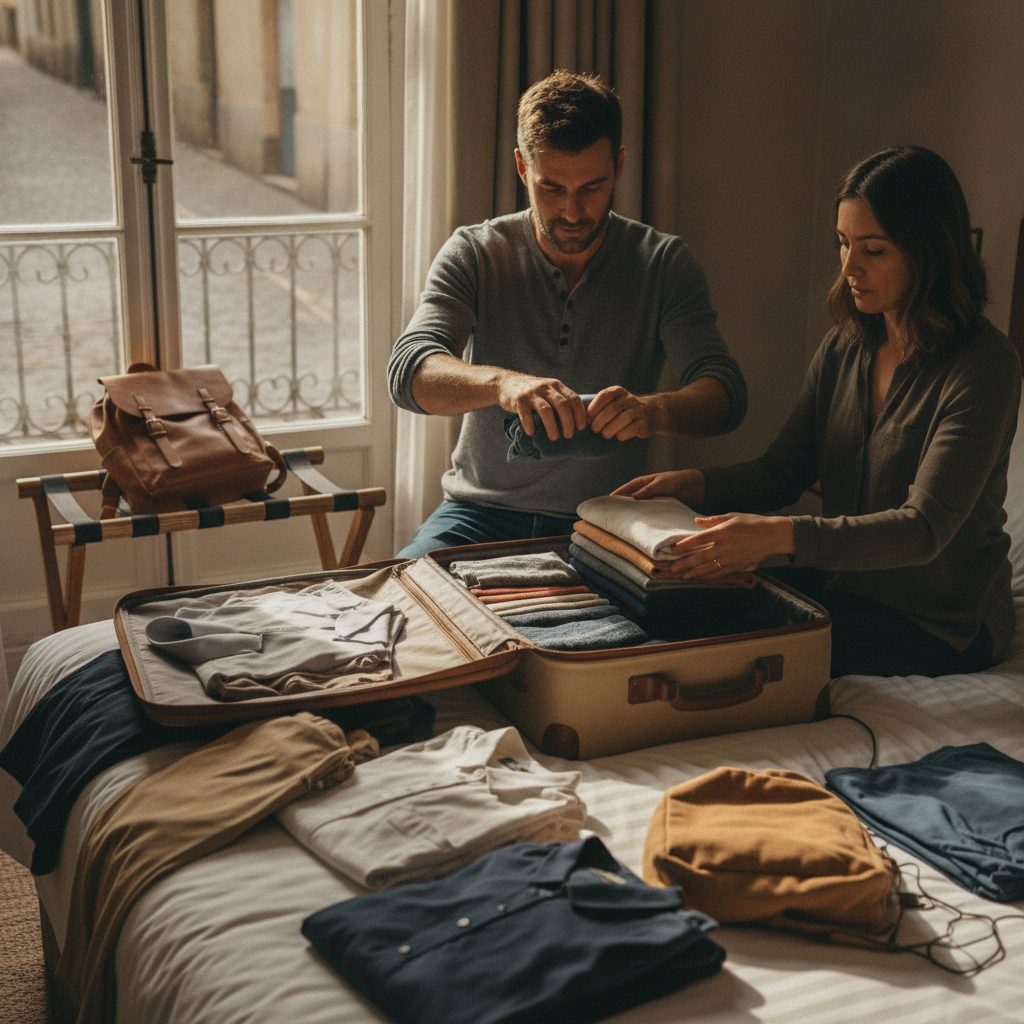
I have spent years testing different ways to pack, and the Ranger Roll is the undisputed champion for saving space. This technique involves folding the bottom edge of a garment upward to create a small cuff, then folding the sides inward and rolling the item tightly from the top down. Once you reach the bottom, you tuck the roll into the cuff you created at the start.
This method turns your clothes into tiny, secure burritos that will not unspool while you travel. It is incredibly effective for t-shirts, gym shorts, and even socks. Because the roll is so tight, it squishes out all the excess air that usually lingers between layers of fabric. I find this particularly helpful when I am trying to stick to a carry-on bag for a two week trip.
The main benefit of the Ranger Roll is modularity. You can stand these rolls up vertically in your suitcase like a filing cabinet. This gives you a clear view of everything you packed. You no longer have to dig through a stack of shirts to find the one at the bottom, which keeps your packing neat throughout the entire duration of your vacation.
Mastering the Bundle Wrap Method
If you are traveling for a wedding or a business meeting, you probably have items that do not take well to tight rolling. This is where the Bundle Wrap comes in handy. This method involves wrapping clothes around a central core, usually a small pouch filled with soft items like underwear or socks. You layer your largest, most structured items first and work your way down to the smaller ones.
The idea is that you are wrapping the fabric around a soft curve rather than folding it against a sharp edge. Since there are no hard creases, your dress shirts and slacks should come out of the bag looking fresh. I start by laying a blazer flat, then overlapping a pair of trousers horizontally across it, and then adding shirts in alternating directions.
While this method saves a surprising amount of space by utilizing the full width of the suitcase, it does have one major drawback. If you need to grab one specific item from the middle of the bundle, you have to unwrap the entire thing. I only use this technique when I know I will be staying in one hotel and can unpack everything onto hangers as soon as I arrive.
Why Traditional Flat Folding Often Fails
Most of us grew up folding clothes into flat rectangles and stacking them on top of each other. While this looks nice in a dresser drawer, it is actually one of the least efficient ways to pack a suitcase. When you stack flat clothes, you create hidden pockets of air between each layer. As you travel, the weight of the bag shifts and those air pockets collapse, leading to shifted piles and messy wrinkles.
Flat folding also makes it very easy to overpack one side of the suitcase while leaving the corners empty. Suitcases are rarely perfect rectangles on the inside because the handle rails and wheel housings create bumps and dips. Flat clothes cannot contour to these shapes, which means you lose valuable real estate in the bottom of the bag.
I only recommend flat folding for very bulky items like thick wool sweaters or heavy denim jackets that are too stiff to roll. In those cases, I place the flat items at the very bottom of the suitcase to create a level base for my rolls and cubes. Everything else should be treated with a more space-efficient technique.
The Essential Role of Packing Cubes
I used to think packing cubes were a gimmick until I actually tried them. Now, I never leave home without a set. These fabric containers do not just organize your gear: they serve as a secondary layer of compression. When you put your rolled clothes into a cube and zip it shut, you are forcing the fabric to stay compressed regardless of how much your suitcase is tossed around by baggage handlers.
I like to categorize my cubes by clothing type. One cube holds all my tops, one holds my bottoms, and a small one is dedicated to socks and undergarments. This makes it impossible for small items to get lost in the corners of the bag. If security needs to check my luggage, they can lift out a few cubes rather than rummaging through my loose laundry.
For those who really want to maximize space, you can buy specific compression cubes that feature a second zipper. This zipper acts like a vacuum seal, squeezing the cube even thinner once it is packed. It is a game changer for fitting a bulky winter coat into a small bag. Just be careful not to exceed airline weight limits, as it is very easy to make a small bag surprisingly heavy.
How to Handle Bulky Winter Gear
Packing for a ski trip or a cold weather destination presents a unique challenge. Bulky items like parkas and puffer vests take up massive amounts of room. My first tip is to wear your heaviest coat on the plane. It might be slightly annoying at the airport, but it saves you a huge amount of internal suitcase volume.
If you must pack a bulky jacket, use a vacuum storage bag. You can buy travel versions that allow you to roll the air out through a one-way valve without needing a vacuum cleaner. It turns a fluffy down jacket into a flat, hard pancake. I have found this to be the only way to fit a true winter wardrobe into a standard suitcase.
For sweaters, I recommend the fold and tuck method. Fold the sleeves in and fold the body in half once, then place it at the bottom of your bag. Try to alternate the direction of the collars and hemlines to keep the stack level. If you have several knit items, try to distribute them across the width of the bag rather than stacking them all in one corner.
Filling the Nooks and Crannies
The biggest mistake travelers make is leaving the edges and corners of their suitcase empty. Once you have placed your main rolls or cubes in the center, you will notice small gaps around the perimeter and between the handle rails. These are the perfect spots for small, squishy items.
- Stuff your socks inside your shoes to save space and help the shoes keep their shape.
- Tuck belts around the inner edge of the suitcase wall.
- Place charging cables and small electronics in the gaps between packing cubes.
- Use swimwear or gym shirts to fill the uneven spaces created by the suitcase handle bars.
- Store hats by filling the crown with soft items and placing it upside down in the center of the bag.
By filling these "dead spaces," you lock the rest of your luggage in place. This prevents your organized rolls from shifting and unravelling during transit. It also gives your bag a more structured feel, which can help protect fragile items located in the center of the suitcase.
Strategic Layering for Easy Access
How you arrange your folds and rolls is just as important as the folds themselves. I follow the "heaviest at the bottom" rule. This means your shoes, toiletry kits, and heavy denim should be placed near the wheels of the suitcase. This keeps the bag stable when it is standing upright and prevents it from toppling over.
I always leave a top layer for items I might need quickly. If I am arriving in a different climate, I make sure a light jacket or a change of clothes is right at the top. This prevents me from having to unpack the entire space-saved masterpiece just to find a pair of shorts at the airport.
If you are using the rolling method, try to color code your rolls. I put my dark shirts on one side and light shirts on the other. It sounds simple, but when you are tired and jet-lagged, being able to identify your clothes at a glance is a massive relief. It keeps the organization intact for the whole trip.
Frequently Asked Questions
Does rolling clothes actually save more space than folding?
Yes, rolling saves more space because it removes the air between layers and allows you to pack items more tightly together. It is especially effective for synthetic fabrics, cotton t-shirts, and casual wear. For very thick items, however, a flat fold might be more practical to avoid creating a massive, unmanageable cylinder.
Will rolling my clothes cause more wrinkles?
Generally, rolling causes fewer wrinkles because it avoids the sharp, pressed creases that come with flat folding. As long as you smooth the fabric out as you roll and do not roll it so tight that the fabric stretches, your clothes should come out looking great. For high-end dress shirts, the bundle method is still the safest bet for a wrinkle free look.
What is the best way to pack shoes to save space?
Shoes should always be used as storage containers themselves. Stuff them with socks, underwear, or small accessories to utilize the empty space inside. Place them in individual shoe bags to keep the rest of your clothes clean, and nest them heel-to-toe along the bottom or sides of your suitcase to minimize their footprint.
How can I prevent my clothes from smelling musty when packed tight?
When you pack clothes tightly for long periods, air circulation is nonexistent. I like to tuck a few dryer sheets or a small cedar sachet between my packing cubes. This keeps everything smelling fresh despite the lack of airflow. Also, always make sure your clothes are completely dry before rolling them, as even a tiny bit of moisture can cause odors in a sealed bag.
Should I use plastic bags for my clothes?
While some people use dry cleaner bags to prevent friction and wrinkles, I prefer reusable packing cubes or compression bags. Plastic bags tend to trap a lot of air and can make your suitcase noisy and slippery. Fabric cubes provide better structure and are much better for the environment in the long run.
Final Thoughts on Efficient Packing
Efficiency is all about choosing the right tool for the job. I use the Ranger Roll for ninety percent of my wardrobe because it is fast, organized, and incredibly compact. I save the Bundle Wrap for my nice dinners and the flat fold for my heaviest outer layers. By combining these methods, I can usually fit twice as much as I could when I first started traveling.
Remember that the goal is not just to fit as much as possible, but to make your trip less stressful. Using these techniques allows you to find what you need without a struggle and keeps your clothes in good condition. Once you master the art of the roll and the tuck, you will never go back to messy stacks again. Happy travels and happy packing.