Quick Answer
To fly with dog in cabin, you must book your pet early as most airlines limit the number of animals per flight to between four and six. You will need an airline approved soft sided carrier that fits under the seat in front of you, and your dog must be able to stand up and turn around inside it. You should expect to pay a one way pet fee ranging from 95 to 150 dollars for this service.
Once at the airport, you will check in at the counter to present your paperwork and have your carrier tagged. During the flight, your dog must remain entirely zipped inside the carrier at all times. I recommend checking the specific dimensions for your airline since under seat space varies by aircraft type. Ensure your dog is at least eight to twelve weeks old and meets all health requirements for your destination.
Comparing Major Airline Pet Policies
Every major carrier in the United States has its own specific set of rules for how to fly with dog in cabin, and these rules often dictate which airline you should choose. Delta Air Lines and United Airlines generally charge around 125 dollars each way, while JetBlue often prices their pet fee at 125 dollars as well. Alaska Airlines is frequently cited as one of the more pet friendly options, typically charging around 100 dollars per kennel. It is important to remember that most airlines count your pet carrier as your one allowed carry on bag or personal item, meaning you will likely need to check your other luggage.
Weight limits are a critical factor when planning your trip. While some airlines like Frontier or Spirit have a combined weight limit for the dog and the carrier of around 20 to 25 pounds, others like Delta do not have a specific weight limit as long as the dog fits comfortably in the bag. I find that JetBlue tends to have slightly smaller under seat dimensions on their Embraer aircraft compared to their Airbus fleet, so checking the aircraft type on your itinerary is a vital step before buying a carrier. Always call the airline directly after booking your own ticket to add the pet to your reservation, as online systems do not always guarantee the spot is available.
Beyond the cost, you must consider the restrictions on the number of pets. Most airlines allow only one pet per passenger, though some allow two kittens or puppies in a single carrier if they are small enough and of the same breed. Alaska Airlines is particularly generous with their space, but they still require that the carrier be no larger than 17 by 11 by 9.5 inches for hard shells or slightly larger for soft sided bags. I suggest keeping a printed copy of the airline policy in your carry on just in case you encounter a gate agent who is less familiar with the specific pet regulations for that day.
Selecting an Airline Approved Carrier
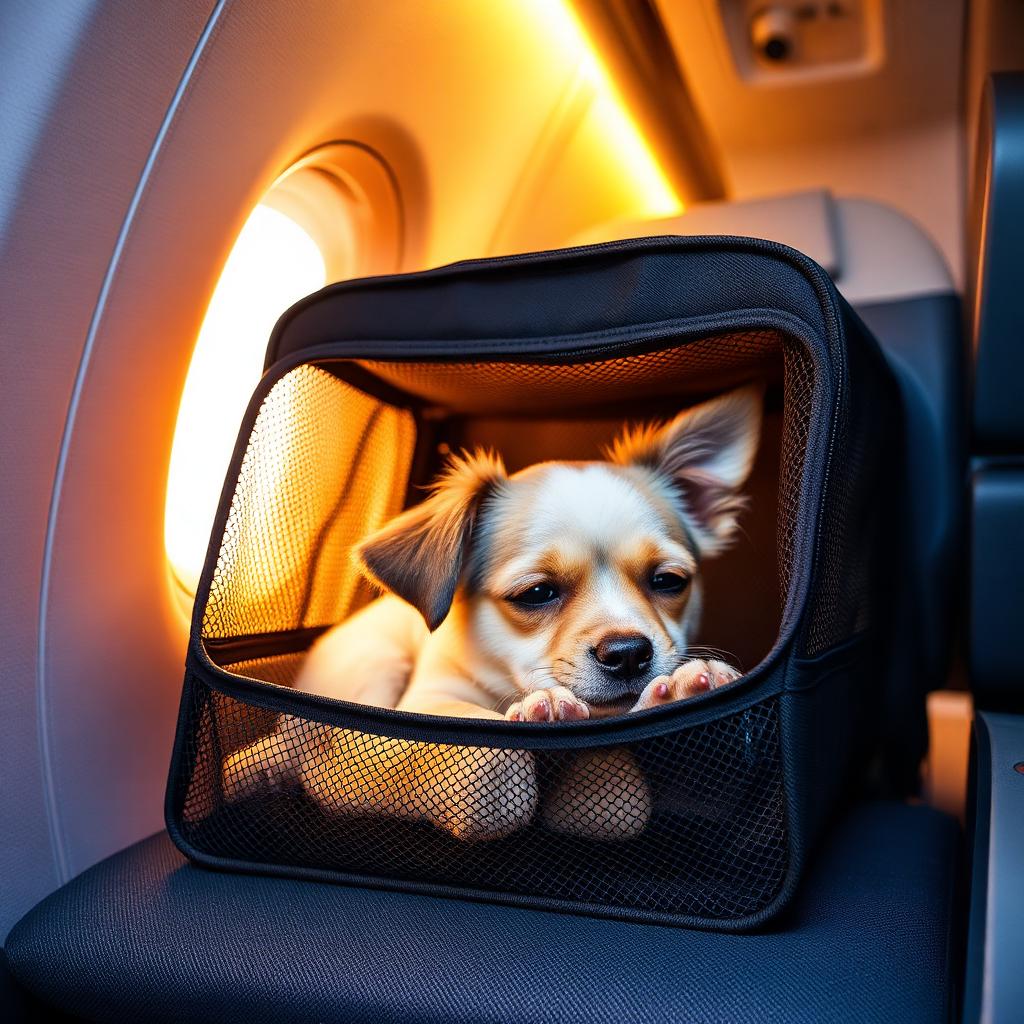
The carrier is the most important piece of equipment for a successful flight. To fly with dog in cabin, you should prioritize a soft sided carrier over a hard plastic one. Soft carriers have a bit of give, allowing you to compress the top slightly to fit under a low seat frame. The general industry standard for dimensions is roughly 18 inches long by 11 inches wide by 11 inches high, but this is not universal. Brands like Sherpa are specifically designed to meet these requirements and even offer a guaranteed on board program for certain sizes. You must ensure the carrier has adequate ventilation on at least three sides and a leak proof bottom.
Before your trip, you should spend several weeks acclimating your dog to the bag. I start by leaving the carrier open in the living room with treats and a favorite blanket inside. This creates a positive association and reduces anxiety on the day of travel. The dog must be able to stand, lie down naturally, and turn around without hitting the top or sides excessively. If the dog appears cramped, the gate agent has the authority to deny boarding. Make sure the carrier has a luggage tag with your contact information and a separate pocket for the dog's leash and collapsible water bowl.
During the security process, you will be required to remove your dog from the carrier. You will walk through the metal detector with your dog on a leash or in your arms while the carrier goes through the X ray machine. I recommend using a harness instead of a collar for extra security during this stage, as a nervous dog might try to bolt in the crowded terminal. Once you are through security, many airports now offer pet relief areas which are small rooms with artificial grass and drainage systems. Use these immediately before boarding to ensure your dog has a comfortable flight with a managed bladder.
In Cabin Travel versus Cargo Transport
There is a significant difference between flying in the cabin and flying in the cargo hold. In cabin travel allows your pet to stay under the seat in front of you, where you can monitor their breathing and comfort levels throughout the journey. This is restricted to small dogs, typically those under 20 pounds. Cargo transport, often referred to as flying as manifest cargo or checked baggage, involves placing the dog in a climate controlled, pressurized compartment of the plane. This is generally reserved for larger breeds that cannot fit under a seat. Many travelers feel anxious about cargo travel, but airlines have strict safety protocols for these animals.
However, many United States airlines have recently moved away from allowing pets as checked baggage. Delta and United, for example, have largely restricted cargo pet travel to military families on permanent change of station orders or specific commercial shipping services. If you have a large dog, you may need to use a specialized pet shipping company rather than flying them on your own passenger flight. This makes in cabin travel the preferred method for anyone with a small enough dog, as it keeps the family together and reduces the logistical complexity of the trip.
Safety is the primary concern for both methods. In the cabin, the main risk is the dog becoming overheated or stressed, whereas in cargo, the risks involve temperature fluctuations on the tarmac or handling errors. Because you can see your dog in the cabin, you can offer a soothing hand through the mesh or a small ice cube to keep them hydrated. I always check the weather at both my departure and arrival cities, as extreme heat or cold can lead to flight cancellations for pets traveling in cargo even if the passenger flight still departs. In cabin pets are rarely affected by these temperature bans because they stay in the temperature controlled passenger area.
Health Certificates and Breed Restrictions
Documentation is a requirement that you cannot overlook. For domestic travel within the United States, many airlines do not strictly require a health certificate, but it is highly recommended to carry one issued by your vet within ten days of travel. This document proves the dog is healthy and up to date on rabies vaccinations. If you are flying to Hawaii or an international destination, the rules become much stricter. Hawaii is a rabies free state and requires a complex process of blood tests and waiting periods to avoid a long quarantine upon arrival. International travel often requires a USDA endorsed health certificate which can take weeks to process.
Brachycephalic or short nosed breeds face unique challenges and restrictions. Breeds like French Bulldogs, Pugs, and Boston Terriers are more prone to respiratory distress at high altitudes due to their narrow airways. Some airlines have banned these breeds from flying in the cargo hold entirely due to health risks. When flying in the cabin, you are generally allowed to bring these breeds, but you must be exceptionally vigilant. I suggest choosing direct flights and traveling during cooler parts of the day to ensure these dogs do not overheat. Always consult your veterinarian before flying with a short nosed breed to discuss their specific oxygen needs.
Beyond health papers, you should consider the use of calming medications or supplements. I advise against heavy sedation of dogs for flight, as it can interfere with their ability to regulate their body temperature and maintain balance if the plane hits turbulence. Many veterinarians suggest natural calming agents like pheromone sprays or CBD chews, but these should be tested at home weeks before the flight to see how your dog reacts. Never give your dog a new medication for the first time on an airplane. The goal is to have a calm pet, not an unconscious one, as the latter can be a sign of a medical emergency to the flight crew.
International Rules and Specialized Destinations
Flying internationally with a dog is a major undertaking that requires months of preparation. Each country has its own import requirements, ranging from simple vaccination records to microchipping and mandatory quarantine periods. For example, traveling to the United Kingdom or Australia involves very specific protocols that often preclude in cabin travel entirely for most commercial flights. If you plan to fly with dog in cabin to Europe, you will need an EU Pet Annex IV form signed by a government veterinarian. Failure to provide the exact paperwork required by the destination country could result in your dog being deported or held in an expensive quarantine facility at your expense.
Mexico and Canada are generally easier to navigate for American travelers, usually requiring only a valid rabies certificate and a brief inspection upon arrival. However, these rules can change, so you should always check the official government website of your destination country at least two months before your trip. You must also consider the return trip to the United States, as the CDC has specific rules regarding dog imports from countries deemed high risk for rabies. Check the current CDC dog import map to see if your destination requires additional permits for the return leg of your journey.
Lastly, be aware that international aircraft configurations might differ from domestic ones. Some wide body planes used for long haul flights have footrests or entertainment boxes under the seats that significantly reduce the available space for a dog carrier. When booking an international flight, I recommend speaking with a representative to find out which seats have the most unobstructed floor space. Keep in mind that you cannot sit in an exit row or a bulkhead seat when traveling with a pet, as these areas must remain clear for safety reasons or lack under seat storage entirely. Planning for these physical constraints is just as important as the paperwork itself.
Frequently Asked Questions
Can my dog sit on my lap during the flight?
No, FAA regulations require that all pets traveling in the cabin remain inside their closed carrier placed under the seat for the duration of the flight, including taxi, takeoff, and landing.
How much does it cost to fly with a dog?
Most major domestic airlines charge a fee between 95 and 150 dollars each way, which is typically paid at the airport check in counter or during the online booking process.
What is the maximum weight for a dog to fly in the cabin?
Most airlines do not have a strict weight limit for the cabin, but the dog must fit comfortably in a carrier that fits the airline's specific under seat dimensions, which usually limits dogs to under 20 pounds.
Does a pet carrier count as a carry on bag?
Yes, on almost all airlines, the pet carrier counts as your one allowed carry on bag or personal item, meaning you will likely need to check your suitcase or pay for an extra bag.
Bottom Line
Flying with a dog in the cabin is a manageable process provided you prepare well in advance and understand the specific rules of your chosen airline. By investing in a high quality carrier, securing the necessary health documentation, and acclimating your dog to the travel environment, you can ensure a safe and relatively stress free journey for everyone involved. Always double check the current regulations for your specific route and aircraft type to avoid surprises at the gate.