Quick Answer
Choosing a good hotel room starts with arriving early and asking for specific features like a high floor, a location away from elevators, and a view away from street noise. I always suggest politely inquiring about recent renovations or corner rooms, which often provide more space and windows than standard units.
The key is to be specific about your needs, whether you prioritize silence or proximity to the lobby, and to do so with a friendly attitude. While many assignments happen automatically, desk agents usually have the power to swap your keys if a better room is vacant and ready.
Arrive During the Sweet Spot
I have found that timing is everything when it comes to snagging the best room in the house. If you show up at 9:00 PM, the hotel is likely at peak occupancy and you will be stuck with whatever is left over, which is usually the room right next to the noisy ice machine.
The best time to check in is usually between 1:00 PM and 3:00 PM. This is when the housekeeping staff has finished cleaning the rooms from the morning departures, but the bulk of the evening travelers have not yet arrived. This gives the front desk agent the widest possible inventory to choose from when you make a specific request.
If you arrive much earlier, like 9:00 AM, the agent might offer you the first available room just to get you settled. While this is convenient, it often means you miss out on the premium layouts that are still being vacuumed. I prefer to leave my bags with the bellhop and wait for a better room to open up later in the afternoon.
The Power of the High Floor
My first rule of thumb is to always ask for a room on a high floor. Noise follows the path of least resistance, and in a busy city, that means street sounds, honking cars, and sirens reflect off the lower buildings and into your window. Being just five or six floors higher can make a massive difference in your sleep quality.
High floors also tend to offer better views, even if you did not pay for a specific landmark view. You are more likely to see the skyline rather than the brick wall of the building next door. Additionally, higher floors usually have less foot traffic in the hallways because people are not constantly walking past your door to get to the lobby or the gym.
One exception to this rule is if you have a phobia of elevators or if the hotel only has one slow lift for twenty floors. In those cases, a middle floor near the stairs might be more practical. However, for 90 percent of my trips, I aim for the top third of the building.
Avoid the Elevator and the Ice Machine
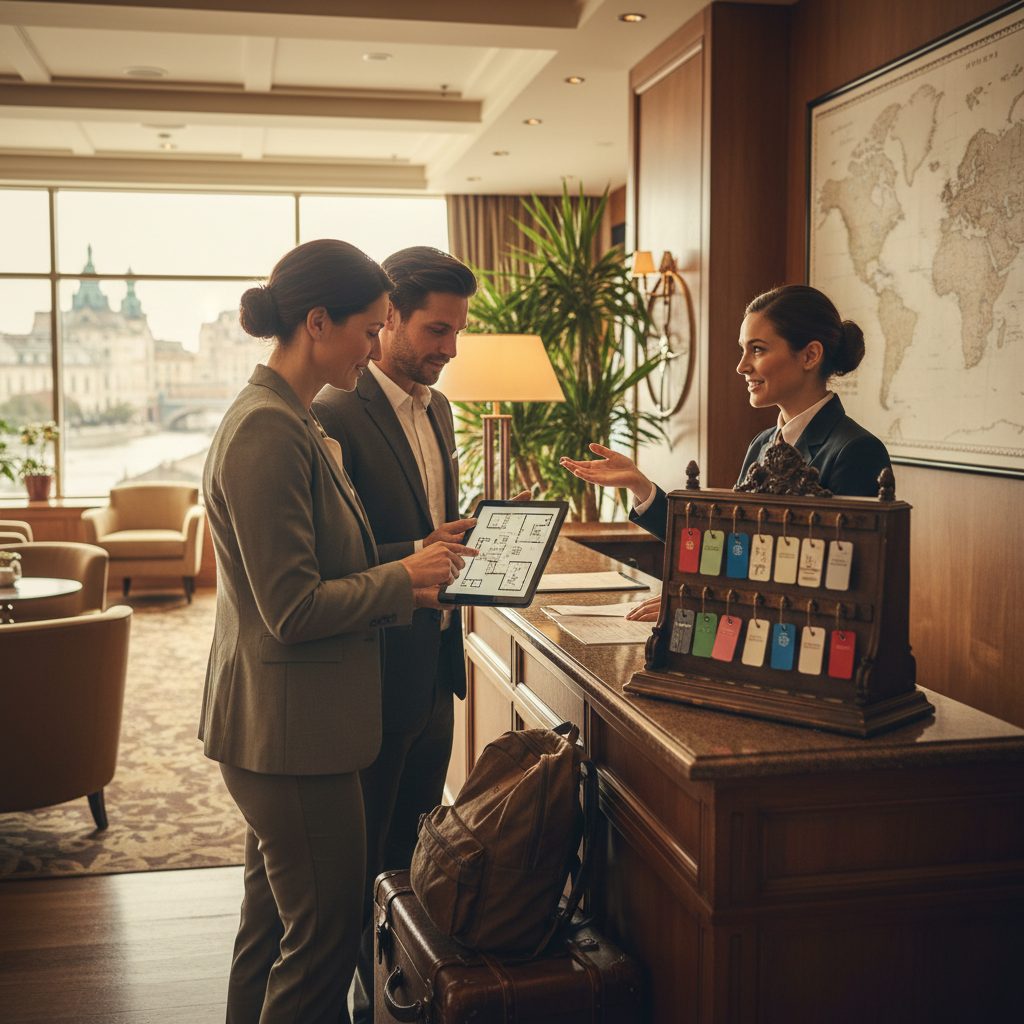
Nothing ruins a good night of rest like the constant "ding" of an elevator or the sound of teenagers filling up an ice bucket at midnight. When I check in, I always ask the agent to check the floor map for a room located midway down the hallway. You want to be far enough from the elevators to avoid the noise, but not so far that the walk becomes a marathon.
I also make a point to ask if the room shares a wall with any mechanical rooms or laundry chutes. These areas generate vibrations and humming sounds that can be very distracting when you are trying to read or sleep. A room tucked into a quiet corner is almost always the best bet for peace and quiet.
If the hotel layout is a long rectangle, try to get a room at the very end. While the walk is longer, you will only have one neighbor instead of two. This significantly reduces the chance of hearing a loud television or a snoring stranger through the drywall.
The "Renovated Room" Strategy
Many hotels undergo rolling renovations where they update one floor at a time. This means a single hotel can have rooms that look like they are from 1995 and rooms that look like they are from 2026. I always ask the agent if there are any recently renovated rooms available in my booked category.
Newer rooms usually have more than just fresh paint. They often feature more outlets near the bed, better lighting, and updated bathroom fixtures. Older rooms might have sagging mattresses or musty carpets that can trigger allergies. It never hurts to ask if a specific floor has been updated more recently than the others.
If the agent says all rooms are the same, I shift my focus to maintenance. I might ask for a room where the air conditioning unit was recently serviced or one that has a newer walk-in shower. These small details can drastically improve the comfort of your stay.
Specific Phrasing That Works
The way you ask is just as important as what you ask for. I avoid being demanding or acting like I am entitled to an upgrade. Instead, I use friendly, collaborative language. I might say, "I am a very light sleeper. Is there any chance you have a quiet room on a high floor away from the elevator?"
I also find that being specific helps the agent help you. Instead of saying "I want a good room," I say "I would love a room with a lot of natural light" or "I am hoping for a room with a desk that faces the window." This gives them a clear target to search for in their system.
- "Is the hotel at full capacity tonight?" (This lets you know how much flexibility they have.)
- "I am here celebrating a special occasion. Do you have any corner rooms available?"
- "I noticed it is a bit noisy on the street side. Is there anything available facing the courtyard?"
- "Which floor has the best Wi-Fi signal?" (Great for business travelers.)
Corner Rooms are Hidden Gems
I always look for corner rooms because they are almost always slightly larger than the standard rectangular rooms in the middle of the hall. Because of the building architecture, corner rooms often have windows on two different walls, which provides much better airflow and light.
In many hotel chains, the corner rooms are classified the same as standard rooms, meaning you do not have to pay extra for the extra square footage. They also tend to be quieter because they have fewer shared walls. You only have a neighbor on one side and possibly below you.
If you are traveling with a lot of luggage or a partner, that extra five or ten square feet makes the room feel much less cramped. I have occasionally even found corner rooms with small balconies or alcoves that were not mentioned in the online description.
Check the View and the Light
Natural light has a huge impact on my mood when I travel. I always ask which side of the building gets the morning sun. If I want to sleep in, I might prefer a room that faces north or west. If I want to wake up early and get to work, an east-facing room is perfect.
I also ask about the view. Even if I did not book a "city view" room, I try to avoid rooms that look directly into a parking garage or onto a roof filled with loud HVAC fans. A view of a quiet courtyard or even a residential street is much more pleasant to look at while you drink your morning coffee.
Do not be afraid to ask the agent to describe what is outside the window. They see these rooms every day and can tell you if you will be staring at a brick wall or if you will have a clear shot of the horizon. If the first room they offer sounds gloomy, I politely ask if there are any brighter options available.
Inspect Before You Unpack
I never fully unpack my suitcase until I have done a quick walkthrough of the room. I check the bathroom for cleanliness, make sure the air conditioning is working, and verify that the door locks properly. I also take a quick look at the mattress to ensure everything looks fresh and well-maintained.
If I notice a weird smell, a loud humming noise, or a stain on the carpet, I call the front desk immediately. It is much easier for them to move you to a different room before you have scattered your clothes and toiletries all over the place. Once you have used the bed or the shower, the hotel has to deep-clean the room before giving it to someone else, which makes them less likely to swap you.
If the room is fine but just feels "off," like it is right next to a noisy ice machine you missed, I go back down to the desk. I usually say something like, "The room is lovely, but I just realized it is right next to the vending area. Could I possibly switch to something further down the hall?" Most agents are happy to accommodate this within the first ten minutes of check-in.
Frequently Asked Questions
Is it okay to ask to see a room before committing to it?
Yes, if the hotel is not extremely busy, you can ask the agent if someone can show you the room or if you can take the key to look at it yourself before you bring up all your luggage. This is common in boutique hotels or when you are staying for a long period.
Should I tip the front desk agent to get a better room?
While some people swear by the twenty dollar sandwich trick, I find that being genuinely kind and asking specific questions is more effective. In the United States, tipping at the front desk is not expected and can sometimes be awkward, so I save my tips for the bellhops and housekeeping.
Do loyalty programs actually help with room selection?
Absolutely, being a member of a hotel loyalty program, even at the lowest free tier, often puts you higher on the list for better room assignments. I always make sure my membership number is attached to the reservation because it shows the agent I am a repeat customer.
What should I do if the hotel is overbooked and I get a bad room?
If the hotel is full and you are stuck in a noisy or small room, ask the agent if they expect any check-outs the following morning. I have often stayed in a subpar room for one night and then moved to a much better room for the remainder of my stay once one became available.
Can I request a specific room number?
If you have stayed at the hotel before and loved a specific room, you can certainly request it by number. However, it is never guaranteed as someone else might be staying in it. I usually describe the features of that room instead, which gives the agent more options to help me.
Final Thoughts on Choosing Your Space
Ultimately, getting a good hotel room is about communication. The front desk agents are people who deal with grumpy travelers all day, so when I approach them with a smile and a clear request, they are usually happy to dig through their inventory to find something I will like. It takes less than two minutes to ask for a high floor or a corner unit, but the payoff lasts for your entire trip.
I always remind myself that no room is perfect, but being proactive at the check-in desk significantly lowers the chances of a bad experience. By understanding the layout of a typical hotel and knowing what to avoid, I can ensure that my home away from home is as comfortable and quiet as possible.