Quick Answer
Charging your phone abroad requires an inexpensive plug adapter to match your device to the local wall outlet. Most modern smartphones and laptops are dual voltage, meaning you do not need a heavy voltage converter to prevent your electronics from frying.
I recommend buying a universal travel adapter that includes built-in USB-C ports. This allows you to charge your phone and a battery pack simultaneously while still keeping the main AC outlet free for a larger device.
Understanding Plug Adapters
The most common hurdle travelers face is that outlets look different in other countries. A plug adapter is a simple plastic device that changes the shape of your home plug to match the shape of the wall socket in your destination. It does not change the electricity itself, it just makes the physical connection possible.
I always carry a kit that covers the four main types. Type G is the bulky three-prong plug used in the United Kingdom, Ireland, and Hong Kong. Type C or E/F is the two-round-prong style found throughout most of Europe. Type I is used in Australia and New Zealand, featuring two slanted flat pins. If you are a US traveler heading to Japan, you might not need an adapter at all, though many Japanese outlets lack the third grounding hole.
I prefer universal adapters because they allow me to slide different pins out depending on where I land. They are slightly larger than single-country adapters, but they save space in the long run. Just make sure the one you buy feels sturdy, as cheap ones tend to fall out of loose wall sockets.
Voltage Converters vs. Adapters
Voltage is the actual pressure of the electricity. In the United States and Canada, we use 110-120 volts. In much of the rest of the world, outlets pump out 220-240 volts. If you plug a device designed only for 110 volts into a 220 volt outlet, it will likely smoke, pop, or stop working forever.
The good news is that almost all modern phone chargers and laptop power bricks are dual voltage. You can verify this by looking for the tiny print on your charger that says Input: 100-240V. If you see that range, you do not need a voltage converter. You only need a simple plug adapter.
I rarely carry a voltage converter anymore because they are heavy, expensive, and unnecessary for electronics. However, if you plan to bring a hair dryer, curling iron, or an older electric razor, you should double check the label. These high-heat items are usually single voltage and will require a heavy-duty converter or, better yet, a dual-voltage travel version of the appliance itself.
The Power of USB-C and Multi-Port Chargers
I have shifted my entire travel setup to rely on USB-C. Most flagship phones now use this standard, and many modern laptops do as well. Instead of carrying three different wall bricks for my phone, tablet, and watch, I bring one high-wattage GaN (Gallium Nitride) charger with multiple ports.
GaN chargers are smaller and more efficient than traditional silicone-based chargers. I use a 65-watt or 100-watt version that can charge my MacBook and my iPhone at the same time through a single wall outlet. This is a lifesaver in older European hotels or tiny hostels where there might only be one available outlet in the entire room.
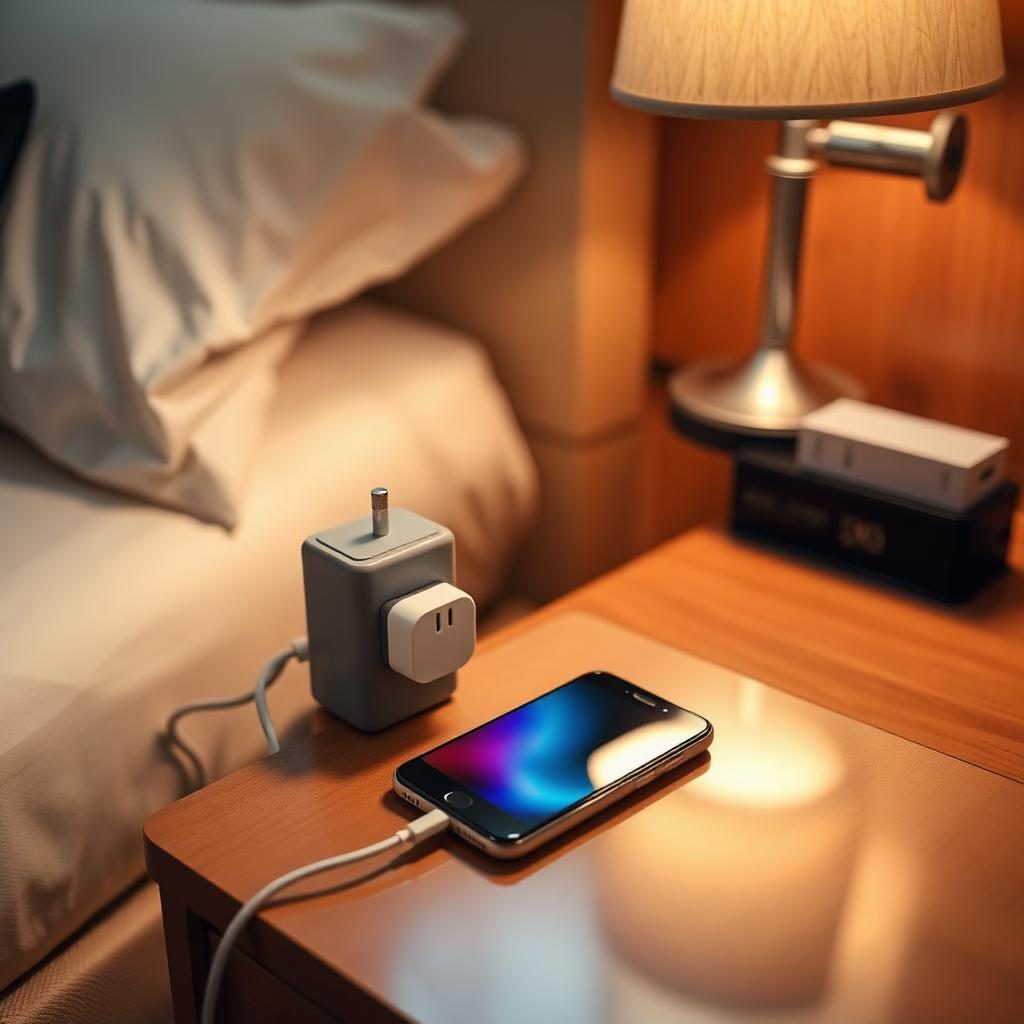
Using a multi-port charger also means I only need one plug adapter for the wall. All my devices then plug into the USB ports on the charger itself. It keeps my bedside table organized and reduces the risk of me leaving a specific charger behind in the hotel socket.
Crucial Countries with Unique Needs
While most of Europe uses the Type C circular plug, there are exceptions you need to know. The United Kingdom and Ireland use the Type G plug. Italy sometimes uses a specific Type L plug with three thin pins in a straight line, though most modern Italian outlets now accept the standard European Type C plug as well.
Switzerland uses a Type J plug. It looks very similar to the European two-prong plug, but the hexagonal shape of the recessed outlet can sometimes prevent thick, round adapters from fitting properly. I always double check that my universal adapter has a relatively slim face for Swiss travel.
South Africa is another outlier. They primarily use Type M, which has three very large round pins. This plug is rarely included in those small all-in-one universal kits. If you are headed to Cape Town or a safari, I suggest buying a specific Type M adapter before you leave or at the airport upon arrival.
Charging on Planes and Trains
Long-haul international flights almost always provide USB-A ports or universal AC outlets at every seat. However, these ports are notoriously slow. I have found that seat-back USB ports often provide just enough power to keep the battery level stable while you watch a movie, but they might not actually increase the percentage much.
In Europe, high-speed trains like the Eurostar or the TGV usually have power outlets at each seat or at least in the cafe car. These outlets will match the local standard of the country where the train started or is traveling through. I always keep my plug adapter in my carry-on bag rather than checked luggage so I can use these seatside outlets during the journey.
I avoid using public USB charging stations in airports when possible. There are rare but real security concerns regarding data theft through these ports. I prefer using my own wall brick in a standard AC outlet or relying on my portable power bank until I get to my hotel.
Portable Power Banks for Day Trips
When I am traveling, I use my phone significantly more than I do at home. Between Google Maps, taking hundreds of photos, and looking up restaurant reviews, my battery usually hits twenty percent by mid-afternoon. A portable power bank is non-negotiable for my travel style.
I recommend a battery with at least 10,000 mAh capacity. This is usually enough to charge a standard smartphone two or three times. If you are a heavy user or traveling with a partner, a 20,000 mAh bank is better, though it will be heavier to carry in your daypack.
- Always pack your power bank in your carry-on luggage. Lithium batteries are generally prohibited in checked bags due to fire risks.
- Check the output wattage. A 20-watt or 30-watt output will charge your phone much faster than a standard 5-watt port.
- Look for a model with a built-in cable or bring a very short six-inch cord to avoid tangles in your pocket.
- Remember to charge the power bank every night at your hotel so it is ready for the next day.
Safety Tips for International Charging
Electricity in some regions can be unstable. In parts of Southeast Asia or Central America, power surges are common. If you notice the lights flickering frequently, I suggest unplugging your expensive electronics until the grid stabilizes. A surge protector can help, but they are often too bulky for light travel.
Avoid buying the cheapest possible adapters at street markets or souvenir shops. I have seen cheap adapters melt or spark because they were made with poor components. Spending an extra ten dollars on a reputable brand from a luggage store or online retailer is worth the peace of mind.
Lastly, pay attention to the heat. Charging a phone through an adapter in a room without air conditioning can cause your device to get quite hot. If your phone displays a temperature warning, remove the case and stop charging until it cools down. Speed charging generates more heat, so you might want to use a standard port if the environment is already sweltering.
Frequently Asked Questions
Do I need a voltage converter for my iPhone?
No, all iPhone chargers are designed to handle 100-240 volts, so you only need a physical plug adapter to fit the local wall outlet.
Can I use a US power strip abroad with an adapter?
I do not recommend this unless the power strip is specifically rated for 240 volts; most US power strips have surge protectors that will short circuit or catch fire when plugged into higher voltage outlets.
What happens if I use the wrong adapter?
The device simply will not plug into the wall, as adapters are designed to match specific physical pin configurations for safety.
Where is the best place to buy a travel adapter?
I suggest buying one online before your trip, as airport shops often charge double or triple the normal price for basic adapters.
Will my laptop charge slower in other countries?
Generally, no, your laptop will charge at its standard speed regardless of the country as long as you are using the original manufacturer power brick.
Final Thoughts on Travel Tech
Staying charged while traveling is mostly about preparation. Before you leave, check the plug type for every country on your itinerary. I like to keep a small tech pouch in my backpack that holds my universal adapter, a high-speed GaN charger, two long cables, and my portable battery.
If you find yourself in a bind without the right plug, check the back of the hotel television. Most modern TVs have a USB port that provides a slow charge, which can be a lifesaver if you forgot your adapter. With a little bit of planning, you will keep your maps and camera ready for every moment of your trip.