
Quick Answer
To wet brine a turkey, dissolve 1 cup of kosher salt and 1/2 cup of sugar in 1 gallon of water. Use enough brine to fully cover the bird, about 2 gallons for most turkeys.
Submerge the thawed turkey and keep it at 40 F or below for 12 to 24 hours. Then rinse, pat it very dry and roast until it reaches 165 F.
A dry brine is easier: rub about 1 tablespoon of kosher salt per 4 to 5 pounds of turkey all over the bird and refrigerate it uncovered for 1 to 3 days.
What Does Brining Do?
Salt slowly seeps into the meat and changes its proteins so they hold on to more moisture during roasting. The result is juicier, better seasoned meat, especially in the lean breast.
Brining also gives you some insurance if the breast cooks a little past done. To brine a turkey well is the simplest path to a juicy Thanksgiving bird.
Which Turkeys Should Not Be Brined?
Check the label first. Skip brining if your turkey is:
- Labeled kosher, which is already salted during processing
- Labeled enhanced, self basting or injected with a salt solution
- Pre brined
Brining these makes the meat too salty. Look for a natural or minimally processed turkey.
What Ingredients Do You Need?
For a wet brine for a 12 to 16 pound turkey:
- 2 gallons cold water
- 2 cups kosher salt (Diamond Crystal), or about 1 1/4 cups Morton kosher salt
- 1 cup brown or white sugar
- 2 tablespoons black peppercorns
- 4 to 6 bay leaves
- 2 oranges or lemons, sliced
- A few sprigs of fresh thyme, rosemary and sage
- 1 head of garlic, halved
Why Does the Type of Salt Matter?
Salts have very different crystal sizes. A cup of Morton kosher salt is much saltier than a cup of Diamond Crystal, and table salt is saltier still.
If you only have table salt, use about half the amount listed for Diamond Crystal. Weighing helps: aim for roughly 5 to 6 percent salt by weight of the water for a wet brine.
How Do You Wet Brine a Turkey, Step by Step?
1. Thaw fully. The turkey must be completely thawed. Remove the neck and giblets.
2. Make the brine. Heat 4 cups of the water with the salt, sugar and aromatics until dissolved. Add the remaining cold water and cool completely.
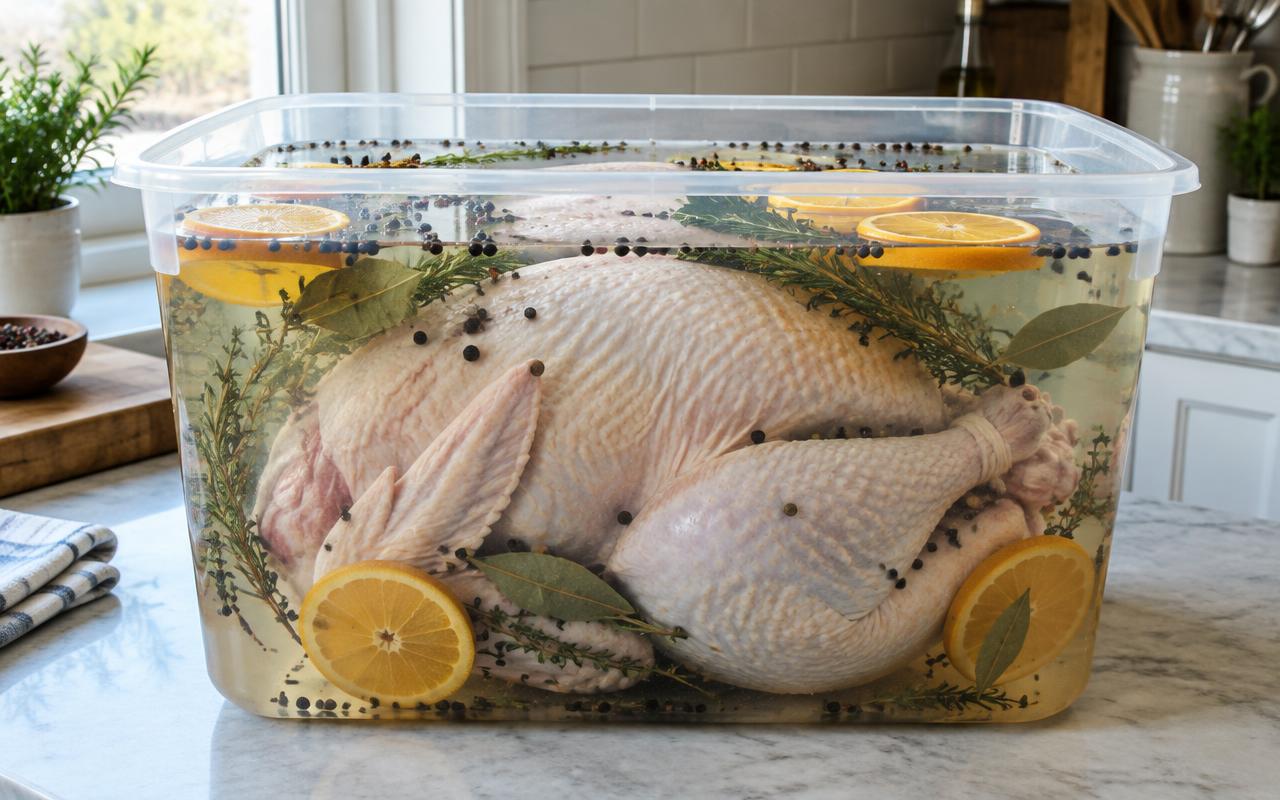
3. Choose a container. Use a food safe bucket, cooler, stockpot or large brining bag set in a pan.
4. Submerge. Place the turkey breast side down and pour in brine to cover. Weigh it down with a plate if it floats.
5. Keep it cold. Refrigerate for 12 to 24 hours. In a cooler, add ice packs and check that the water stays at 40 F or below.
6. Rinse and dry. Remove the turkey, rinse briefly, and pat completely dry. Discard the brine.
7. Air dry. For crisp skin, refrigerate uncovered on a rack for several hours or overnight.
8. Roast. Roast at 325 F until a thermometer reads 165 F in the thickest part of the breast, the innermost thigh and the wing.
How Do You Dry Brine a Turkey?
Dry brining uses salt alone and no bucket. Many cooks prefer it for crisper skin.
1. Season. Mix kosher salt with herbs, pepper and a little sugar if you like. Use about 1 tablespoon of Diamond Crystal per 4 to 5 pounds.
2. Rub. Rub it all over the turkey and under the breast skin.
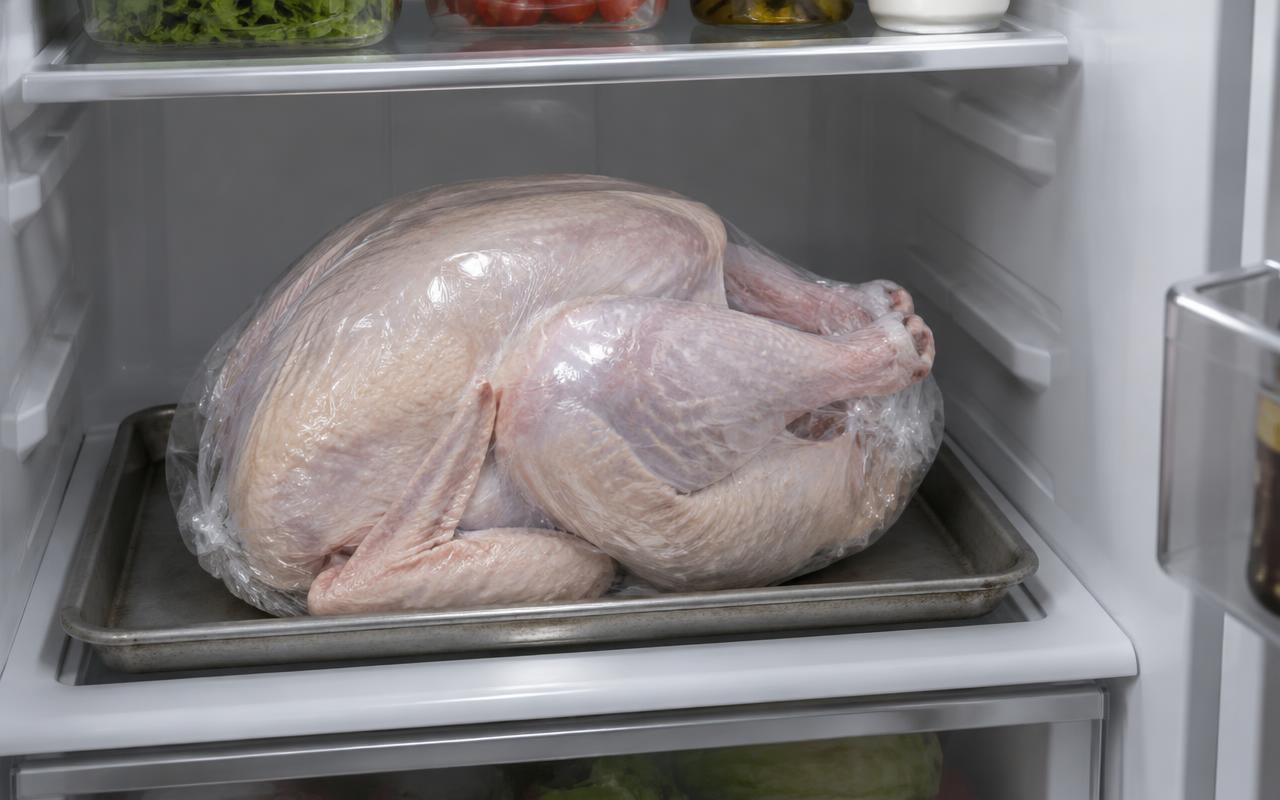
3. Chill uncovered. Set the turkey on a rack in a pan and refrigerate for 1 to 3 days. Do not rinse before roasting.
How Long Should You Brine a Turkey?
- Wet brine: 12 to 24 hours. Longer can make the texture spongy and too salty.
- Dry brine: 24 to 72 hours.
- Turkey breast only: 6 to 12 hours wet, or 1 day dry.
Is Brining a Turkey Safe?
Yes, if you keep it cold. USDA FSIS advises keeping raw turkey at 40 F or below. Brining at room temperature lets bacteria grow quickly.
Clean and sanitize the sink and container afterward, since raw poultry juices can spread germs. Always confirm doneness with a thermometer, not the color of the juices.
How Much Turkey Do You Need?
FSIS suggests about 1 pound of turkey per person. Buy a little more if you want leftovers.
What Flavors Can You Add to a Turkey Brine?
- Apple cider brine: swap half the water for apple cider and add cinnamon sticks.
- Citrus herb: extra orange and lemon, plus rosemary and thyme.
- Maple: replace the sugar with maple syrup.
- Spiced: add allspice berries, star anise and a little fresh ginger.
Flavorings mostly perfume the skin and outer meat. Salt does the real work, so do not cut it.
How Do You Roast a Brined Turkey?
Brined turkeys brown faster because of the sugar, so watch the skin. Tent the breast loosely with foil if it darkens before the thighs are done.
Plan on about 13 to 15 minutes per pound at 325 F for an unstuffed turkey, but rely on the thermometer. Let it rest for 20 to 30 minutes before carving so the juices settle.
How Far Ahead Should You Plan?
Work backward from Thanksgiving. A large frozen turkey needs several days to thaw in the refrigerator, then 1 day for a wet brine or up to 3 days for a dry brine.
For a 16 pound frozen turkey, that means moving it to the fridge the Friday or Saturday before, brining on Tuesday or Wednesday, and air drying overnight before roasting on Thursday.
Frequently Asked Questions
Can I brine a frozen turkey?
No. Thaw it fully in the refrigerator first.
Should I rinse after a wet brine?
A quick rinse removes surface salt. Pat it very dry afterward.
Can I use the drippings for gravy?
Yes, but taste first. Brined drippings can be salty, so use unsalted stock.
Wet or dry brine?
Dry gives crisper skin with less mess. Wet gives slightly juicier meat.
The Bottom Line
Brining makes a juicier, better seasoned turkey. Use about 1 cup kosher salt per gallon of water for 12 to 24 hours, or a dry rub of salt for 1 to 3 days.
Keep it at 40 F or below, dry the skin well and roast to 165 F for a safe, moist Thanksgiving bird.