Quick Answer
To avoid checked bag fees, travelers should prioritize flying with Southwest Airlines, which famously allows two free checked bags for every passenger. Alternatively, carrying a co-branded airline credit card often waives the first checked bag fee for the cardholder and several companions on the same reservation. This single benefit can save a family hundreds of dollars on a round trip flight.
Another reliable method involves reaching elite status through frequent flyer programs or strategically packing into a regulation sized carry-on and personal item. By understanding the specific dimensions allowed by each carrier and avoiding basic economy tickets that restrict overhead bin access, you can master the art of traveling without paying extra at the check-in counter. I recommend weighing your bag before leaving home to ensure it meets carry-on limits.
Leveraging Airline Credit Cards for Annual Savings
One of the most effective strategies to avoid checked bag fees is to carry a co-branded credit card from a major carrier like Delta, United, or American Airlines. Most entry-level airline cards with an annual fee between 95 and 100 dollars provide a free first checked bag for the primary cardholder. The real value lies in the companion benefit, as many these cards extend the same waiver to up to eight people traveling on the same itinerary. If you travel with a family once a year, the savings often exceed the card's annual fee in a single trip.
It is important to note that you usually do not need to pay for the flight with the specific airline card to receive the benefit, though United Airlines is a notable exception that requires the ticket purchase to be on their card. You simply need to ensure your frequent flyer number is attached to your reservation. I have found this to be the most "set it and forget it" method for frequent domestic travelers who prefer not to sacrifice their favorite liquids or bulky items. These cards often come with additional perks like priority boarding, which ensures you find space in the overhead bin before it fills up.
Before applying, check if the card offers the bag benefit on international routes, as some restrictions may apply depending on the destination and the partnership agreements between airlines. It is also wise to monitor your card status, because if you cancel the card, the benefit typically disappears immediately. For those who fly various airlines, a general travel rewards card might offer a yearly travel credit that can be applied toward baggage fees, providing more flexibility than a single-airline card.
The Southwest Airlines Two Bags Free Advantage
Southwest Airlines remains the only major domestic carrier in the United States that allows every passenger two checked bags for free. This policy is regardless of the fare class purchased, meaning even the "Wanna Get Away" cheapest tickets include this 50-pound allowance per bag. This unique business model allows travelers to avoid checked bag fees without needing a special credit card or elite status. For families, ski trips, or long-term travelers, this can represent a savings of 60 to 120 dollars per person on a round-trip journey.
I often suggest that travelers compare the total cost of a flight rather than just the base fare. A legacy carrier might offer a fare that is 40 dollars cheaper than Southwest, but after adding a 35 dollar bag fee each way, the legacy carrier becomes significantly more expensive. Southwest also has generous policies regarding sports equipment: items like golf bags or skis often count as one of the two free bags. This makes them the go-to choice for outdoor enthusiasts who cannot fit their gear into a standard carry-on suitcase.
The only caveat with Southwest is their open seating policy. While your bags fly for free, you might want to pay for "EarlyBird Check-In" to ensure you get a better boarding position and overhead bin space for your smaller items. However, since you are likely checking your larger suitcases for free, the pressure to find overhead space is greatly reduced. Their commitment to this policy has remained a cornerstone of their brand identity for decades, making them the most reliable option for budget-conscious packers.
Avoiding the Basic Economy Baggage Traps
When searching for flights online, the lowest price shown is often a "Basic Economy" fare. These tickets are designed to compete with ultra-low-cost carriers and often have very restrictive baggage rules. On airlines like United or JetBlue (for certain fare types), Basic Economy passengers are sometimes prohibited from using the overhead bins entirely. This means you are limited to a single personal item that must fit under the seat in front of you. If you show up at the gate with a standard rolling carry-on, you may be forced to gate-check it and pay a hefty fee plus a handling surcharge.
To avoid checked bag fees in these scenarios, I recommend reading the fine print carefully during the booking process. Often, the "Main Cabin" or "Economy" fare is only 20 to 30 dollars more than Basic Economy but includes a free carry-on bag and the ability to choose your seat. If you plan on bringing a suitcase, paying for the higher fare class is almost always cheaper than paying the penalty fees associated with bringing a bag to a Basic Economy gate. It is a psychological trap where the initial low price lures you in before the add-on costs accumulate.
If you are flying an ultra-low-cost carrier like Spirit or Frontier, they charge for both checked and carry-on bags. In these cases, it is actually usually cheaper to pay for a checked bag during the initial booking than it is to pay for a carry-on. Their carry-on fees are often higher because they want to speed up the boarding process. If you must use these airlines, pay for your bags at the moment of ticket purchase to get the lowest possible rate, as the price increases as you get closer to the departure date.
Mastering Personal Item Optimization and Packing
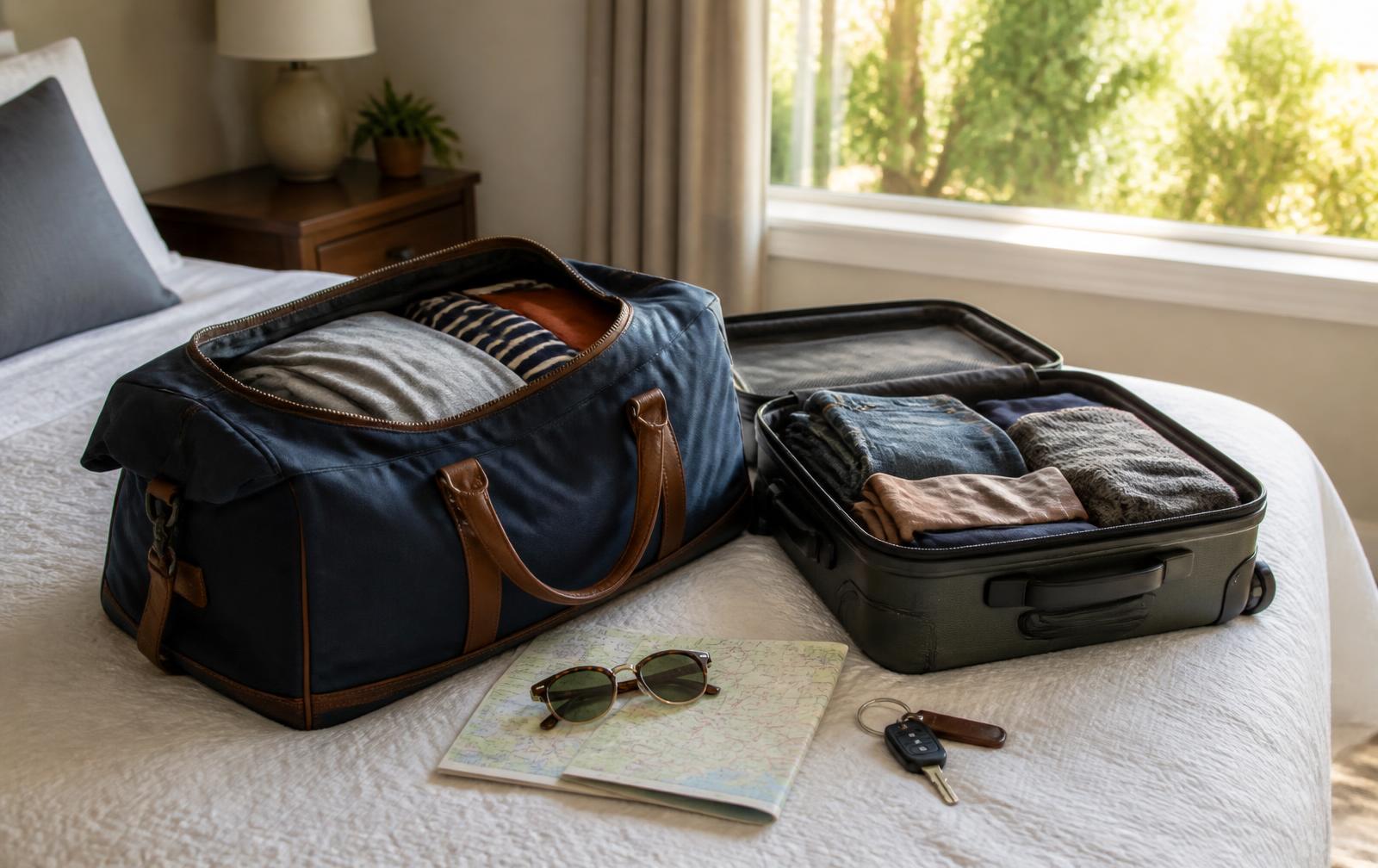
One of the most reliable ways to avoid checked bag fees is to master the art of "personal item only" travel. Most airlines allow one personal item (like a backpack, laptop bag, or tote) for free, provided it fits under the seat. By choosing a bag that maximizes these specific dimensions, usually around 18 by 14 by 8 inches, you can often fit three to four days' worth of clothing. Using compression packing cubes is a game-changer here: they allow you to squeeze the air out of your garments, significantly reducing the volume they occupy in your bag.
I suggest wearing your heaviest items on the plane. If you are traveling with a bulky jacket, boots, or heavy jeans, wear them through security and onto the aircraft. This frees up crucial space in your bag for smaller items. You can also utilize "hidden" space by stuffing socks inside your shoes or using a neck pillow cover to store soft clothing items like t-shirts. Many travelers find that by transitioning to a capsule wardrobe, where every piece of clothing coordinates with the others, they can significantly reduce the number of items they need to pack.
Another tip involves the strategic use of terminal shopping. If you find your bag is slightly over the weight limit or too full, remember that most airlines do not count a bag of items purchased at an airport duty-free shop or newsstand as an extra carry-on. While I do not advocate for excessive consumerism, placing a heavy item like a book or a souvenir in a shopping bag can sometimes help you meet the strict weight requirements of certain international carriers without incurring a fee for a checked suitcase.
The Gate-Check Strategy and Elite Status Perks
For those who cannot avoid bringing a larger bag, the gate-check strategy is a common, though slightly risky, tactic. On many full flights, especially on smaller regional jets with limited overhead space, gate agents will ask for volunteers to check their carry-on bags to their final destination for free. This is a legitimate way to avoid checked bag fees if you were already planned on carrying the bag onto the plane. However, you must ensure your bag meets the carry-on size requirements first, as an oversized bag might still be flagged for a fee at the counter.
If you travel frequently for work, achieving elite status is the ultimate way to eliminate baggage costs. Most "Silver" or "Gold" tiers on major airlines include at least one or two free checked bags as a standard benefit. Even the lowest tier of status often grants you access to priority check-in lines, which saves time as well as money. If you are close to reaching a status milestone at the end of the year, it might be worth a "mileage run" to secure those benefits for the following year, especially if you plan on taking several long-haul trips.
Finally, consider the benefits of "bundling" if you are not an elite flyer. Some airlines offer a package deal during checkout that includes a checked bag, a seat selection, and priority boarding for a flat fee that is lower than the individual costs. While this is still a payment, it is a way to minimize the total expenditure. Always double-check your airline's specific weight limits, as international carriers often have much lower weight caps (sometimes as low as 15 pounds) for carry-on bags than domestic US airlines.
Frequently Asked Questions
Can I bring a carry-on bag for free on all airlines?
No, several budget airlines like Spirit, Frontier, and Allegiant charge for overhead bin space, and many major carriers restrict carry-on bags for "Basic Economy" ticket holders.
Does an airline credit card cover bags for my friends?
Most airline credit cards extend the free checked bag benefit to a certain number of companions (often between one and eight) as long as they are booked on the same confirmation number as the cardholder.
Is it cheaper to pay for a bag at the airport?
No, it is almost always more expensive to pay for a bag at the airport check-in counter. Most airlines offer a discount if you pay for your checked bag online or through their mobile app at least 24 hours before the flight.
Is the personal item separate from a carry-on?
On most standard economy tickets, you are allowed one carry-on bag for the overhead bin and one personal item that must fit under the seat, but you should always check your specific fare rules.
Bottom Line
To successfully avoid checked bag fees, you must be proactive and understand the specific rules of the airline you are flying. Whether you choose to fly Southwest for their inclusive policies, use a co-branded credit card to unlock waivers, or master the efficiency of packing into a single personal item, there are many ways to keep your travel costs down. I always recommend checking your fare class details before hitting the purchase button to ensure you are not surprised by hidden baggage costs at the terminal.