Quick Answer
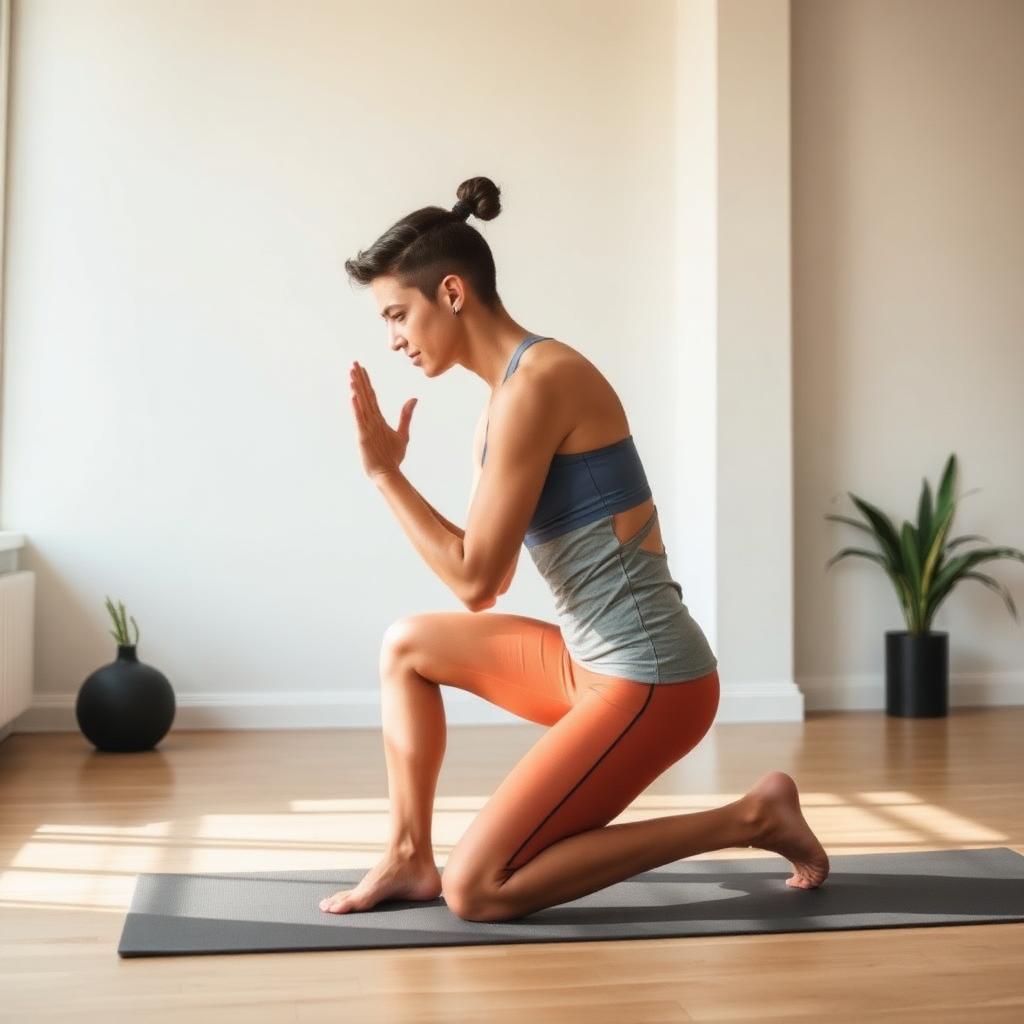
Drop into a half-kneeling lunge with your right knee on a mat and your left foot flat in front. Before you shift your weight forward, tuck your pelvis under by squeezing the right glute hard. Then nudge your hips forward two or three inches. Hold 30 to 45 seconds, switch sides. The squeeze and tuck is what actually stretches the hip flexor. Skip it and you are just compressing your lower back.
For chronically tight hips from desk work, progress to the couch stretch: same kneeling position, but the back foot is pressed flat against a wall or couch, knee resting on a cushion at the base. That hits the deeper rectus femoris muscle and gives the strongest stretch most people will ever feel.
The stretch progression
| Stretch | Target | Hold time |
|---|---|---|
| Kneeling lunge with pelvic tuck | Psoas major | 30 to 45 seconds per side |
| Couch stretch | Rectus femoris and deep hip flexors | 45 to 60 seconds per side |
| Standing figure-4 with hip drive | Glutes and hip capsule | 30 seconds per side |
Why hip flexors get tight in the first place
The hip flexor group includes the psoas major, iliacus, and rectus femoris. When you sit in a chair, all three sit in a continuously shortened, contracted position for the entire workday. Multiply that by eight hours a day, five days a week, for years, and the tissue adapts to that shortened length. The pelvis then tilts forward (an anterior pelvic tilt), the lumbar spine arches more than it should, and the glutes get neurologically inhibited because they are stuck on stretch. The downstream symptom is low back pain that does not respond to back stretches, because the back is not the actual problem.
Step 1: the kneeling lunge done correctly
Almost everyone does this stretch wrong. The common version is to drop into a lunge and lean forward into the front knee, hoping for a stretch. That just pinches the lumbar spine and rotates the pelvis further forward, which makes the underlying problem worse.
The correct version:
- Drop into a half-kneeling position on a mat. Right knee down, left foot flat in front, both at clean 90-degree angles.
- Before you move your hips at all, perform a posterior pelvic tilt. Picture your pelvis as a bucket of water and pour the water out the back. You will feel your right glute switch on hard.
- Maintaining that glute squeeze, nudge your hips forward by just two or three inches. A real stretch will bloom across the top of your right thigh and the front of your right hip.
- Breathe deeply for 30 to 45 seconds. Do not bounce. Switch sides.
If you cannot feel a stretch at all, your glute is not firing. Squeeze harder. If you feel pinching in the lower back, you skipped the tuck.
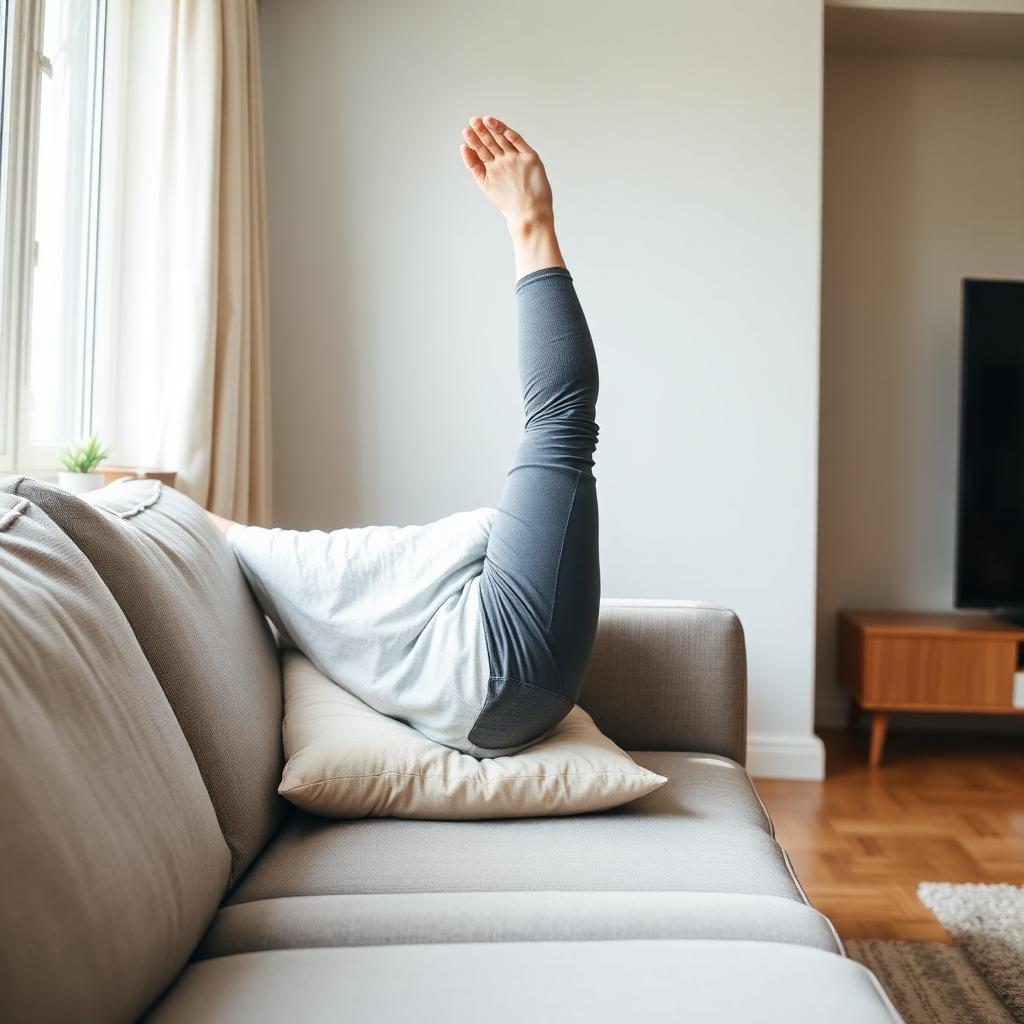
Step 2: progress to the couch stretch
Once the kneeling lunge feels easy, move to the couch stretch. It is the strongest hip flexor stretch in common use.
- Place a soft pillow at the base of a wall or the front of a couch.
- Get on hands and knees and back up so your right knee rests on the pillow with the right shin running vertically up the wall, foot pointed up, top of the foot pressed flat against the wall.
- Step your left foot forward, flat on the floor, like a regular lunge.
- Slowly raise your torso to vertical. Use a chair for support the first few times if you need it.
- Apply the same posterior pelvic tuck. Hold for 45 to 60 seconds. Switch sides.
This stretch will be intense the first time. Build up. If you cannot hold for 30 seconds without breaking form, regress to the kneeling lunge for two weeks before trying again.
Step 3: add a glute activator
Stretching the front of the hip is half the equation. The other half is waking up the glutes that the sitting position has switched off. Two minutes of glute bridges or single-leg hip thrusts after your stretches reinforces the new range and trains the pelvis to stop tipping forward when you stand. Without that, the tissue lengthens, then snaps right back to its old position within a few hours of returning to the chair.
How often, and for how long
Daily is the answer. Hip flexor tightness from chronic sitting does not resolve from a once-a-week yoga class. Two minutes per side, twice a day, for three or four weeks is what it usually takes to feel a permanent shift. After that, a maintenance dose of two minutes daily is enough to keep the gains, as long as the underlying cause (eight hours of sitting) does not change.
What to do if you also have low back pain
If your back pain is new, sharp, radiates down a leg, or comes with numbness, see a clinician before starting any stretch routine. The kneeling lunge and couch stretch are safe for most people but not for everyone. If the pain is the familiar dull desk-worker ache that comes and goes, the stretches above are almost certainly part of the answer, paired with regular standing breaks and a chair set up so your hips sit slightly above your knees.
The takeaway
Hip flexor tightness from sitting is fixed by a glute squeeze plus a posterior pelvic tuck plus a forward hip nudge, not by leaning harder into a lunge. Do the kneeling version daily, progress to the couch stretch when you can, and add a few glute bridges to lock in the new range. Most desk workers feel meaningfully looser inside two weeks.