Quick Answer
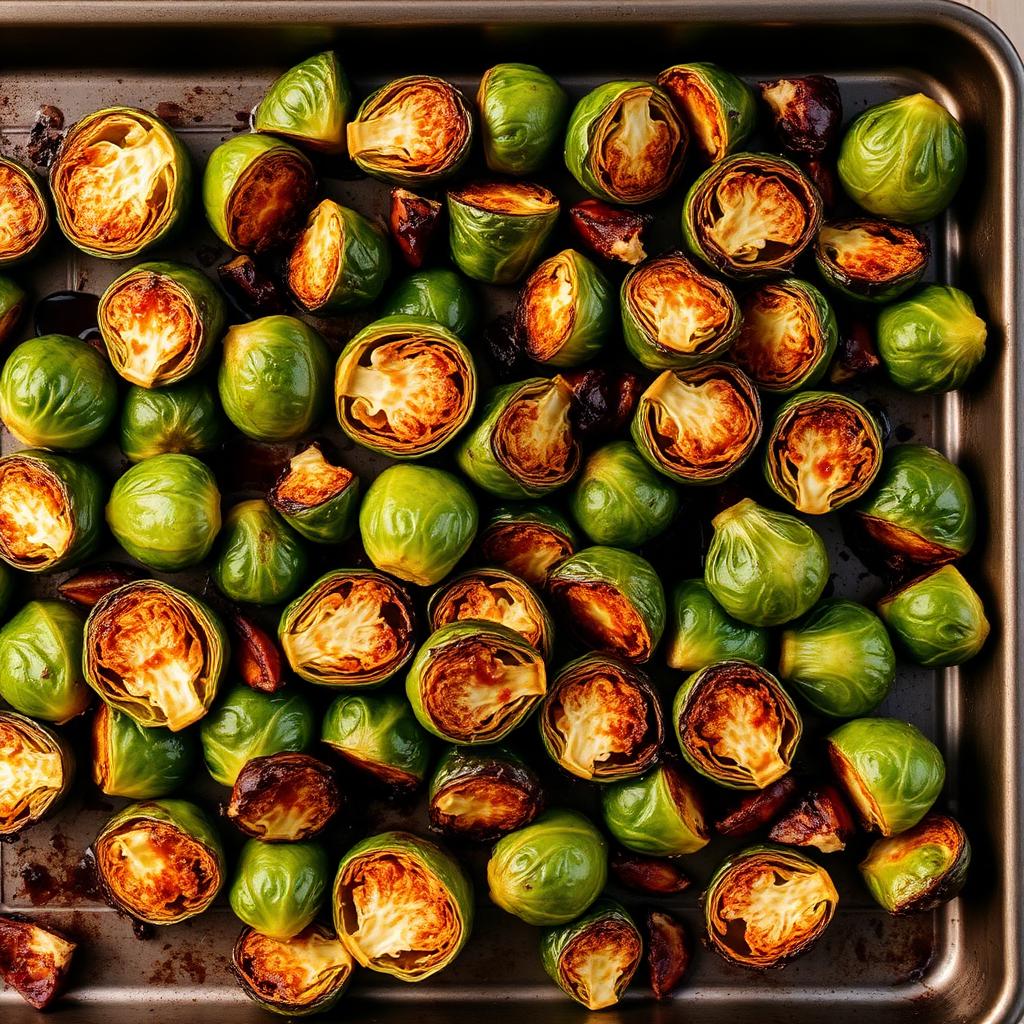
Halve small Brussels sprouts, toss with 2 tablespoons of oil per pound, and roast cut side down on a bare metal sheet pan at 425F (220C) for 20 to 25 minutes.
Do not use parchment paper, do not crowd the pan, and do not stir during the first 15 minutes. The flat cut side has to stay in direct contact with hot metal long enough to caramelize.
Finish with a hit of acid (lemon, balsamic, or hot honey) the moment they leave the oven.
Why Brussels sprouts went from hated to beloved
For decades, Brussels sprouts meant boiled, sulfur smelling, mushy little cabbages. The rehabilitation happened the moment chefs switched to dry, high heat roasting. The natural sugars caramelize, the outer leaves crisp into chips, and the slight bitterness mellows into something nutty and almost sweet.
That transformation depends on three controllable factors: surface contact, moisture management, and temperature. Get those right and the result is consistent every time.
Pick the right sprouts
Choose small to medium sprouts (roughly the size of a large grape or a walnut). They are sweeter and less sulfurous than the giant softball sized ones. Look for tight, bright green leaves and a firm feel. Yellowing outer leaves or a spongy core mean they are past their prime.
If you can only find large sprouts, quarter them instead of halving so you still expose plenty of flat surface area.
Prep that sets you up to win
Trim minimally
Shave off the dry brown tip of the stem with a paring knife. Do not cut deep into the core or the leaves will fall apart.
Halve through the stem
Slice each sprout in half top to bottom through the stem base. This creates a flat surface, which is where caramelization happens via the Maillard reaction.
Keep the loose leaves
Outer leaves that fall off during trimming are a feature, not a flaw. Toss them in with the halves. They turn into crisp, almost chip like pieces during roasting and add texture.
Dry them completely
If you washed the sprouts, spin them dry or roll them in a clean towel. Water is the single biggest enemy of crispness. Wet sprouts steam instead of roast and you end up with a tray of disappointing mush.
The blueprint formula
Step 1: Get the oven properly hot
Preheat to 425F (220C). At 350F or 375F the sprouts soften and turn yellow before they brown. 425F is the inflection point where the surface caramelizes faster than the interior can sweat moisture.
Step 2: Fat and seasoning ratio
Use 2 tablespoons of oil per pound (450g) of trimmed sprouts. Add 1 teaspoon of kosher salt and half a teaspoon of cracked black pepper. Toss until every sprout has a glossy coat.
Step 3: Use bare metal
Skip parchment, skip silicone mats. Bare aluminum or steel transfers heat far more efficiently and gives you the dark sear you want. Yes, cleanup is slightly worse. The flavor payoff is worth it.
Step 4: Flat side down, every single one
Take two minutes to flip every halved sprout so the cut side faces the pan. This is the highest leverage step in the entire process. Scatter the loose leaves over the top.
Step 5: Roast and do not peek
Slide the pan into the oven and walk away for 15 minutes. Opening the door drops oven temperature by 50F or more and interrupts the sear. At 20 minutes, check. The flat side should be deeply browned, almost charred at the edges. A fork should slide easily into the core. If it is still firm, give it 3 to 5 more minutes.
Common mistakes that ruin the result
- Crowding the pan: sprouts piled on each other steam instead of roast. Give each one breathing room or split between two pans.
- Cold oven start: sprouts have to hit hot metal immediately. A lukewarm oven gives you soggy outer leaves.
- Too much oil: more than 2 tablespoons per pound drowns the leaves and prevents crispness.
- Tossing midway: every flip resets the sear timer. Leave them alone for the first 15 minutes.
Finishing flavors that elevate the dish
Once your base method is solid, layer flavor in the last 3 minutes or right after pulling the tray:
- Agrodolce: drizzle with aged balsamic glaze and a teaspoon of hot honey straight out of the oven.
- Bacon or pancetta: toss diced raw bacon onto the pan from the start. The rendered fat coats the sprouts in savory richness.
- Parmesan crust: grate finely shredded Parmigiano Reggiano over the sprouts for the final 3 minutes. It melts into a crispy lacy crust.
- Maple sriracha: whisk 1 tablespoon maple syrup with 1 teaspoon sriracha and toss with hot sprouts.
- Lemon and chili flake: brightens everything with just a squeeze of fresh lemon and a pinch of Aleppo or red pepper flakes.
Troubleshooting
Why are mine still soggy?
Three usual suspects: damp sprouts, an overcrowded pan, or too much oil. Fix any one of those and you will see a clear improvement.
Should I parboil first?
No. Parboiling adds internal water that dilutes the sugars and prevents proper browning. 425F dry heat cooks the core just fine.
Can I use frozen Brussels sprouts?
You can, but expect less crispness. Roast straight from frozen, do not thaw (thawing releases water), and add an extra 5 to 8 minutes.
How do I store leftovers?
Refrigerate in a shallow container for up to 4 days. Reheat in a 400F oven for 6 to 8 minutes (skip the microwave, which makes them limp).
The takeaway
Halve, dry, oil, salt, flat side down on bare metal at 425F. Leave them alone. Acid at the end. Those rules turn the most maligned vegetable of the 1990s into the side dish people fight over at the table.