Quick Answer
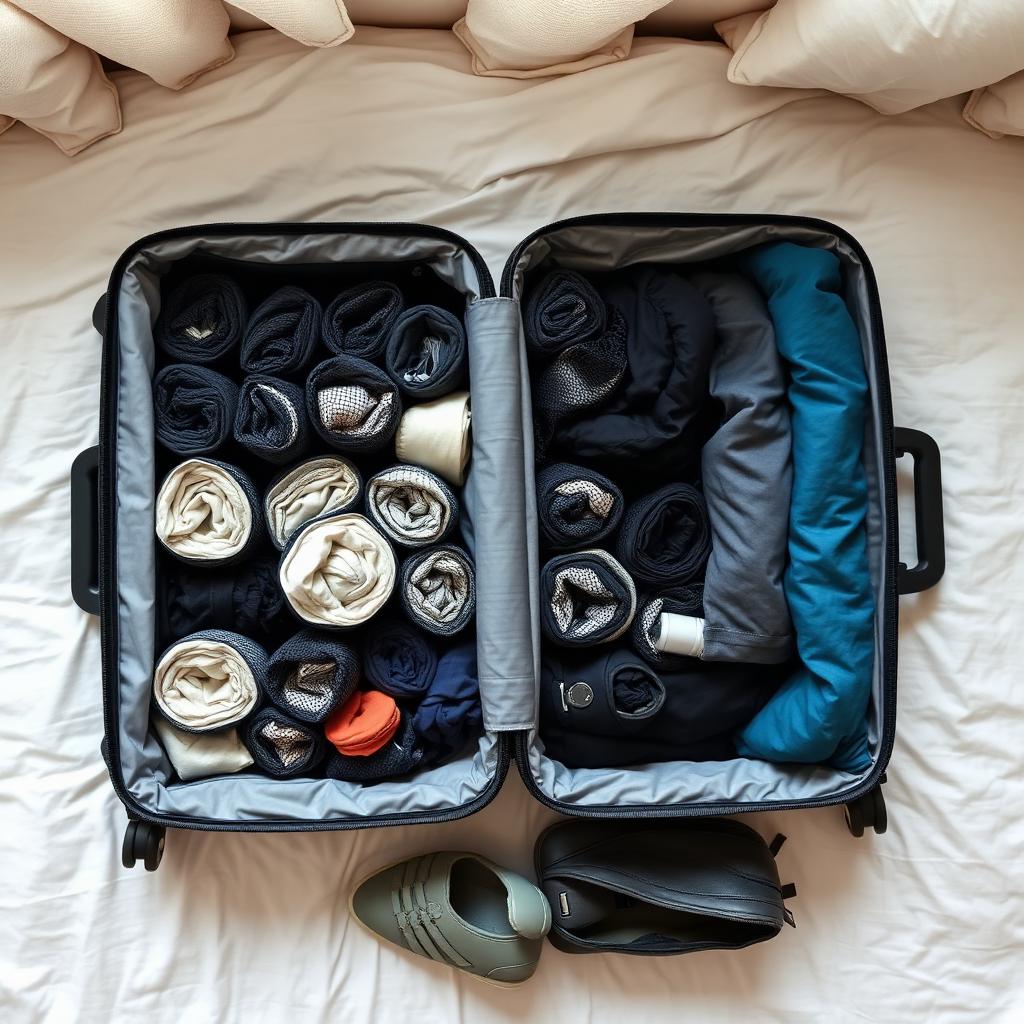
The fastest way to pack more into one suitcase is to roll your clothes tightly instead of folding them, slot the rolls into mesh compression cubes, and put the heaviest items (shoes, toiletry bags) right next to the wheels so the bag stays balanced when you stand it up.
For a week long trip use the 5 4 3 2 1 rule: 5 pairs of socks and underwear, 4 tops, 3 bottoms, 2 pairs of shoes, 1 jacket or hat. Done well, this approach frees up roughly 30 to 40 percent of your luggage volume and keeps clothes wrinkle free.
Build a layered packing plan before you start
Think of a suitcase as a four layer system rather than a single bucket. The bottom layer (closest to the wheels) holds dense, heavy items that should not move in transit. The core middle chamber holds your tightly rolled clothes. The top perimeter layer holds delicate items like a blazer, a dress shirt, or a swimsuit cover up that you want to lay flat. The outer zipper pocket holds documents, chargers, a power bank, and anything you might need to pull out fast at airport security.
Planning the layers in advance stops you from repacking three times. It also keeps the heaviest mass low so the bag glides smoothly behind you instead of toppling sideways every time you stop walking.
Step 1: Cut your packing list with the 5 4 3 2 1 rule
Most travellers pack roughly double what they actually wear. The 5 4 3 2 1 rule is a well known travel formula that covers a full week of varied outfits while keeping the load light enough for a single carry on.
- 5 pairs of socks and underwear (one for each weekday, plus a spare).
- 4 tops in colours that mix and match.
- 3 bottoms such as one pair of jeans, one pair of trousers, and one pair of shorts.
- 2 pairs of shoes: one comfortable walking pair you wear on the plane and one dressier pair packed inside the bag.
- 1 jacket or hat appropriate for the destination weather.
Add a swimsuit or workout kit only if your itinerary actually calls for it. Pack to the trip, not to your wardrobe.
Step 2: Roll, do not fold
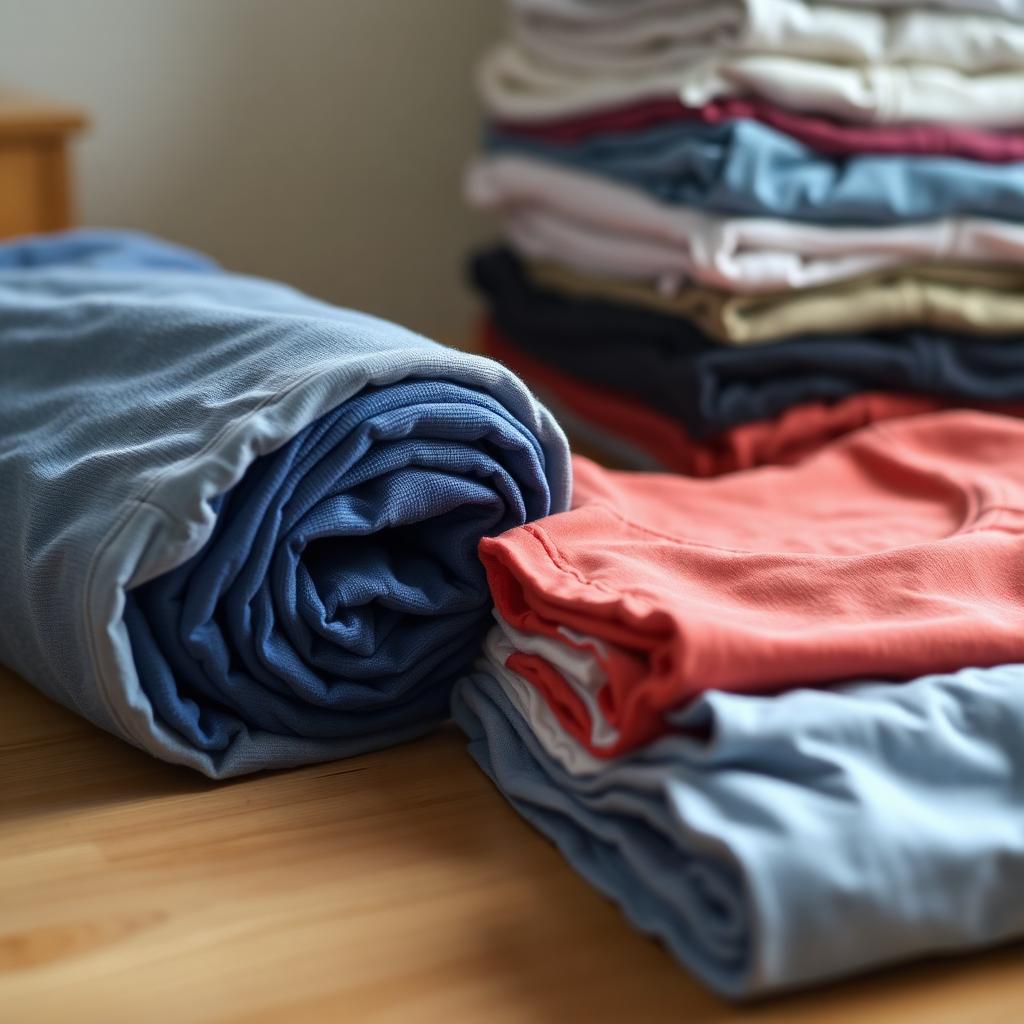
Folded clothes trap large pockets of air between layers, which is why a folded stack feels bulky. Rolling presses the fibres tight against each other and squeezes that air out, so the same shirt takes up roughly 30 to 40 percent less volume. The military style ranger roll goes one step further by turning the bottom hem inside out first to create a cuff, then using that cuff to lock the rolled cylinder so it cannot unravel in transit.
Lay the garment flat, flip the bottom two inches inside out to form a cuff anchor, fold the sleeves in so the shape is a clean rectangle, then roll from the collar down into a dense cylinder. Pull the cuff up and over the roll. The roll stays locked, the fabric stays under tension, and deep creases never form because the cloth never has room to crumple.
Step 3: Group rolls inside compression cubes
Loose rolls slide around and unravel. Mesh compression packing cubes solve both problems. Group rolls by type: small cube for socks and underwear, medium cube for tops, large cube for bottoms. The double zipper on a compression cube lets you close the bag normally and then crank a second zipper that physically squeezes the walls together, pushing more air out.
Cubes also save time at the destination. You can lift a single cube out of the suitcase, drop it straight into a hotel drawer, and live out of it for the trip without ever fully unpacking.
Step 4: Load by weight, not by size
Place your heaviest items, usually shoes and a toiletry bag, at the bottom of the case next to the wheels. When you stand the suitcase up at the airport, gravity pulls those heavy items down and keeps the centre of mass low. A low centre of mass means the bag rolls straight, takes corners cleanly, and does not pull your wrist sideways.
If you put heavy shoes at the top, the bag becomes top heavy, the moment you angle it on its wheels the shoes slide down through the clothing, crushing your neat rolls and creating the exact wrinkles you tried to avoid. Stuff socks inside the shoes themselves to reclaim the dead space. Put shoes in cloth shoe bags so they do not dirty other items.
Step 5: Use the perimeter for delicate items
The top perimeter of the case is where you place anything you do not want creased. A blazer or dress can be laid flat across the top with the sleeves and hem folded only at the suitcase edges. Lay tissue paper or a dry cleaner bag between folds to stop the crease from setting. Belts coil neatly around the inner edge of the case. Ties roll loosely and slip into shoes for shape protection.
Common packing mistakes that waste space
Overstuffing toiletries is the silent space killer. Decant shampoo into small refillable bottles and skip anything the hotel will provide. Packing a hairdryer is almost always wasted weight: nearly every hotel supplies one. Bringing more than two pairs of shoes is the single largest space cost most travellers make.
The takeaway
Efficient packing is a layered system, not luck. Cut the list with 5 4 3 2 1, roll every soft item, lock the rolls inside compression cubes, and load the bag heaviest at the wheels with delicates on top. Done in that order, a standard carry on swallows a full week of clothing with room left for souvenirs and arrives at the destination without a single deep crease.