Quick Answer
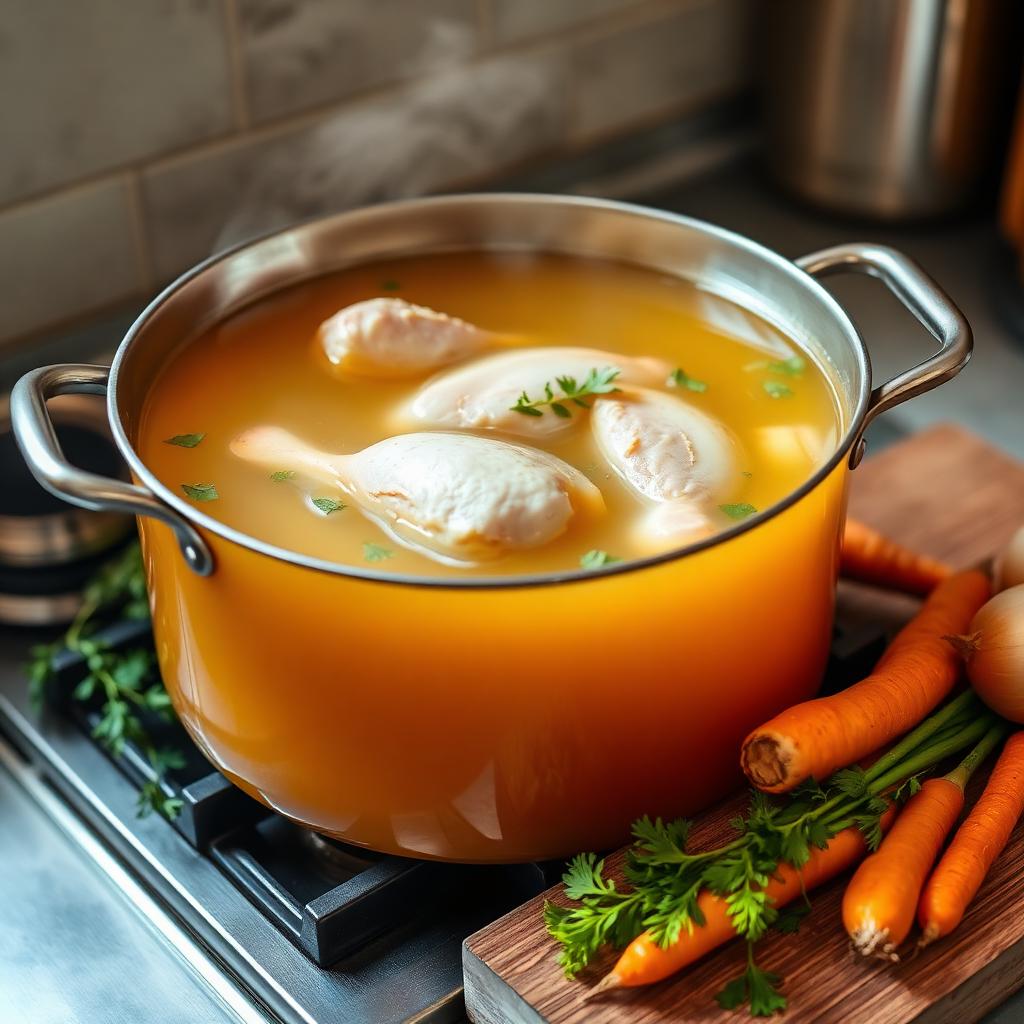
A great homemade stock comes from simmering bones, aromatics, and a classic mirepoix (two parts onion, one part carrot, one part celery) in cold water at a bare simmer for hours, never a hard boil. The slow heat breaks down collagen in the bones into gelatin, which is what gives stock its rich body and silky mouthfeel.
Roast the bones first for a dark beef or veal stock. Blanch them for a clear white stock from chicken or fish. Start in cold water, hold the temperature between 180 and 200 degrees Fahrenheit, and skim the foam off in the first hour.
Simmer times vary by ingredient: 30 to 45 minutes for fish, 4 to 6 hours for chicken, 8 to 12 hours for beef.
The science of body
The thing that separates a real stock from a watery broth is gelatin. Collagen, the tough protein in bones, joints, and connective tissue, slowly converts to gelatin when held at low heat in water. That gelatin is what gives chilled stock the wobbly jelly texture and gives hot sauces that velvety coating quality.
Higher collagen cuts make richer stock. Chicken feet, oxtail, knuckle bones, and pork trotters are the gold standard. Plain rotisserie chicken carcasses still work but produce a lighter result.
The mirepoix ratio
French kitchens standardize the aromatic base at 2 parts onion, 1 part carrot, 1 part celery by weight. For every 4 pounds of bones, that means roughly:
- 2 medium onions, roughly chopped, skins on if your stock is dark.
- 1 large carrot, scrubbed and cut into chunks.
- 2 ribs of celery, chopped into 2 inch pieces.
- A bouquet garni of thyme, parsley stems, bay leaves, and whole peppercorns tied in cheesecloth.
No salt during stock making. Salt now means an over salted reduction later.
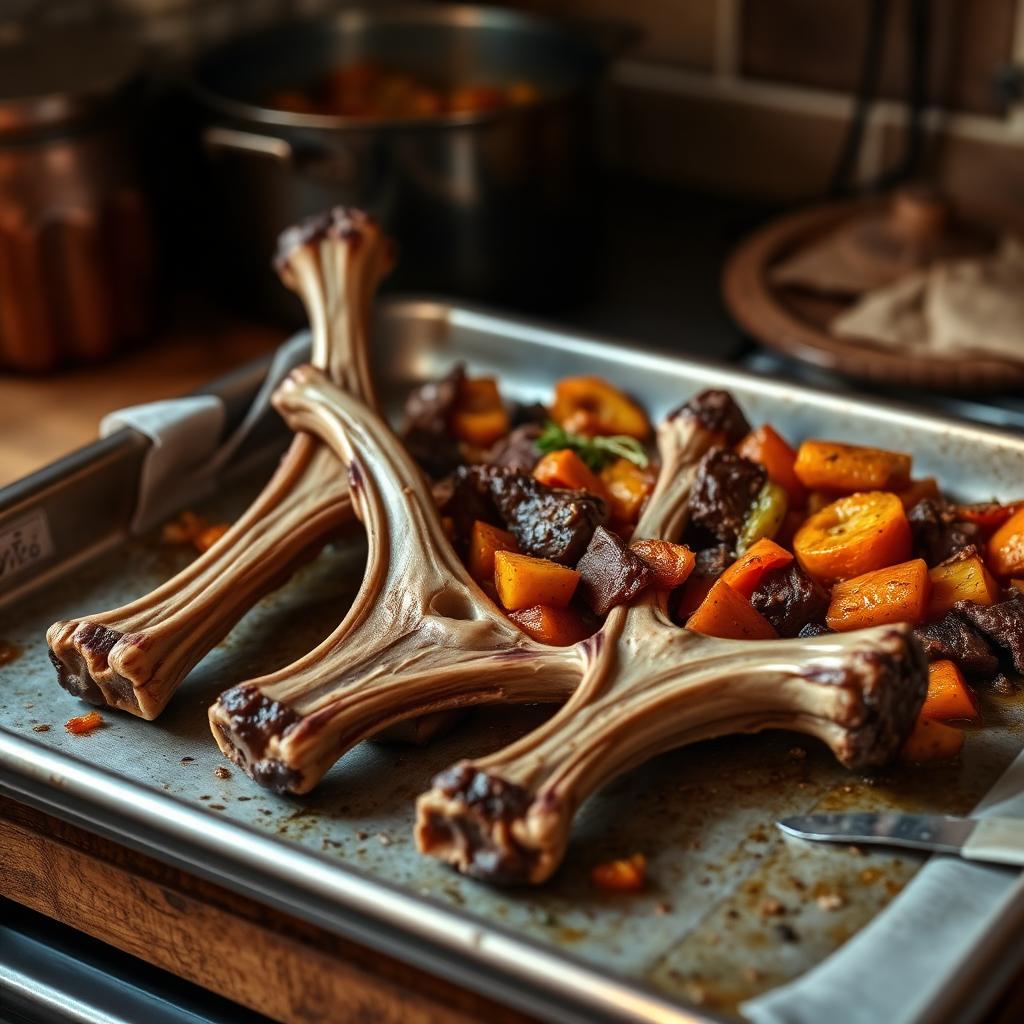
Step 1: Prep the bones
For dark stock from beef or veal, spread the bones on a baking sheet and roast at 400 degrees Fahrenheit for 45 minutes until deep golden brown. The Maillard reaction during roasting builds the caramelized depth that defines a great brown stock.
For white stock from chicken or fish, skip roasting. Drop the bones into a pot of boiling water for 10 minutes, drain, and rinse. This blanch removes surface blood and impurities so the finished stock stays clear.
Step 2: Cover with cold water
Always start in cold water. As the water heats slowly, soluble proteins rise to the surface as grey foam that you can skim away. Drop bones into already hot water and those proteins lock inside, leaving a permanently cloudy stock.
Cover the bones by about 2 inches. Too much water dilutes the final stock and forces a long reduction later.
Step 3: Hold a bare simmer
Bring the pot just to a boil, then immediately drop the heat. You want a bare simmer at about 180 to 200 degrees Fahrenheit, where only a few small bubbles break the surface every few seconds.
A rolling boil emulsifies fat and protein particles into the liquid permanently, turning the stock cloudy and greasy. This single mistake ruins more home stocks than anything else.
Step 4: Skim and add aromatics
During the first hour, use a ladle to skim grey foam and rendered fat as it rises. Add the mirepoix and bouquet garni only during the final 1 to 2 hours of cooking. Vegetables held in a long simmer go bitter, so adding them late keeps the flavor bright.
Stock type and simmer time
- Fish or seafood: 30 to 45 minutes. Anything longer turns bitter from the bones.
- Vegetable: 45 to 60 minutes. Strain before vegetables fall apart.
- Chicken or poultry: 4 to 6 hours for full collagen extraction.
- Beef or veal: 8 to 12 hours for deep flavor and maximum body.
Step 5: Strain, cool, and store
Strain through a fine mesh sieve lined with cheesecloth into a clean bowl. Press lightly on the solids but do not push too hard or you cloud the liquid.
Cool fast by setting the bowl in a larger bowl of ice water and stirring occasionally. Quick cooling is a food safety habit, not a luxury. Once cold, the fat solidifies on top and lifts off in one easy disc. Refrigerate up to 4 days or freeze up to 6 months. Frozen stock in muffin tin portions thaws perfectly for a quick sauce.
The takeaway
Cold water, bare simmer, late aromatics, patient skimming, and strict matching of simmer time to ingredient. Those five rules deliver restaurant quality stock from a home stove. Skip the boil, skip the salt, and never rush the cool down. The freezer dividend pays back the time investment for months.
Frequently asked questions
Can I make stock in a pressure cooker or instant pot?
Yes. Chicken stock takes about 90 minutes on high pressure, beef about 3 hours. The result is slightly less clear than a stovetop version but still full bodied.
What if my finished stock is not jiggly when chilled?
Your bones were low in collagen. Add chicken feet, knuckles, or oxtail next time, or reduce the strained stock by half on the stovetop to concentrate it.
Should I add salt during cooking?
No. Stock is a base ingredient. Salt the final dish, not the stock, so you keep control over the seasoning when you reduce it later.
Can I reuse the bones for a second batch?
Once. A second simmer extracts the rest of the gelatin but the flavor will be thin. Use it as a light cooking liquid for grains or vegetables.