Quick Answer
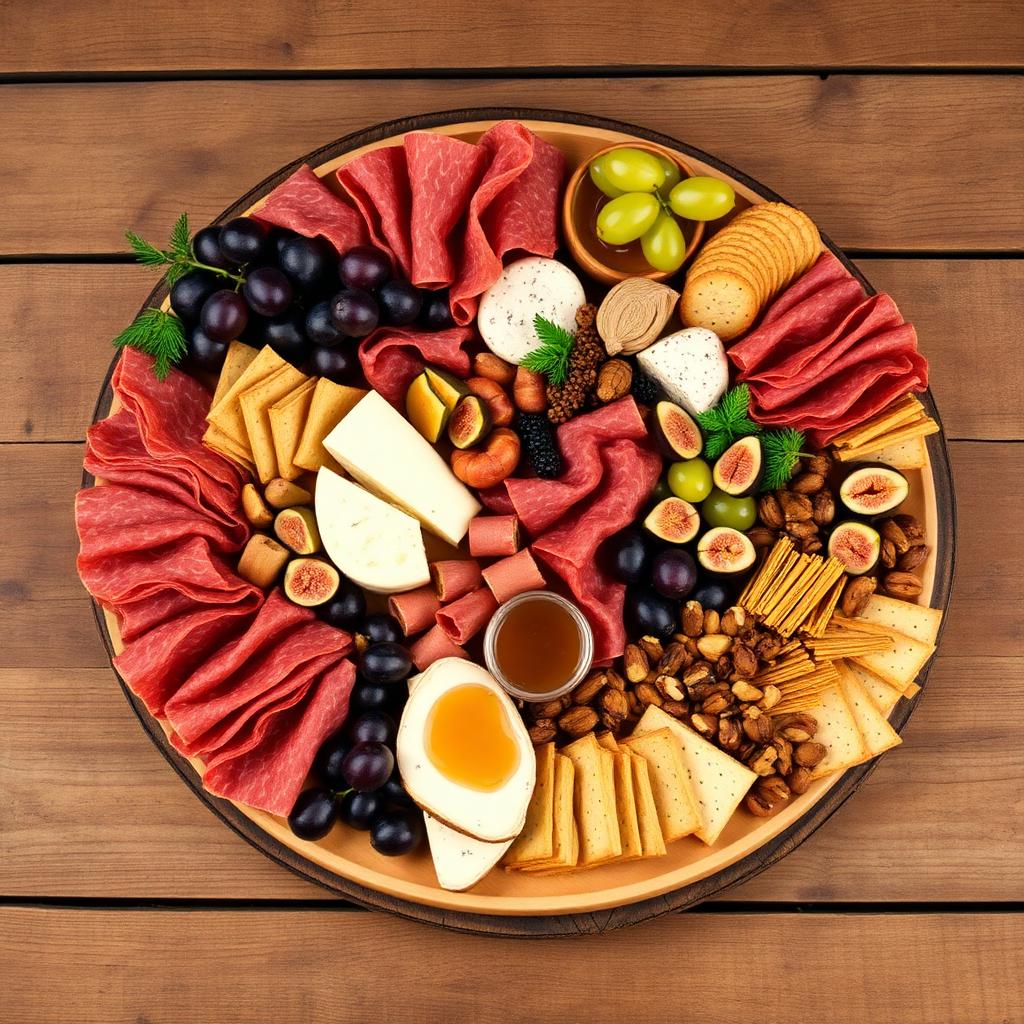
A great charcuterie board needs five things: hard cheese, soft cheese, cured meat, something briny like olives or pickles, and something sweet like grapes or honey. Place cheeses first as anchors, then add small bowls for olives and dips, fold meats into ribbons or rosettes, line crackers along the edges, and fill every remaining gap with fresh and dried fruit and nuts.
Plan for about 2 ounces of meat and 2 to 3 ounces of cheese per person if it is an appetizer, double that if the board is the meal. Take cheese out of the fridge 30 to 45 minutes before serving so the flavors open up.
The five flavor pillars
You can make any board work by picking at least one item from each of these five groups. Variety in texture and intensity is what makes a board feel curated instead of random.
| Pillar | Examples | Role | Placement tip |
|---|---|---|---|
| Hard cheese | Aged gouda, sharp cheddar, manchego, parmigiano | Salty savory backbone | Pre slice into triangles or batons |
| Soft cheese | Brie, camembert, goat cheese, burrata | Creamy contrast | Leave whole with a small spreader |
| Cured meat | Prosciutto, salami, soppressata, chorizo | Rich salty fat | Fold into ribbons or rosettes |
| Briny or acidic | Cornichons, kalamata olives, pickled onions, marinated artichokes | Cuts through fat | Use small bowls or ramekins |
| Sweet | Grapes, figs, dried apricots, honeycomb, jam | Balances salt | Tuck into gaps between meats and cheeses |
How much to buy
- Appetizer board (light snack before dinner): 2 ounces of meat and 2 ounces of cheese per person.
- Main course board (the meal itself): 4 to 5 ounces of meat and 4 ounces of cheese per person, plus extra bread and crackers.
- Cocktail party board: 1 ounce of each per person if there are several food stations.
For a group of six having a casual gathering, that is roughly 12 ounces of meat across two or three varieties, and about a pound of cheese across three or four varieties.
The building order that always works
Working in this order keeps the board balanced and stops you from ending up with awkward empty corners.
- Anchors first. Place small bowls for olives, jam, mustard, or honey at three points around the board. They are rigid, so building around them is easier than squeezing them in last.
- Cheese second. Set the cheeses around the bowls, spacing them evenly so the eye moves across the board. Pre slice hard cheese, leave soft cheese whole.
- Meat third. Place folded or rolled meats in clusters next to the cheeses they pair with. Fan salami slices like fallen dominoes, drape prosciutto ribbons, roll soppressata into loose rosettes.
- Crackers and bread fourth. Line crackers along edges or in tight rows. Use sliced baguette in fans. They form pathways between sections.
- Fillers last. Tuck grapes, figs, berries, nuts, and dried fruit into every remaining gap. The goal is no visible board surface.
Three classic pairings to anchor the board
- Prosciutto with figs and honey. Salty fat, jammy sweetness, floral honey.
- Aged cheddar with apple slices and grainy mustard. Sharp, crisp, tangy.
- Soft goat cheese with cornichons and toasted walnuts. Creamy, sour, crunchy.
Easy meat folds you can do in seconds
- Salami river: fan slices like dominoes in a long curve across the board.
- Prosciutto ribbon: drape a single slice in loose folds so it looks like crumpled silk.
- Soppressata rosette: wrap a slice around the rim of a small wine glass, then peel it off and place it cup side up.
- Chorizo coin pile: stack small rounds in a low pyramid.
Best boards and tools
- An olive wood or acacia board, 12 to 18 inches across for 4 to 6 people.
- A separate cheese knife for each soft cheese to avoid cross flavoring.
- Three small ramekins or ceramic bowls for olives, mustard, and jam.
- A bench scraper or chef knife to slice hard cheese.
- Parchment or fig leaves under runny items so the board does not stain.
What to drink with it
| Style | Pairs well with |
|---|---|
| Dry sparkling wine (cava, prosecco, champagne) | Salty meats and creamy cheeses, cuts through fat |
| Crisp white (sauvignon blanc, albariño) | Goat cheese, fresh fruit, olives |
| Medium red (pinot noir, chianti) | Hard cheeses, salami, cured meats |
| Amber beer or saison | Aged gouda, soppressata, mustard |
Common mistakes
- Serving cheese straight from the fridge. Cold cheese tastes flat. Pull it 30 to 45 minutes early.
- Picking three cheeses that all taste similar. Aim for one hard, one soft, one funky or blue.
- Using only one shape of cracker. Mix round, long, and seeded for visual variety.
- Forgetting the briny pillar. Without acid the board feels heavy after a few bites.
- Building the board on a plain plate. Wood or slate makes everything photograph better and feels more inviting.
FAQs
How far in advance can I build a charcuterie board?
Up to two hours covered loosely with a slightly damp paper towel, then plastic wrap, in a cool room. Beyond that, hard cheese dries out and prosciutto darkens.
Do I need a wood board or can I use a plate?
A board is best because it spreads everything out, but a large flat ceramic platter works in a pinch. Avoid bowls and deep dishes.
Can I make a vegetarian charcuterie board?
Yes. Replace the meats with marinated artichokes, roasted peppers, sundried tomatoes, hummus, and stuffed grape leaves. The five pillar structure still applies.
What if I have leftovers?
Wrap each cheese in parchment or cheese paper and refrigerate. Meats can be sealed in a zip bag. Use within three days.
The takeaway
Hit all five flavor pillars, place anchors first, then cheese, meat, crackers, and fillers in that order. Pull cheese from the fridge early, mix up shapes and textures, and your board will look styled even if it took you ten minutes.