Quick Answer
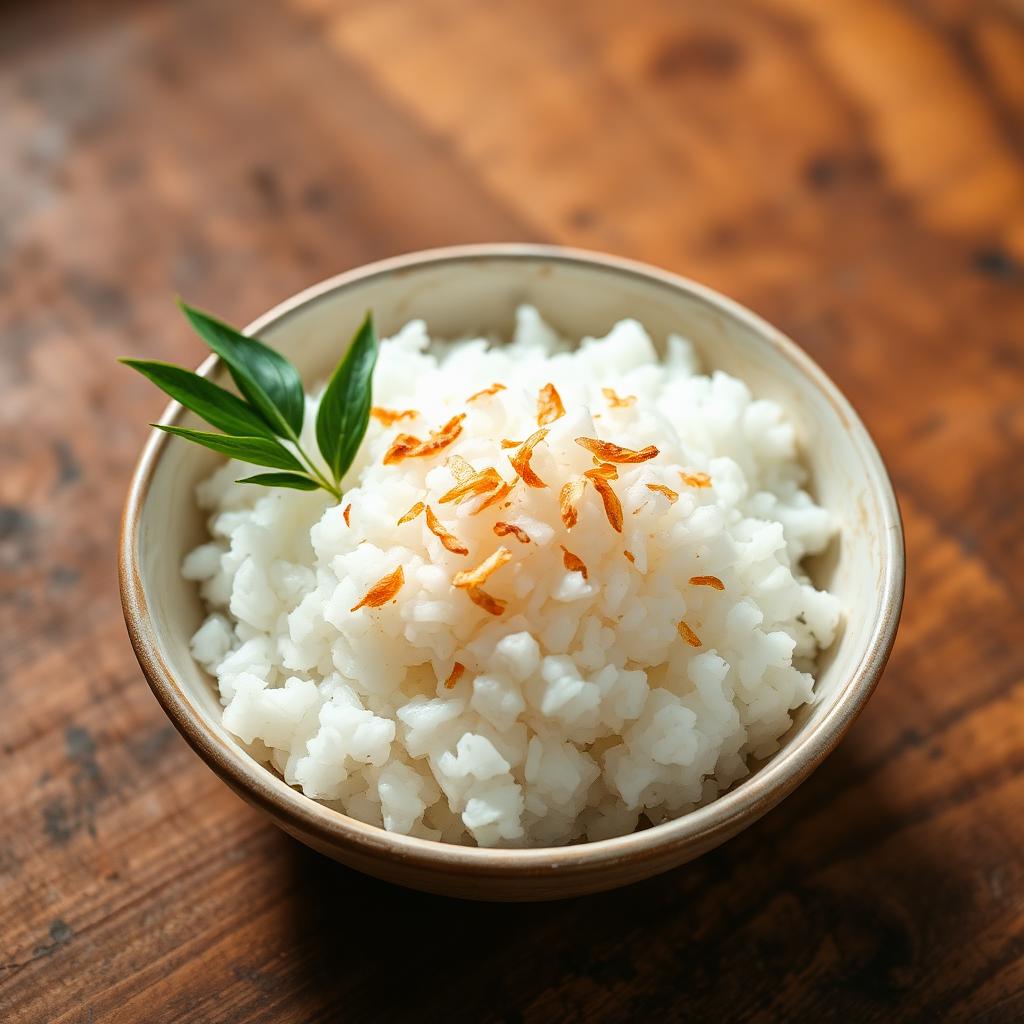
For fluffy jasmine coconut rice, use one cup of rinsed jasmine rice, one cup of full fat coconut milk, one cup of water, half a teaspoon of salt, and a teaspoon of sugar. Bring to a boil, cover, drop to the lowest heat for 15 minutes, then rest off the heat (lid on) for another 10 minutes before fluffing.
That 1:1:1 ratio prevents the heavy coconut fats from over cooking the grains while still flavouring every bite.
Why coconut rice is trickier than regular rice
Cooking rice in fat is not the same as cooking it in water. Coconut milk is roughly 20 percent fat and 80 percent water, so the grains absorb liquid more slowly and scorch more easily. Three things go wrong if you treat it like normal rice:
- All coconut milk and no water leaves the grains gummy because the fat coats them before they can swell.
- No rinse means surface starch combines with the fat into a paste.
- Cooking on medium heat scorches the bottom layer.
The liquid ratio table
| Rice variety | Full fat coconut milk | Cold water | Simmer time |
|---|---|---|---|
| Jasmine (long grain) | 1 cup | 1 cup | 15 min low |
| Basmati | 1 cup | 1 1/4 cup | 18 min low |
| Short grain (sushi) | 3/4 cup | 1 1/4 cup | 18 min low |
| Brown jasmine | 1 cup | 1 3/4 cup | 40 min low |
Adjust upward proportionally when scaling. For four cups of jasmine rice, use four cups coconut milk plus four cups water.
Ingredients that matter
- Full fat coconut milk in a can, not the diluted carton drink (which is mostly water). Shake the can before opening.
- Jasmine or basmati rice for the most aromatic result. Avoid parboiled rice; it never softens fully in coconut milk.
- Salt brings out the flavor. Skip it and the rice tastes flat.
- A tiny pinch of sugar balances the slight bitterness of coconut fats. Optional but recommended.
- Aromatics (optional): a knotted pandan leaf, a bruised lemongrass stalk, or two kaffir lime leaves dropped on top.
Stovetop method, step by step
- Rinse the rice. Place it in a fine mesh strainer and run under cold water, swishing with your fingers, until the water runs clear (usually 30 to 45 seconds). This washes off surface starch and prevents gumminess.
- Combine in a heavy bottomed pot. Add the rinsed rice, coconut milk, water, salt, optional sugar, and any aromatics. A heavy pot is non negotiable; thin pots scorch instantly.
- Bring to a boil over medium heat. Stir once, just to dissolve the salt and stop the rice settling.
- Cover and drop to lowest heat. Set a timer for the simmer time in the table. Do not lift the lid.
- Rest off the heat for 10 minutes. Keep the lid on. The trapped steam evens out the moisture so the grains stay separate.
- Fluff with a fork. Remove the pandan or lemongrass. Serve.
Rice cooker version
- Rinse the rice the same way.
- Add it to the rice cooker bowl with the same coconut milk plus water ratio.
- Add salt, sugar, and aromatics.
- Press the white rice setting. When it clicks off, let it rest 10 minutes before opening.
Common mistakes
- Skipping the rinse. Surface starch plus coconut fat equals a gummy, sticky brick.
- All coconut milk, no water. The fat ratio is too high and the grains stay raw in the middle.
- Lifting the lid mid simmer. Steam escapes and the cook time changes unpredictably.
- Skipping the rest. Going straight from boil to fork creates a wet bottom layer and a dry top.
- Light coconut milk. It is too thin to give the dish its signature richness.
Three serving ideas
Sweet breakfast bowl
Top warm coconut rice with sliced mango, toasted coconut flakes, a drizzle of honey, and a pinch of flaky salt. A simplified take on Thai khao niao mamuang.
Savoury weeknight side
Serve under grilled jerk chicken, Thai green curry, or sambal prawns. The natural sweetness of coconut balances spice perfectly.
Caribbean rice and peas
Soak red kidney beans overnight, cook them in coconut milk with thyme, garlic, and a whole scotch bonnet (kept whole, removed before serving). Add the rice and the rest of the liquid and continue with the standard method.
Storage and reheating
- Cool the rice within one hour of cooking and refrigerate in a sealed container. Use within three days.
- Reheat with a splash of water or coconut milk in the microwave under a damp paper towel for 90 seconds, or in a covered pan on low heat.
- Cooked rice can be frozen for up to one month. Thaw overnight in the fridge before reheating.
FAQs
Can I use canned light coconut milk?
You can, but expect a much milder coconut flavor and a thinner texture. Full fat is worth the extra few calories.
Why did my rice burn at the bottom?
The heat was too high or the pot too thin. Use the smallest burner on the lowest setting and a heavy bottomed saucepan.
Can I make coconut rice in an Instant Pot?
Yes. Use a 1:1:1 ratio for jasmine, set to pressure cook on high for 4 minutes, then natural release for 10 minutes.
Is coconut rice gluten free and vegan?
Yes to both, as long as the coconut milk has no added thickeners with gluten (rare but worth checking).
The takeaway
Rinse the rice, hit the 1:1:1 ratio with full fat coconut milk and water, simmer low and covered, then rest 10 minutes. That recipe delivers fluffy, fragrant coconut rice every time, with no scorching and no gum.