Quick Answer
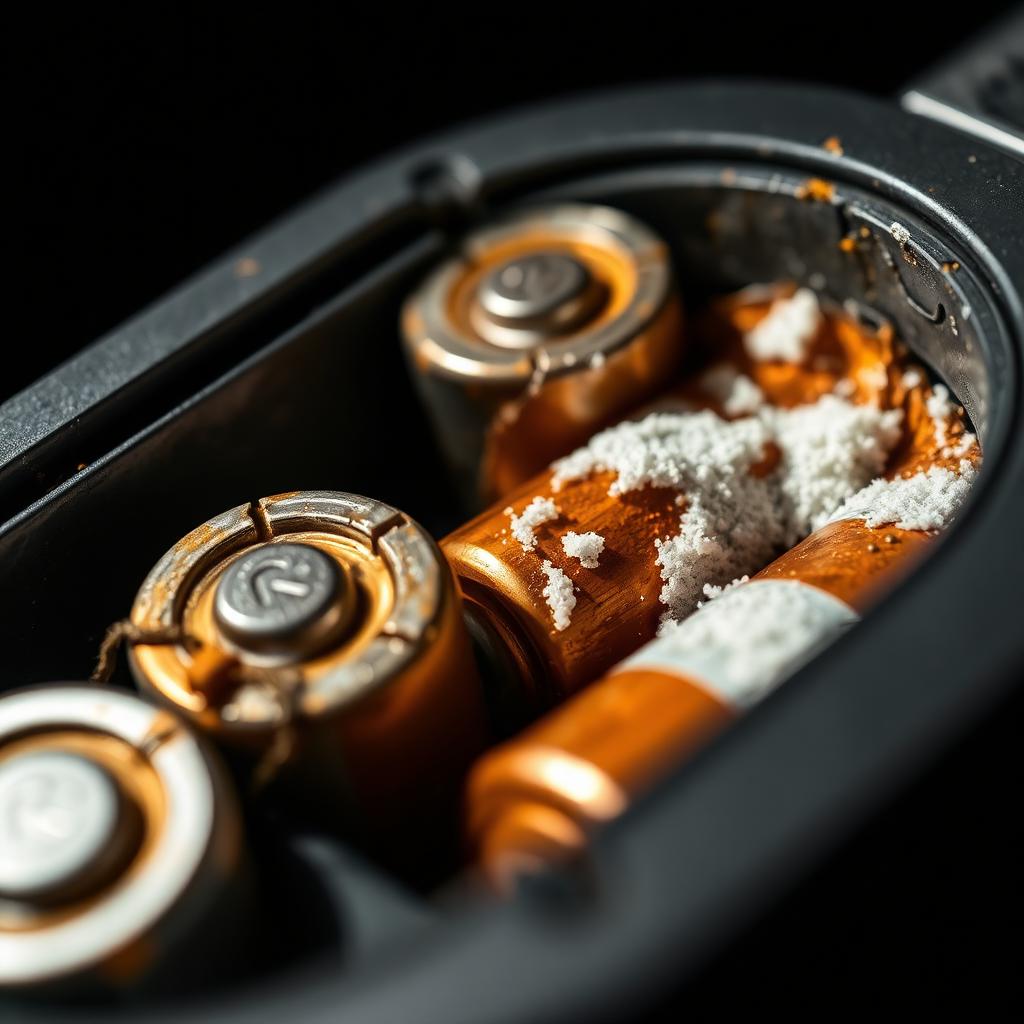
Battery corrosion in a remote is leaked potassium hydroxide that reacted with the air to form a white crystalline crust. Water and dish soap will not dissolve it because the crust is a base. You need a mild acid.
Wear gloves, pop the dead batteries out, then dab plain white vinegar or lemon juice on the crust with a cotton swab. You will see fizzing as the acid neutralizes the salt. Scrape the springs clean with fine sandpaper or a fiberglass scratch pen, wipe everything with 99 percent isopropyl alcohol, and let it air dry for 15 minutes before fresh batteries go in.
Why water and soap fail
Alkaline batteries use a potassium hydroxide (KOH) paste as the electrolyte. When the steel can rusts through or the seal at the positive end fails (usually after deep discharge or heat), that paste seeps out. In the open air it reacts with carbon dioxide and forms potassium carbonate, the white crust you see on the terminals.
Potassium carbonate is alkaline with a pH around 11. Soap is also alkaline. You cannot dissolve a base with another base. To break it down, you have to introduce a mild acid that reacts with the carbonate and converts it into a soluble salt plus water and carbon dioxide. White vinegar (5 percent acetic acid) is ideal because it is cheap, mild enough to skin, and leaves no harsh residue.
What you need
| Item | Why |
|---|---|
| White vinegar or lemon juice | Mild acid that neutralizes potassium carbonate |
| Cotton swabs | Precise application around springs |
| Old soft toothbrush | Scrubs softened crust out of crevices |
| Fine grit sandpaper (400 to 600) or fiberglass pen | Removes the dull rust layer left behind |
| 99 percent isopropyl alcohol | Final flush, evaporates with no residue |
| Nitrile or latex gloves | The powder is a skin irritant |
Step by step cleanup
- Protect your skin. Wear gloves and work over a paper towel. Do not rub your eyes.
- Remove the dead cells. If they are stuck, do not pry hard. Drip a few drops of vinegar around the edges, wait two minutes, and they will slide out.
- Apply vinegar. Dip a cotton swab in white vinegar and squeeze out the excess so it is damp but not dripping. Press the swab against the white crust on each spring and contact plate. You should see a small foam reaction within seconds.
- Brush it out. Use a dry toothbrush to scrub the softened crust away. Repeat the vinegar and brush cycle until the metal underneath is fully visible.
- Polish the metal. Once the crust is gone the terminals usually look dull or coppery instead of shiny. This rusted nickel plating blocks current. Rub each spring and flat contact with fine sandpaper or a fiberglass scratch pen until you see bright bare metal.
- Final flush. Wipe down the entire compartment with a swab soaked in 99 percent isopropyl alcohol. The alcohol picks up any leftover vinegar and salt, then evaporates in seconds.
- Dry fully. Leave the cover off for 15 minutes before installing fresh batteries.
When to give up
If the corrosion has eaten through a spring (you can see broken wire ends or the spring is loose), you can sometimes solder a replacement spring from an old remote. If the leak made it onto the green circuit board and you see green or blue copper salts on traces, the remote is usually finished. The cost of a new $8 universal remote is less than the time to repair etched copper traces.
Preventing the next leak
- Never mix old and new batteries. The weaker cell drains until it reverses polarity and leaks.
- Never mix brands or chemistries.
- Remove batteries from any remote you will not use for more than 30 days.
- Avoid the cheapest store brand cells. Name brand alkalines have better seals.
- For high drain devices like RC cars, switch to lithium AA or AAA. They cost more but do not leak in storage.
Frequently asked questions
Can I use baking soda instead?
No. Baking soda is for acid spills (like from a car battery, which uses sulfuric acid). Alkaline battery leaks need an acid, not another base.
Is the white powder toxic?
It is irritant rather than acutely toxic. Wash skin contact with water. Keep it away from eyes and pets.
Will WD-40 work?
WD-40 will displace moisture but it will not chemically neutralize the potassium carbonate. Use vinegar first, then WD-40 Specialist Contact Cleaner if you want extra polish on the springs.
The takeaway
The white crust is a base. Water and soap will not dissolve it. Plain white vinegar on a cotton swab neutralizes the leak in seconds, a quick scrub with fine sandpaper restores conductivity, and a wipe of isopropyl alcohol finishes the job. Most remotes that look dead from corrosion come back to life in under 10 minutes once you treat the chemistry instead of just wiping at the powder.