Quick Answer
Castle Impossible is the community label for the hardest user-built map variants in physics puzzle platformers, and the trick to clearing them is to stop trusting your eyes. The rooms use non-Euclidean geometry, hidden trigger volumes, and pixel-perfect input windows that punish standard platforming instincts.
The strategy I use comes down to three habits: map the hidden geometry by throwing objects at every wall, treat the character's momentum like a heavy vehicle rather than a sprite, and look for environmental cues (lighting, texture seams, ambient sounds) that hint at the intended solution. Builders can copy the same playbook in reverse to design fair but punishing levels of their own.
What Makes a Castle Impossible Level Actually Hard
A true Castle Impossible level is rarely impossible. It is engineered to violate the assumptions a player carries in from normal levels, which is what makes it feel impossible the first ten times you run it.
The most common trick is visual misdirection. A room looks like a small entry chamber but expands the moment you cross the threshold, because the designer has used a teleport volume to swap you into a much larger geometry set. Your instinct is to back out and look again, which fails because the entry door is now a one way trigger.
The second trick is pixel-perfect input boundaries. A jump that looks like it has a generous landing zone actually has a 4 pixel landing tolerance, with a reset pit covering the rest. The designer has hidden the trap inside what looks like a margin of safety.
The third trick is invisible structural triggers. Platforms appear only after you face the opposite direction, interact with a candle in a different room, or stand on a pressure plate that is hidden under a rug. Standard speedrun routes break instantly in these rooms because the level reacts to what you do rather than just where you are.
Mapping the Hidden Geometry
The first thing I do in any new Castle Impossible room is throw every interactable I can find at every vertical surface. Boxes, torches, even the player's own corpse on the first inevitable death. Anything that bounces off normally is a real wall. Anything that passes through is a teleport volume or a false surface, and that tells me where the room actually wants me to go.
I also slide along every boundary. Walking with my character pressed into a wall reveals collision seams that are invisible from a distance, and many designers hide drop down chutes inside what looks like flat floor.
The third habit is to listen. Good designers reinforce hidden geometry with audio cues, a faint hum near a teleport volume, a slight footstep change on a hollow platform, a wind noise near a drop. The audio is almost always the most honest information in the room.
Momentum and Tilt Calibration
Many custom physics engines use unusual acceleration variables, so the character feels slippery or unexpectedly heavy. The single biggest mistake I see new players make is trying to stop their character cold on a narrow platform.
The fix is to drive the character like a heavy vehicle. Anticipate stops three steps early, counter-steer gently against momentum, and look for stable rest zones between moving hazards rather than trying to balance on them. Once you internalise the slip, the level becomes a series of smooth arcs rather than a series of frantic micro corrections.
Reading Designer Tells
Every designer leaves tells. The good ones do it on purpose, the lazy ones do it by accident, and either way the player benefits. Three I look for every time:
- Lighting bias. A torch placed slightly off centre is almost always pointing at the solution path. Designers use light to draw the eye, even subconsciously.
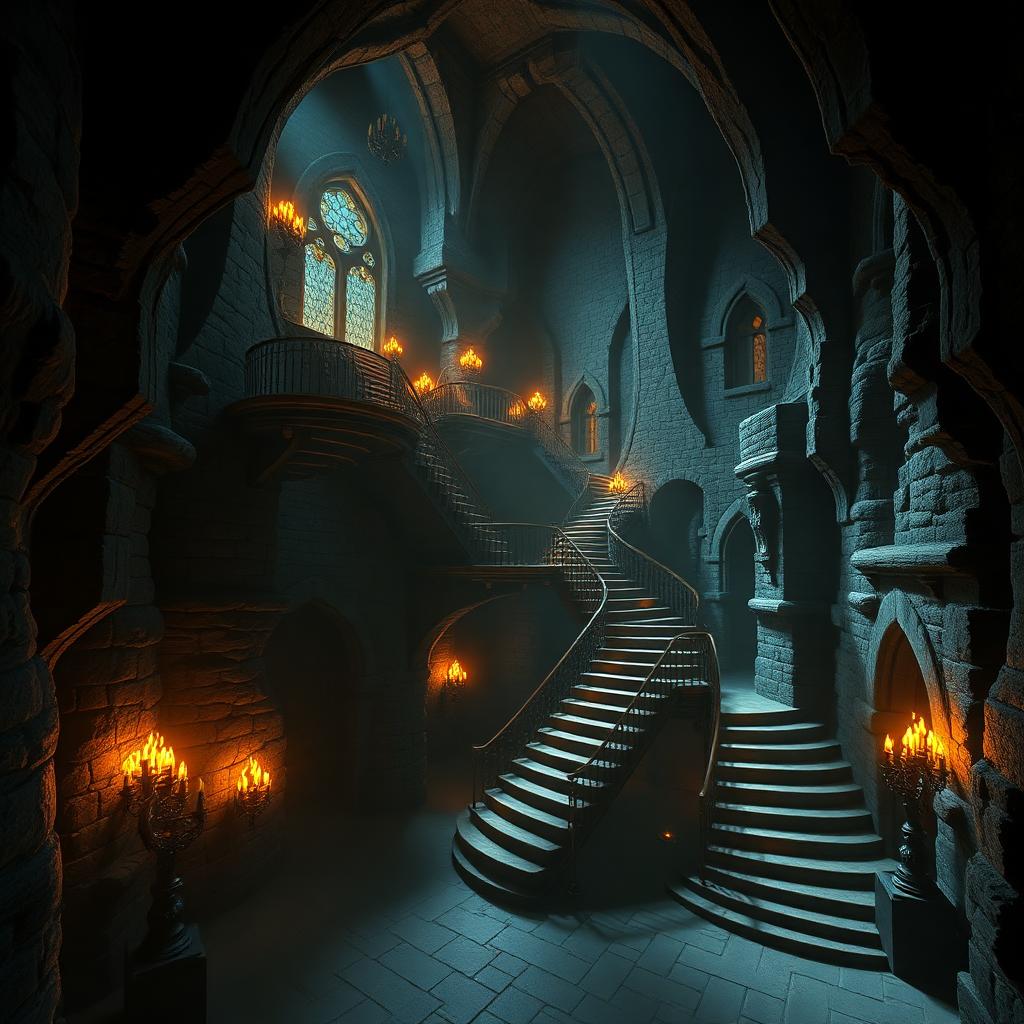
- Texture seams. A change in wall texture inside a single room usually marks the boundary of a hidden trigger volume. Pay attention to where the stone changes to brick or the brick changes to wood.
- Ambient prop placement. A barrel, statue, or banner that is the only one of its kind in a room is almost certainly load bearing for the puzzle solution.
When all three tells point at the same corner, that corner is the solution. When they conflict, the designer is intentionally trolling you and the solution is somewhere counter to the obvious bias.
How to Build a Fair but Punishing Level
If you want to flip from player to designer, the same principles apply in reverse. The goal is to make the room feel impossible without actually being unfair.
- Enforce one core rule. Pick one mechanic, gravity inversion, object scaling, time rewind, and build the entire room around it. Mixing four mechanics in one room is the fastest way to make it feel random.
- Telegraph with cues. Use lighting, texture, and ambient sound to hint at the solution. A puzzle that cannot be solved through observation feels unfair; a puzzle that can be solved through careful observation feels brilliant.
- Place checkpoints aggressively. Put a respawn point right before the hardest input window. Players will accept dying to the same jump 80 times if they do not have to walk three minutes back to retry it.
- Test on a stranger. Watch a friend who has never seen the room play it. If they get stuck for more than twenty minutes without making any progress, the puzzle is missing a cue, not adding difficulty.
- Polish the audio. A satisfying click on a solved pressure plate or a confident bell on a successful jump turns frustration into momentum.
Tools and Engines That Make This Possible
The Castle Impossible style emerged out of a handful of platformer engines that give creators deep access to trigger volumes, scripted geometry, and custom physics constants. The most active scenes today are inside Roblox Studio, Geometry Dash, Levelhead, Super Mario Maker 2, and a long tail of indie sandbox engines on Steam. Each engine has its own quirks, and the best designers learn one engine deeply rather than dabbling in all of them.
The community side matters as much as the engine. Most of the best Castle Impossible variants spread through Discord servers and creator subreddits where players share clear videos, time stamped solutions, and respectful difficulty ratings. Following two or three of those communities is the fastest way to find rooms that are hard for the right reasons, not just punishing for the sake of it.
The Takeaway
Castle Impossible levels feel impossible because they are designed to break the assumptions that normal platformers reward. Once you stop trusting your eyes, start mapping hidden geometry by hand, and start reading the designer tells embedded in lighting and texture, the rooms collapse from impossible to merely very hard. The same principles flipped in reverse, single mechanic, telegraphed cues, aggressive checkpoints, will let you build levels that other players will love to hate. The best Castle Impossible designers and the best Castle Impossible players are doing the same thing from opposite sides of the screen.