Quick Answer
Scrub Russet potatoes, dry them completely, prick 6 to 8 times, then bake naked on a wire rack at 400F (200C) for 45 minutes.
Pull them out, brush with oil, coat with coarse salt, and return for 15 to 20 minutes until the internal temperature hits 205F to 212F (96C to 100C).
Skip the foil. Foil steams the skin and ruins the fluff. Crack the potato open with a fork the moment it leaves the oven so trapped steam escapes instead of turning the inside gummy.
Why the potato variety matters more than the recipe
The fluffy interior of a great baked potato is a starch story. Russets (often sold as Idaho potatoes) carry the highest starch content and the lowest moisture, which is exactly what creates that mealy, cloud like texture when the granules swell and separate in dry heat.
Yukon Golds are medium starch all purpose potatoes. They bake into a denser, creamier interior, which is delicious in its own right but not classic. Red, fingerling, and new potatoes are waxy and high moisture. They roast beautifully in chunks but turn gluey and tight when baked whole.
One quick test at the store: pick a potato that feels heavy for its size with no sprouting eyes and no green tint. Green skin signals solanine, a bitter compound that develops when potatoes are stored in light.
The equipment that actually makes a difference
You only need four things, and one of them is non negotiable.
- Rimmed baking sheet: catches any oil drips from step 5.
- Wire cooling rack set inside the sheet: the critical piece. It lets hot air circulate underneath so the bottom skin crisps instead of steaming.
- Vegetable brush: for scrubbing without peeling.
- Instant read thermometer: optional but removes all guesswork.
Step by step: the foolproof bake
1. Scrub and dry
Wash each Russet under cold running water with a stiff brush. No soap. Dry every potato thoroughly with a clean towel because any surface water turns into steam and softens the skin.
2. Prick the skin
Pierce each potato 6 to 8 times with a fork or paring knife, going about half an inch deep on all sides. Skipping this step is how potatoes explode in the oven. The vents let internal steam escape as the water inside boils.
3. Heat the oven correctly
Preheat to 400F (200C) with a rack in the center. Put the wire rack inside the rimmed sheet pan so air can reach every surface of the potato during the bake.
4. Bake naked first
Place the dry, pricked potatoes straight onto the wire rack with no oil and no salt yet. Bake undisturbed for 45 minutes. The skin will look slightly wrinkled and feel leathery, which is exactly the state you want before adding fat.
5. Oil and salt the skin
Pull the pan out. Brush each potato all over with a high smoke point oil (avocado, canola, or a sturdy olive oil all work). Immediately shower the oiled skin with coarse kosher salt or flaky sea salt so the crystals stick.
6. Final crisp
Return the potatoes to the oven for another 15 to 20 minutes. This is where the skin transforms from leathery to shatteringly crisp.
7. Check doneness the right way
Squeeze the potato with an oven mitt. It should yield easily without feeling hard in the middle. For total precision, push an instant read thermometer into the thickest point. The sweet spot is 205F to 212F (96C to 100C). Below that, starches have not fully gelatinized and the interior stays gummy.
8. Crack, do not slice
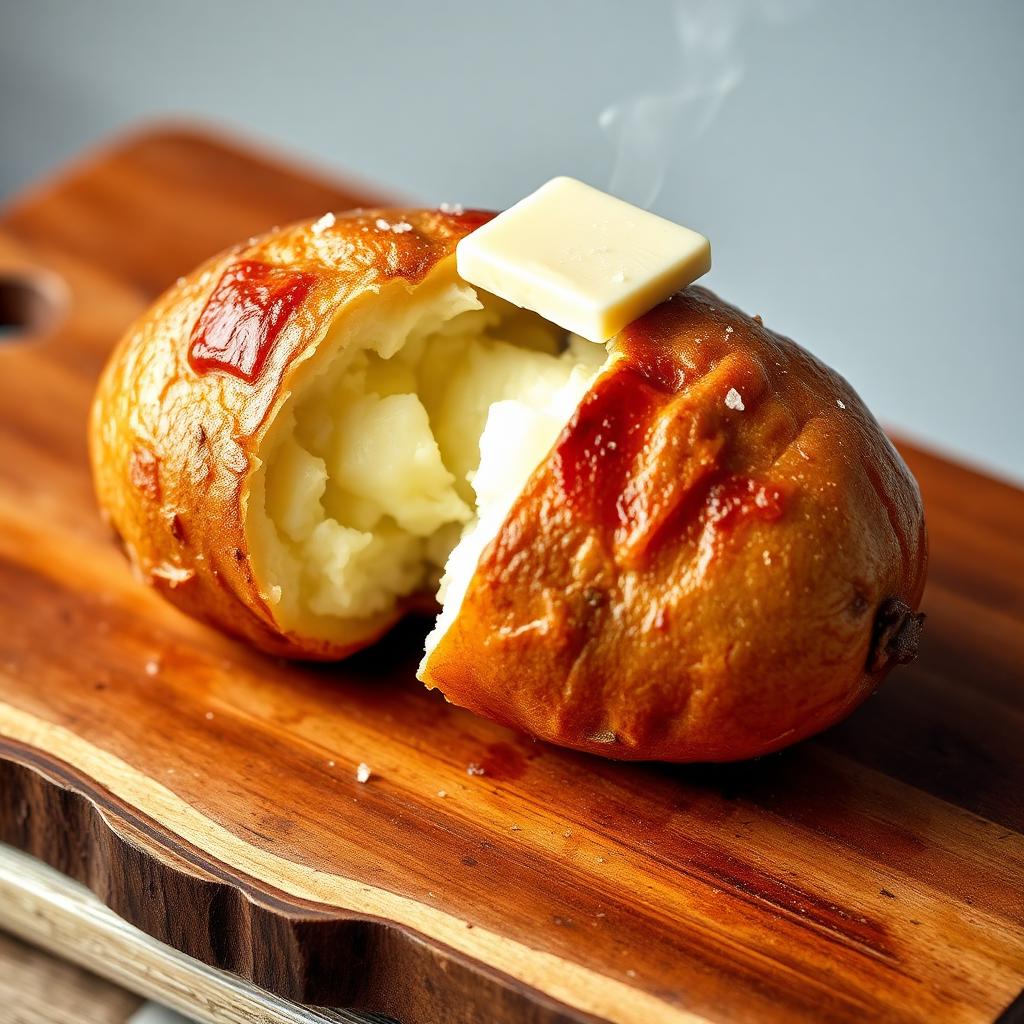
Score a small cross on the top skin with a fork. Use both hands to press the ends toward the middle. The potato bursts open and releases a plume of steam. Cutting cleanly across with a knife compresses the starch cells and kills the fluff.
Temperature reference
- 350F (175C), 75 to 90 minutes: thick chewy skin, dense interior. Useful only if you are slow roasting alongside a brisket.
- 375F (190C), 60 to 75 minutes: standard bake with average crispness.
- 400F (200C), 50 to 60 minutes total: the sweet spot for fluff and crackle.
- 425F (220C), 40 to 50 minutes: fastest result but the surface sugars can scorch and turn bitter before the center finishes.
Why aluminum foil ruins baked potatoes
Wrapping a potato in foil traps escaping moisture against the skin. That turns the bake into a steam, which gives you soft pale skin and a wet, dense interior. There is also a food safety angle: foil wrapped potatoes held at room temperature create a low oxygen environment where Clostridium botulinum spores can grow. The USDA flags this directly, recommending you keep wrapped potatoes either above 140F or refrigerated.
Toppings that actually belong on a real baked potato
Once the skin is crisp and the interior is steaming, restraint wins. A classic loaded baked potato pairs salted butter, sour cream, sharp cheddar, crisp bacon, and finely sliced chives. For a lighter route, try whipped feta and lemon zest, or Greek yogurt with smoked paprika and dill. Spicy chili with cheese is an underrated weeknight dinner build.
Frequently asked questions
Can I microwave first to save time?
You can. Microwave on high for 4 to 5 minutes per potato, then finish in a 425F oven for 15 to 20 minutes. The skin will not be quite as crisp as a full oven bake, but the gap is small and you save real time.
Why is my baked potato gummy inside?
Either the center never hit 205F, or you waited too long to crack it open. Trapped steam condenses back into water and turns the starch sticky within minutes.
Can I bake potatoes ahead of time?
Yes. Bake fully, cool, refrigerate. Reheat at 400F for 15 minutes. Avoid the microwave for reheating because it softens the skin.
What is the best oil to use?
Avocado oil, refined olive oil, or rendered duck fat. All handle 400F easily and add flavor without smoking.
The takeaway
Start with Russets, dry them well, bake naked, oil and salt at minute 45, finish to 205F, and crack open with a fork. Do that and you will produce baked potatoes that genuinely match steakhouse quality, using only an oven, a wire rack, and a little patience.