Quick Answer
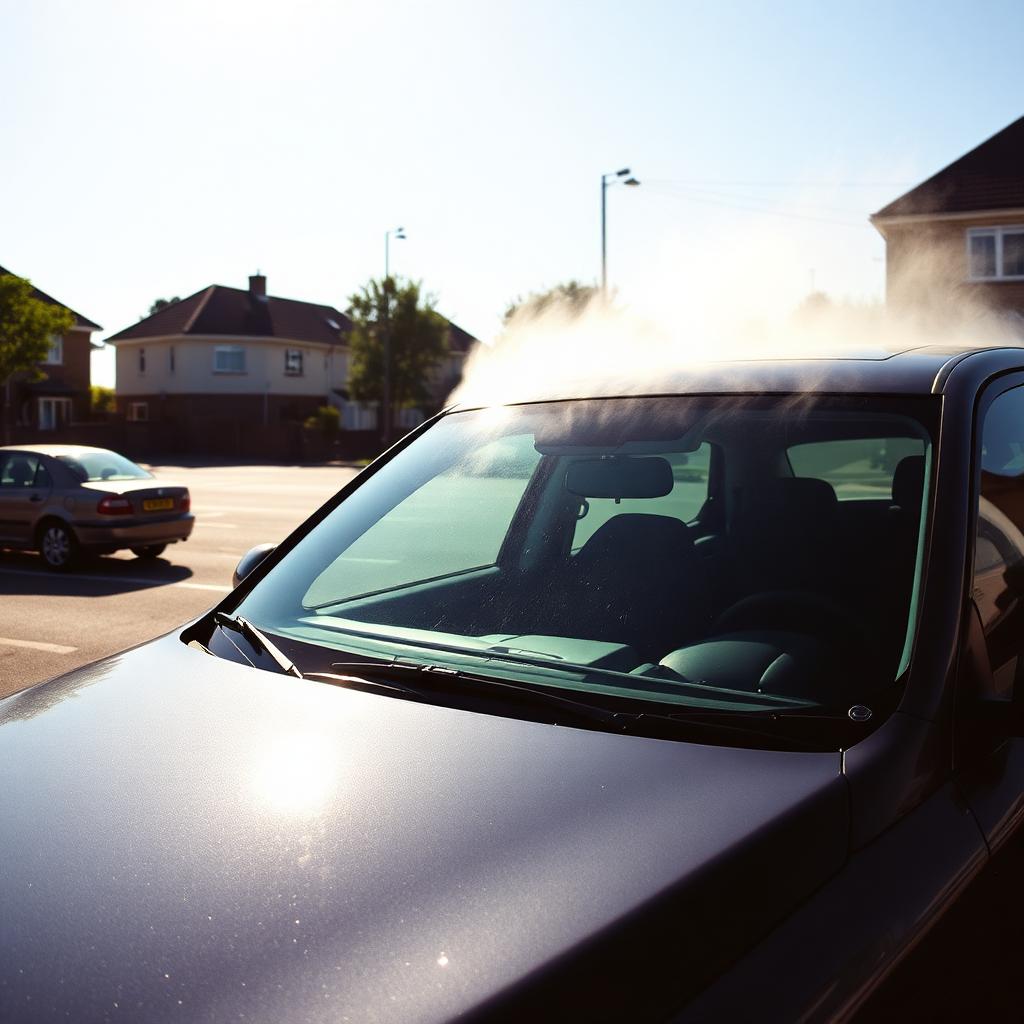
On a 22 C UK summer day, the inside of a parked car can hit 42 C within 30 minutes. At 30 C outside it climbs past 50 C. Cracking the windows barely slows it down. Dogs and small children can suffer fatal heatstroke in under an hour.
If you find a distressed animal or child locked in a hot car, call 999 first. UK law gives you a defence under the Criminal Damage Act 1971 if you reasonably believe smashing a window is necessary to protect life.
Why a parked car turns deadly so fast
A common misconception is that the inside of a car simply tracks the outside temperature. The physics is much harsher than that. A vehicle in direct sun behaves like a textbook greenhouse: short-wave solar radiation passes cleanly through the glass and is absorbed by dark interior surfaces (dashboard, seats, headlining, carpet).
Those surfaces re-emit the energy as long-wave infrared radiation, which cannot escape back through glass. The trapped heat raises the air temperature in the cabin far above ambient conditions, and the spike happens fast: roughly 80 percent of the total rise occurs in the first 10 to 15 minutes.
The numbers that actually matter
Stanford University and University of Arizona research summarised by the AA and the RSPCA puts the typical 30 minute rise inside a parked vehicle at roughly 19 to 22 C above outdoor temperature, climbing further over the following hour. That gives a useful UK-relevant scale:
- Outside 18 C, mild sun: cabin reaches around 38 C in 30 minutes.
- Outside 22 C, sunny day: cabin reaches around 42 C in 30 minutes.
- Outside 26 C, warm afternoon: cabin reaches around 47 C in 30 minutes.
- Outside 30 C, heatwave conditions: cabin reaches around 52 C in 30 minutes.
Anything above 40 C is heatstroke territory for a dog. Above 50 C is rapid organ failure. These thresholds do not require a Mediterranean heatwave; they show up on an ordinary British summer day.
The cracked window myth
Drivers frequently believe that lowering the windows by an inch or two provides enough ventilation to keep a car safe. Repeated thermal testing by veterinary and meteorological groups (including the AVMA and RSPCA) has found the effect is essentially nil. A cracked window slows the temperature rise by perhaps 1 to 2 degrees over 30 minutes, nowhere near enough to keep the cabin survivable for a dog or young child.
Parking in shade helps more, but shade moves with the sun. A spot that is shaded when you leave the car can be in direct sunlight 20 minutes later. The only safe rule for animals and children is to never leave them in a parked vehicle at all on a warm day.
Why dogs are at particular risk
Dogs cannot sweat efficiently. They regulate body temperature almost entirely through panting, which becomes useless once the air they breathe is hotter than their core temperature. Once a dog's body temperature crosses 41 C, cellular damage starts; above 42 C the risk of seizures, organ failure, and death rises sharply.
Brachycephalic breeds (pugs, bulldogs, boxers), overweight dogs, very young or very old dogs, and dogs with cardiac or respiratory conditions are even more vulnerable. So is any dog with a thick double coat in summer.
Warning signs you should never ignore: heavy panting, drooling, glazed eyes, bright red gums, vomiting, stumbling, or collapse. By the time you see those, the dog is already in a medical emergency.
What to do if you see a dog or child trapped in a hot car
The RSPCA's official guidance is unambiguous: call 999 first. Police can attend faster than the RSPCA itself, and they have the legal authority to force entry.
- Note the registration plate, make, and colour, and try to find the owner. Ask shop staff to make a tannoy announcement if you are at a supermarket or service station.
- Call 999 and request police. Stay with the vehicle.
- Document the situation: take photos and a short video of the animal's condition, note the outside temperature, and gather any witnesses willing to give a statement.
- If police are delayed and the animal or child is in obvious life-threatening distress, your legal position is set out below.
The Criminal Damage Act and your legal cover
Smashing someone's car window is criminal damage by default. Section 5(2)(b) of the Criminal Damage Act 1971 provides a statutory defence: you are not guilty of the offence if you can show you honestly believed the owner would have consented to the damage if they had known the circumstances. Saving a life is the textbook example.
That defence is not automatic, so build a record:
- Confirm you have already called 999 and named the operator you spoke to.
- Take photos and video showing the animal or child, the empty driver's seat, the closed doors, and the outside conditions.
- Get at least one witness to confirm what they saw.
- Choose the window furthest from the casualty and use a glass breaker or heavy blunt object. Reach in to unlock the door rather than dragging anyone over broken glass.
- Move the casualty into shade, offer cool (not iced) water, and pour cool water over the body. Wait for emergency services.
Prevention beats heroics
The simplest rule: when the forecast is above 18 C and the sky is clear, leave the dog at home. Plan walks for early morning or late evening. For families, build a habit of opening the back door before locking the car and double-checking the seat. Reversal of normal routines (different parent, change of car seat) is the most common trigger for tragedy. A reminder on the dashboard or a phone in the back seat works.
The same rules apply to children
Children under 4 have a much higher body-surface-to-mass ratio than adults and heat up roughly 3 to 5 times faster. NHS guidance and child safety charities advise the same rule: never leave a child alone in a parked vehicle on a warm day, even briefly, even with windows down, even in shade. Most fatalities in the UK involve a parent or carer who forgot the child was in the back seat after a change of routine. Practical defences include placing your phone, handbag, or work pass in the back footwell so you cannot leave without checking.