Quick Answer
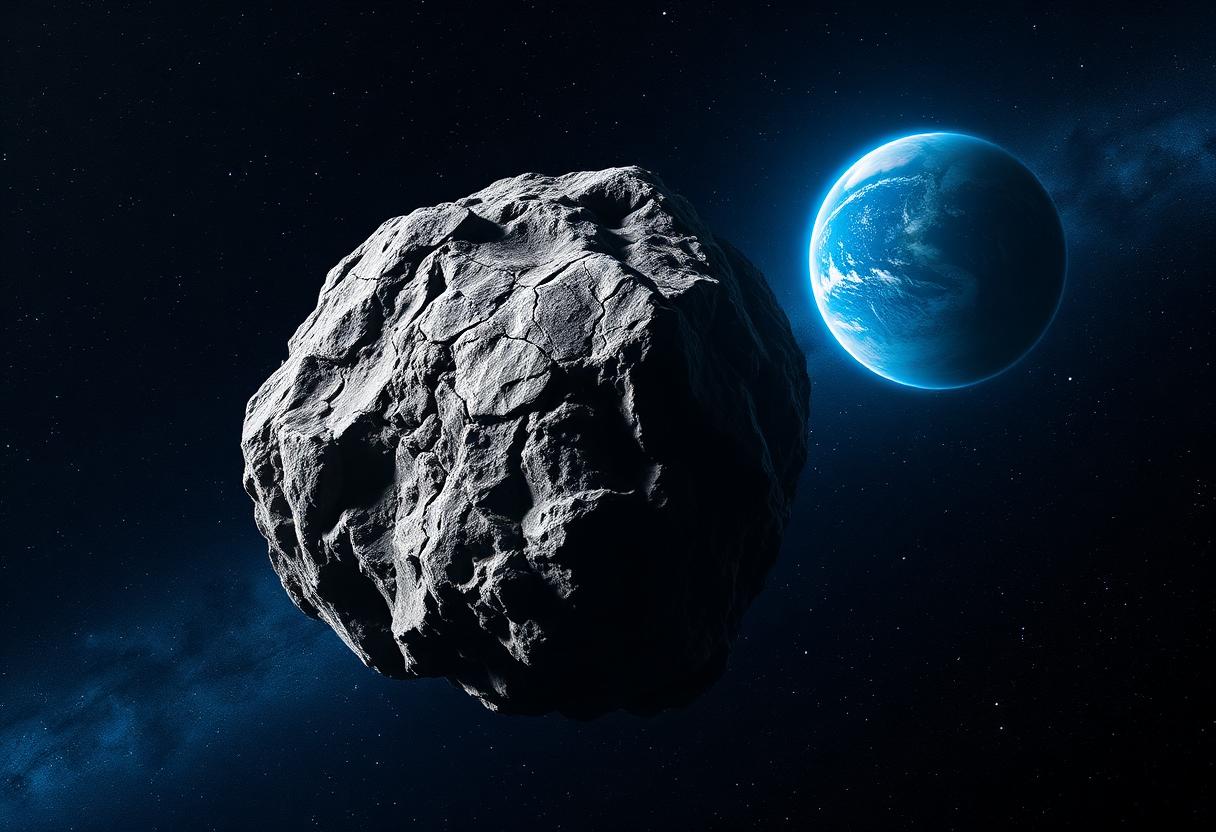
Asteroid 2026 JH2 will make its closest approach to Earth on Monday, May 18, 2026, passing within roughly 56,000 miles (about 90,000 kilometers) of the planet. That is less than a quarter of the average Earth to Moon distance.
There is zero risk of impact, and the asteroid is being treated as a research opportunity rather than a hazard. The flyby will not be visible to the naked eye, but amateur astronomers with mid-sized telescopes can track it.
The short answer
Asteroid 2026 JH2 will make its closest approach to Earth on Monday, May 18, 2026, passing within roughly 56,000 miles (about 90,000 kilometers) of the planet. That is less than a quarter of the average Earth to Moon distance. There is zero risk of impact, and the asteroid is being treated as a research opportunity rather than a hazard.
The flyby will not be visible to the naked eye, but amateur astronomers with mid-sized telescopes can track it. For everyone else, the Virtual Telescope Project will livestream the closest approach starting at 2:45 p.m. Eastern Time.
How close is 56,000 miles, really?
The average distance from Earth to the Moon is about 238,900 miles. So 2026 JH2 will sweep through roughly 23 percent of that gap. In planetary defense terms, that is close enough to be tagged as a "near miss" event, but well outside any orbit that would allow it to be captured or to graze the atmosphere.
For context, geostationary communications satellites orbit at about 22,000 miles. The asteroid will pass beyond that ring, with a comfortable margin against any operational spacecraft.
How big is asteroid 2026 JH2?
Astronomers currently estimate the diameter at 50 to 115 feet (roughly 15 to 35 meters). The wide range reflects how recent the discovery is. As more observations come in over the next few days, the size estimate will narrow.
That size band is significant. The 2013 Chelyabinsk meteor, which exploded over Russia and injured more than 1,400 people from shattered glass, was about 60 feet across. So 2026 JH2 sits in the same class of objects that can produce dramatic airbursts if they enter the atmosphere. The key word here is "if": this object is staying in space.
What kind of asteroid is it?
2026 JH2 is classified as an Apollo-class near-Earth object. Apollo asteroids:
- Have orbits that cross Earth's orbital path around the Sun.
- Spend most of their time in the inner solar system but can swing outward.
- Make up the majority of known potentially hazardous asteroids that planetary defense networks track.
Discovery credit goes to the Mount Lemmon Survey in Arizona, one of the largest contributors to NASA's near-Earth object catalog. Confirmation observations have come in from observatories worldwide over the past several days.
How to watch the asteroid 2026 JH2 flyby
You have two practical options.
1. Use a telescope. As 2026 JH2 nears Earth, it should brighten enough for a 6-inch or larger telescope to capture it as a moving point of light against the star field. Apps like Stellarium or the JPL Horizons system can give you precise sky coordinates from your location.
2. Watch the livestream. The Virtual Telescope Project, run by Italian astronomer Gianluca Masi, will broadcast the closest approach starting at 2:45 p.m. Eastern Time on Monday, May 18, 2026. The feed will use remote robotic telescopes to track 2026 JH2 in real time, complete with commentary and orbital diagrams.
Frequently Asked Questions (FAQ)
Could asteroid 2026 JH2 hit Earth?
No. Orbital calculations show a closest approach of about 56,000 miles, with no risk of impact during this pass.
Will I be able to see it without a telescope?
No. Even at closest approach, 2026 JH2 will be too small and faint to spot with the naked eye. A modest telescope or the Virtual Telescope Project livestream is your best option.
Why does 2026 JH2 matter?
It belongs to the same size class as the Chelyabinsk meteor and lets astronomers refine planetary defense models. Close, harmless flybys are valuable test cases for the global network that watches for actual impactors.
The takeaway
2026 JH2 is a textbook close approach: dramatic numbers, real scientific value, no danger. If you have a telescope, this is a great chance to track a near-Earth object live. If not, the Virtual Telescope Project broadcast is the easiest seat in the house.
Quick recap
Asteroid 2026 JH2 makes its closest approach on May 18, 2026, at roughly 56,000 miles, well inside the Moon's orbit. It is 50 to 115 feet across, classified as an Apollo-type near-Earth object, and will be livestreamed by the Virtual Telescope Project at 2:45 p.m. ET.
How to Observe the Pass
- Major observatories will live stream the encounter.
- NASA and ESA will share tracking updates through official channels.
- Amateur astronomers with mid sized telescopes can attempt to image the object.
Should You Be Worried
No. The asteroid will pass well outside the distance at which any impact is possible. Routine planetary defense monitoring confirms the trajectory poses no threat to Earth.
Why Events Like This Matter
Close passes give scientists rare opportunities to gather data on near Earth objects. The information feeds into long term planetary defense planning and broadens our understanding of the small bodies that populate the inner solar system.