Quick Answer
On May 12, 2026, Russian President Vladimir Putin claimed Russia had successfully tested the RS-28 Sarmat super-heavy intercontinental ballistic missile and announced that the first units would enter combat duty in Krasnoyarsk Krai by the end of 2026. The Kremlin has made nearly identical promises in 2021, 2022, and 2023, all of which slipped after technical failures.
Western analysts at the Institute for the Study of War argue the announcement is less about military capability and more about political theater. It landed days after a heavily downsized May 9 Victory Day parade and is widely read as an attempt to mask vulnerability with nuclear posturing.
The short answer
On May 12, 2026, Russian President Vladimir Putin claimed Russia had successfully tested the RS-28 Sarmat super-heavy intercontinental ballistic missile and announced that the first units would enter combat duty in Krasnoyarsk Krai by the end of 2026. The Kremlin has made nearly identical promises in 2021, 2022, and 2023, all of which slipped after technical failures.
Western analysts at the Institute for the Study of War argue the announcement is less about military capability and more about political theater. It landed days after a heavily downsized May 9 Victory Day parade and is widely read as an attempt to mask vulnerability with nuclear posturing.
What is the RS-28 Sarmat?
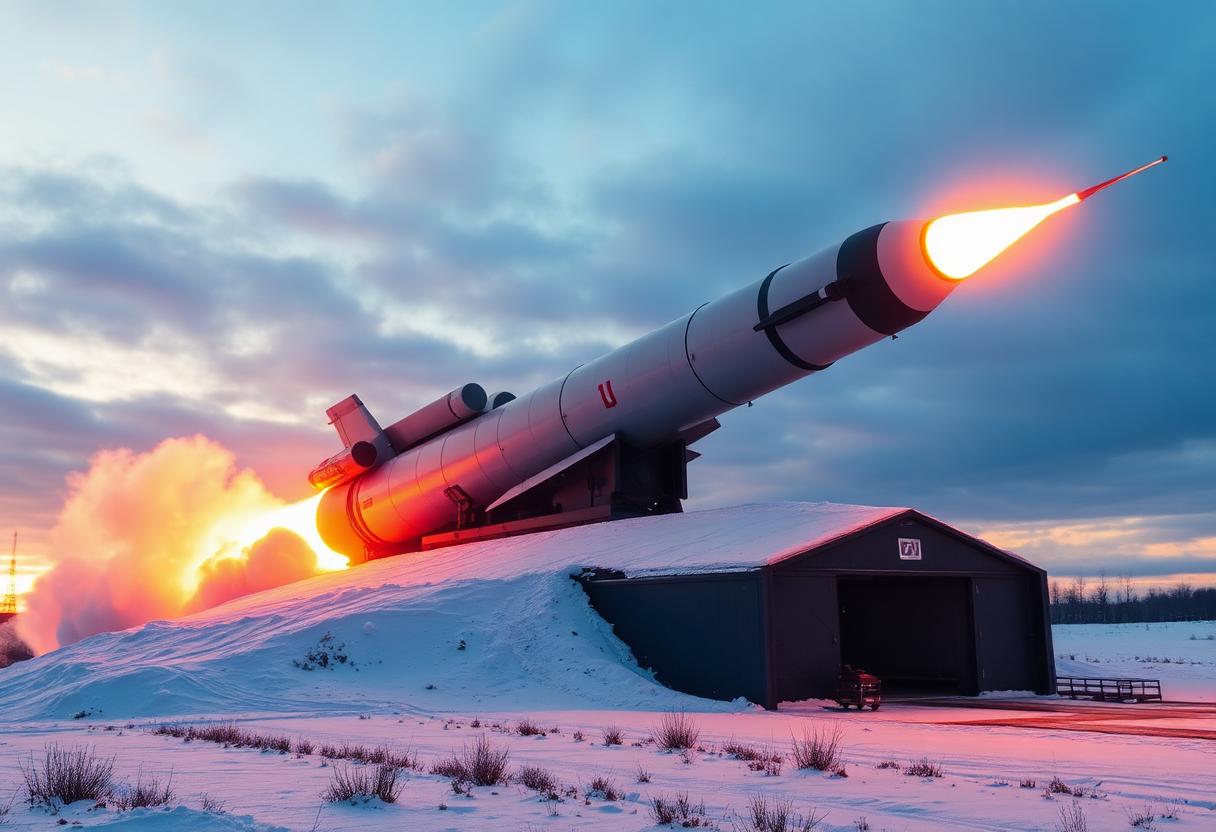
The RS-28 Sarmat, designated SS-X-29 (sometimes SS-X-30) by NATO, is a liquid-fueled, silo-based, super-heavy ICBM. It was designed to replace the Soviet-era R-36M2 Voevoda, the largest operational nuclear missile in the world.
- Class: super-heavy ICBM, roughly 200 metric tons at launch.
- Range: Russia claims more than 18,000 kilometers, enough to strike any target on Earth.
- Payload: up to 10 metric tons, capable of carrying multiple independently targetable reentry vehicles (MIRVs) or hypersonic glide vehicles such as the Avangard.
- Fueling: liquid propellant, which gives high throw weight but slower readiness compared to solid-fueled designs.
Putin has repeatedly grouped the Sarmat with the Oreshnik intermediate-range ballistic missile and the Poseidon nuclear-armed underwater drone as the public face of Russia's nuclear modernization.
The 2026 deployment timeline
According to the May 12 statement, the first regiment of RS-28 Sarmat missiles will enter combat duty with the 62nd Missile Division based in the Krasnoyarsk Krai region of Siberia by the end of 2026. The 62nd Division currently fields older R-36M2 silos, so a Sarmat handover would represent a one-for-one replacement rather than a brand new field.
The credibility problem is the track record. Russian officials previously promised initial combat deployment in 2021, then 2022, then 2023. A reported test failure in late 2024, in which a Sarmat is believed to have exploded inside its silo at the Plesetsk Cosmodrome, set the program back further. A successful claim in 2026, without independent confirmation, fits the pattern of repeated optimistic timelines.
Is the timing political?
The Institute for the Study of War and other open-source analysts highlight three reasons the announcement reads as political signaling:
- It followed a weak Victory Day parade. The May 9, 2026 parade was visibly scaled down, with fewer columns of armor and a noticeably reduced air component.
- Moscow leaned on an informal ceasefire. Reporting indicates Russia could not fully secure the parade against Ukrainian deep-strike drones and missiles, and quietly relied on a tacit pause rather than its own air defenses.
- The Kremlin chose a nuclear-coded weapon. Promoting the Sarmat and Oreshnik immediately after a vulnerable moment lets Putin substitute strategic deterrence narratives for conventional military performance.
What it changes for global security
Even if the Sarmat enters service on schedule, the strategic balance does not fundamentally shift. The R-36M2 it replaces already covers similar targets and payloads. The bigger questions are about doctrine and signaling.
A real Sarmat regiment in Krasnoyarsk would let Russia field MIRVs and hypersonic glide vehicles on a more modern platform, complicating US missile defense planning. The political effect, however, is happening now: the announcement itself is the deterrent message, regardless of whether the hardware ships on time.
Frequently Asked Questions (FAQ)
What is the range of the RS-28 Sarmat?
Russia claims a maximum range of more than 18,000 kilometers, which would allow it to strike anywhere on Earth from Russian territory.
How many warheads can it carry?
The Sarmat can reportedly carry up to 10 large MIRV warheads or a smaller number of Avangard hypersonic glide vehicles.
Has the Sarmat been deployed before?
No. Despite multiple announced timelines since 2021, the Sarmat has not been confirmed as operational by independent sources. The 2026 announcement is the latest in a series of deployment promises.
The takeaway
The RS-28 Sarmat is a real program with real capability, but the May 2026 announcement should be read as much through a political lens as a technical one. A claimed test plus a year-end deployment date plays to a domestic audience that watched a thin Victory Day parade and signals to Western capitals that nuclear modernization is the Kremlin's chosen counterweight to battlefield weakness.
Quick recap
Putin announced a successful Sarmat test on May 12, 2026, with combat deployment by year end in Krasnoyarsk Krai. Analysts see the timing as a strategic deflection from a weak Victory Day parade rather than a clean technical milestone.