Quick Answer
Yes, a quality leverage-mount door pull-up bar is safe on a standard wood-framed doorway up to roughly 300 lb of user weight. The injury reports almost always involve cheap pressure-only "tension" bars, drywall-only frames, or worn doorway trim.
The two non-negotiables: pick a bar rated above your bodyweight from a reputable brand (Iron Gym, Perfect Fitness, ProsourceFit), and confirm your doorframe is solid wood at least 5 to 6 inches deep with no rot or hollow trim before each use.
How leverage-mount bars work
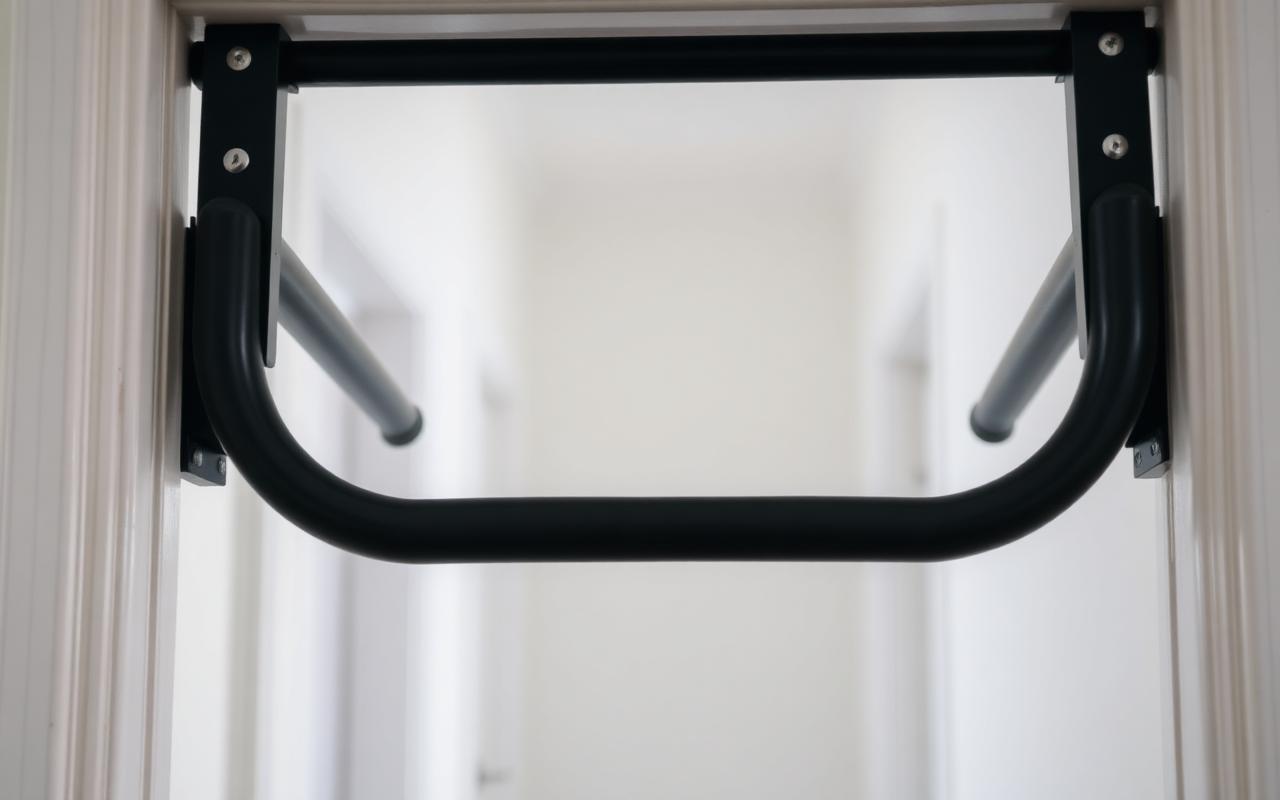
The common "Iron Gym" style bar is technically a leverage mount, not a pressure mount. Two foam pads press against the wall above the door, and the bar itself hooks over the top of the doorframe. Your body weight pulls down, which pushes the upper pads harder into the wall above. This design is mechanically sound on a normal wood frame.
How tension bars differ (and fail)
Pure tension bars (a single horizontal bar held in place only by an expanding spring) rely entirely on friction with the doorframe. They are convenient but have a well-documented failure pattern: a small slip turns into a complete release, and the user falls. The CPSC has logged recurring injury reports involving tension-only bars.
Common installation mistakes
Mounting on hollow-core or thin trim. Skipping the wall pads. Using on a frame with old paint flaking or wood rot. Installing on a frame less than 5 inches deep. Mounting too high so your full bodyweight drops onto it during pull-ups (sudden shock load is much higher than static load).
Damage to the doorframe
Even properly installed bars can leave dents or paint marks on the wall above the door over time. The fix is to put a small towel or felt pad behind the upper pads, and to remove the bar when not training rather than leaving it loaded 24/7.
Who should not use them
Skip door bars if you weigh near the bar's rating limit, if your doorframe is hollow or shows any rot, if you do kipping/CrossFit-style swinging pull-ups (the shock loads can blow out the trim), or if you plan to add weight via a weighted vest beyond the bar rating.
Safer setup checklist
Verify the doorframe is solid wood. Hang from the bar with both hands and a slight pull before each session to confirm seating. Mount the bar so your feet can touch the ground when fully hanging. Replace the bar if pads tear or the steel shows any bending.
Better alternatives if you have doubts
Wall-mounted pull-up bars (lag-bolted into studs) and free-standing pull-up towers eliminate the doorframe variable entirely. Both are worth the upgrade if you train frequently or use a weighted vest.
Bottom line
A quality leverage bar on a solid wood doorframe is safe. The failures come from cheap tension bars, hollow trim, and skipped safety checks, not the concept itself.
How to weight-test a new bar in 30 seconds
Install per instructions, then hang both hands on the bar without lifting your feet for 5 to 10 seconds. Listen for creaks or paint cracking. Slowly add a small swing. If anything shifts, take it down, re-seat the wall pads, and retest. Never trust an installation you have not weight-tested.
Pull-up technique that protects the bar and you
Avoid kipping or explosive jerking on a door bar; the shock load can be 2 to 3 times your bodyweight and is the number-one cause of trim blowout. Pause for one second at the bottom of each rep so you do not bounce off the dead hang into the next pull. This is also better strength training.
When to graduate to a wall or tower mount
If you train pull-ups three or more times a week, add a weighted vest, or weigh more than 230 lb / 105 kg, move to a permanent wall mount lag-bolted into studs or a freestanding pull-up tower. The doorframe bar is excellent for casual training and travel; serious training deserves serious hardware.
How to inspect a doorframe before installing
Tap along the trim with a knuckle: solid wood gives a flat thud, hollow or MDF trim gives a hollow ring. Look at the back side of the frame from the next room for any cracks or separation. Peel back the threshold molding if you can; cheap frames often hide thin shimmed wood behind decorative trim. If any of those red flags appear, do not mount a pull-up bar there.
Maintenance and replacement schedule
Inspect every month: wall pad foam (compressed or torn?), the bar weld points (any flex or paint cracking?), the doorframe (new dents or chipping above the door?). Replace the bar every two to three years of regular use or sooner if any inspection point fails. Steel fatigues with cyclic loading even if it looks fine.
Final answer for the cautious buyer
Spend $30 to $40 on a reputable leverage bar from a known brand, install it on a solid wood frame with the wall pads correctly seated, weight-test before every session, and avoid kipping pull-ups. Done that way, door pull-up bars are a safe, effective, space-saving training tool used by millions without incident.