Quick Answer
Fast food chains like Chick fil A and Taco Bell are packaging their signature sauces for wholesale clubs like Costco to tap into the lucrative consumer packaged goods (CPG) market. It builds brand loyalty and creates a massive new revenue stream without the overhead of opening new restaurant locations.
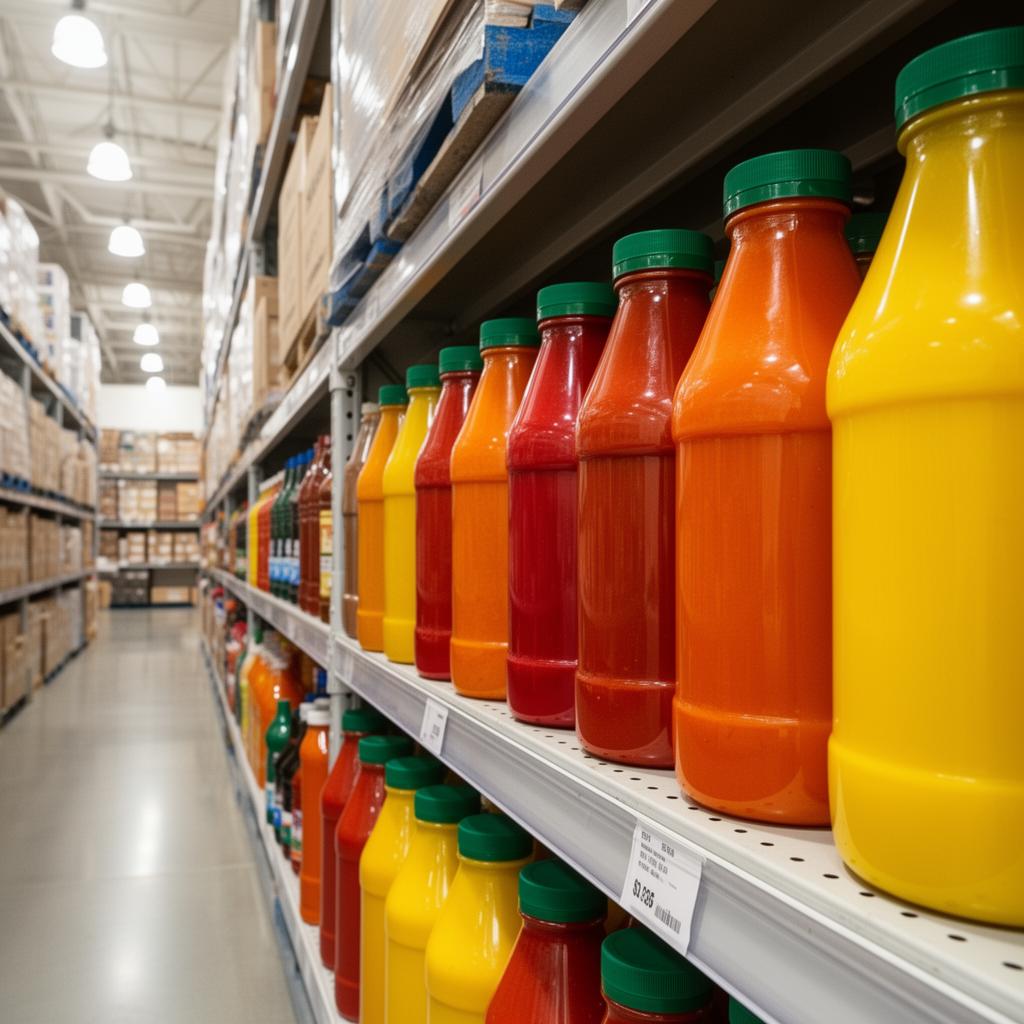
If you have walked down a Costco condiment aisle recently, you might have noticed a massive 3 pack of Chick fil A signature sauce, or a giant bottle of Taco Bell mild sauce sitting right next to the standard ketchup and mustard. To anyone used to grabbing a handful of packets at the drive thru, it feels a little out of place.
The power of the CPG market
For decades, fast food restaurants viewed their sauces as a loss leader. You give away the BBQ sauce for free because it makes the customer buy the chicken nuggets.
However, corporate strategy shifted when chains realized they had accidentally created cult followings for their condiments. By entering the consumer packaged goods (CPG) market, these companies turn a free drive thru perk into a highly profitable retail item. Partnering with a wholesale giant like Costco allows a brand like Chick fil A to move massive volume with incredibly low distribution costs.
For the restaurant, it is passive income. They do not have to fry a single piece of chicken or hire cashier staff to make money off a bottle of sauce sitting on a Costco pallet.
The shelf life science
Taking a sauce from a fast food kitchen and putting it on a Costco shelf for six months requires specific food science. You cannot just pour restaurant sauce into a bottle and ship it.
To make a condiment shelf stable, food scientists have to manipulate its biological makeup:
- Managing water activity: Bacteria need moisture to grow. By adjusting the water activity inside the sauce using salt and sugar, scientists create an environment where pathogens cannot survive.
- The pH balance: Most fast food sauces use vinegar or citric acid to drop the pH level well below 4.6. This high acidity acts as a natural preservative, keeping the sauce fresh at room temperature until the consumer finally pops the seal.
- Emulsification: A sauce like Chick fil A's is heavily oil and egg based. To stop the oil from separating and floating to the top of the bottle during a bumpy truck ride to a Costco warehouse, food scientists add heavy duty emulsifiers to hold the molecules together.
The psychology of the "secret sauce"
Why do consumers buy these bulk packs? It comes down to psychological branding. Fast food companies spend millions of dollars engineering flavor profiles that trigger an immediate dopamine response.
When you buy a massive bottle of Taco Bell sauce at Costco to put on your homemade eggs or tacos, you are bringing that specific, nostalgic dopamine hit into your own kitchen. It keeps the fast food brand at the forefront of your mind, essentially putting a billboard inside your refrigerator.
The takeaway
The Costco condiment aisle is no longer just about ketchup and mustard. It has become a battleground for fast food brands looking to extend their reach beyond the drive thru, blending food science, retail economics and emotional branding into a single bottle on a wholesale shelf.
How These Costco Deals Actually Get Done
The retail sauce business is driven by brand licensing and contract manufacturing. A fast food chain partners with a sauce manufacturer, scales the recipe into shelf-stable format, and licenses the brand to a co-packer that handles bottling, labelling and distribution. Costco then negotiates exclusive pack sizes, often the multipack you cannot find at a typical supermarket.
The chain earns brand royalties without taking on the operational risk of running a CPG business. The manufacturer gets a hero brand on shelf. Costco gets a traffic-driving SKU that customers cannot find easily elsewhere.
Why Fast Food Brands Want a Grocery Aisle Presence
- It extends the brand into the home, deepening the relationship between meal occasions.
- It turns a free-with-your-meal item into a paid retail product.
- It defends shelf space against generic competitors that try to imitate the recipes.
- It gives the brand a marketing asset that does not require running new commercials.
- It generates licensing revenue at attractive margins.
Why Costco Is the Ideal Retail Partner
Costco's membership model rewards items that drive trips and basket size. A two-pack of a beloved fast food sauce delivers both. The warehouse format also handles the bulk pack sizes that would be awkward in a conventional grocer's planogram. And Costco's reputation for quality protects the brand from the discount-aisle stigma that haunts some licensing deals.
What Makes the Sauce Different From the In-Restaurant Version
The grocery version is reformulated for shelf stability. That usually means a slightly different acid level, a tweaked thickener and a longer-life preservative system. Most chains work hard to keep the flavour profile recognisably the same, even if a side-by-side taste reveals small differences.
If you have ever wondered why the retail bottle tastes 90 percent like the restaurant version, that is the trade-off. Shelf stability and bottling tolerances change the recipe at the margin.
Examples of Recent Costco Sauce Launches
- Chick-fil-A's branded sauces in multi-bottle packs.
- Wingstop's flavour range in concentrated bottles.
- Buffalo Wild Wings' top selling sauces packaged for retail.
- Raising Cane's signature sauce in larger format.
- In-N-Out's Spread, sold in regional Costco locations.
What This Tells Us About the Retail Shift
Fast food is no longer a single-channel business. The biggest brands now run apps, loyalty programmes, delivery partnerships, packaged grocery products and consumer events. Costco is one stop on a longer journey to be present wherever the customer thinks about food, not just where they buy a meal.
Expect more chains to follow, particularly those with cult-favourite sauces that travel well outside the restaurant.
Should You Buy
If you genuinely love the sauce and use it regularly, the warehouse multipack usually beats any other retail option on price per ounce. Pay attention to the use-by dates because the bulk pack is a commitment. And do not expect the bottle to taste identical to the restaurant version. It is a close cousin, not a clone.