Quick Answer
Frying dry wheat pasta in oil or butter before adding liquid triggers the Maillard reaction, which gives the noodles a deep, nutty flavor. It also physically alters the starches on the outside of the pasta, helping the noodles maintain a firm texture instead of turning mushy when they finally boil.
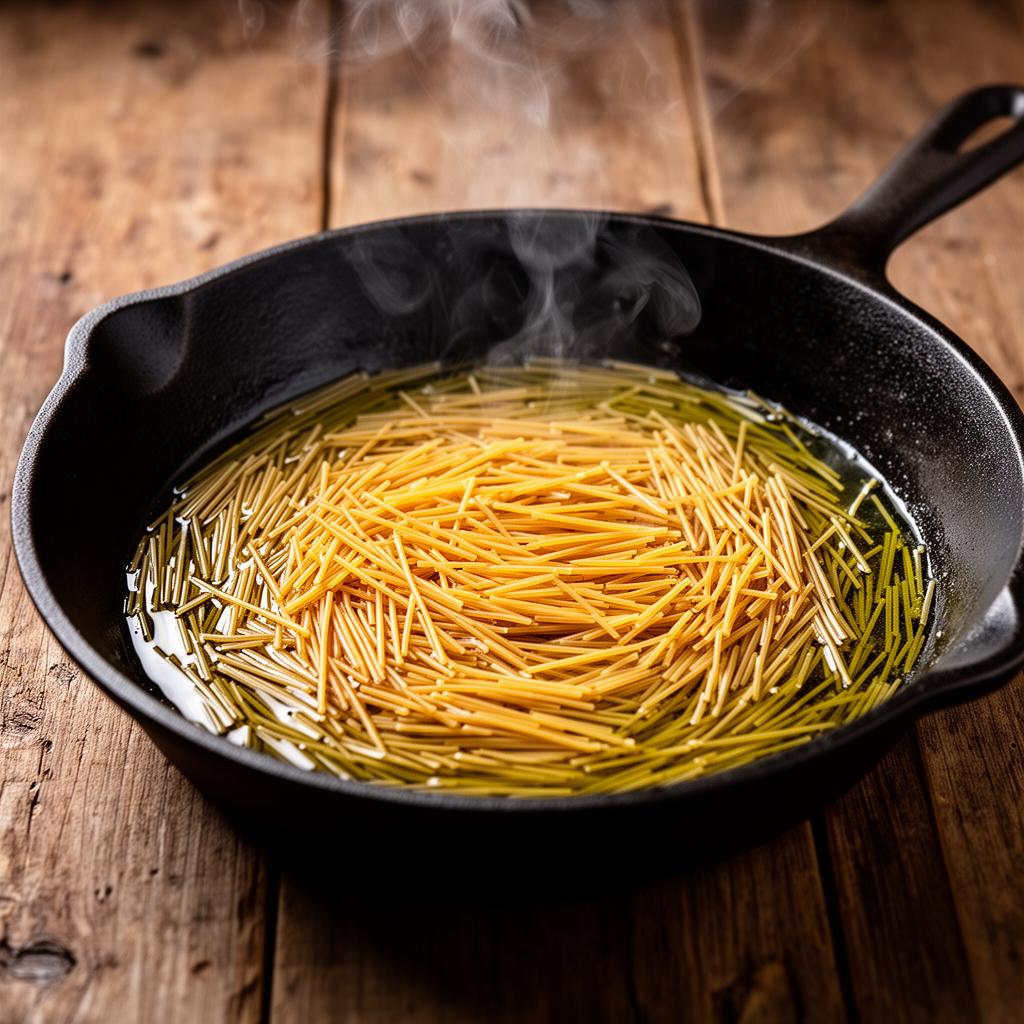
If you grew up eating traditional Mexican Sopa de Fideo, Middle Eastern rice pilaf with vermicelli, or even a box of Rice A Roni, you have probably noticed a unique cooking step: the dry wheat pasta is toasted in hot oil before a single drop of water or broth hits the pan.
To someone used to simply dumping a box of spaghetti into a pot of boiling salted water, frying dry, hard pasta sounds completely counterintuitive. Won't it just burn?
The chemistry of flavor: the Maillard reaction
The primary reason cooks fry dry wheat pasta is to build a complex flavor profile from scratch.
When you heat raw, dry pasta in a fat (like olive oil or butter) at a high temperature, you trigger a chemical process called the Maillard reaction. This is the exact same chemical reaction that causes a steak to develop a savory brown crust, or a loaf of bread to turn golden brown in the oven.
During this process, the heat forces the amino acids and natural sugars in the wheat to violently rearrange themselves. This creates hundreds of brand new flavor compounds. Instead of tasting like plain boiled flour, the toasted pasta develops a rich, savory, and incredibly nutty flavor profile.
Once the pasta is golden brown, you pour in the broth or water. The pasta then absorbs that liquid while retaining the complex roasted flavors locked inside.
The physical science: changing the starch structure
Beyond flavor, toasting dry pasta actually changes its physical biology, which heavily dictates the final texture of your dish.
Raw wheat pasta is packed with starch granules. When you drop raw pasta straight into boiling water, those starch granules immediately swell, burst open, and release a sticky gel into the water (which is why pasta water gets cloudy).
However, when you fry the pasta in oil first, you are essentially sealing those starches. The high heat of the oil dextrinizes the starch on the surface of the noodle. It creates a microscopic barrier. When you finally add the cooking liquid, this dextrinized barrier prevents the starches from rapidly exploding.
The result? The noodles absorb the broth much slower. They maintain a firm, distinct shape and refuse to turn into a clump of mush, even if they sit in a hot soup (like Sopa de Fideo) for an extended period of time.
A global culinary tradition
Frying wheat pasta isn't just a random kitchen hack; it is a foundational technique across several global cuisines:
- Mexico: Sopa de Fideo relies on lightly frying short, thin wheat noodles (fideo) in oil until golden before simmering them in a rich tomato and chicken broth.
- The Middle East: Classic vermicelli rice features broken pieces of thin wheat pasta toasted in butter or ghee before the raw rice and water are added.
- Spain: Traditional Fideuà (a seafood dish similar to paella, but made with pasta) requires toasting the short noodles in olive oil to build the dish's signature savory depth.
The takeaway
The next time you are cooking a soup or a pilaf, try breaking up a handful of thin wheat pasta and tossing it in a skillet with some butter first. It only takes two minutes, but the science behind the flavor will completely change your dish.
The Science of Toasting Starch
Frying dry pasta in a little oil or butter before adding water triggers the Maillard reaction on the surface of each strand. That browning develops nutty, almost popcorn-like aromatics that plain boiled pasta simply cannot produce.
Toasting also partially gelatinizes the outer starch layer. When the pasta hits the cooking liquid, that pre-cooked shell holds its shape better, giving you a firmer bite and reducing the gummy mouthfeel that ruins a tired weeknight bowl.
Step by Step Method
- Heat one tablespoon of olive oil or butter in a wide skillet over medium heat.
- Add the dry pasta in a single layer and stir constantly for two to four minutes until it turns a light golden brown.
- Pour in hot broth or salted water just to cover, then simmer until al dente, stirring occasionally.
- Finish with cheese, herbs, or a splash of cream for a one pan meal.
Best Shapes for the Technique
Short, sturdy shapes work best. Orzo, fregola, ditalini, broken spaghetti, and even fideos all toast evenly and absorb flavor without falling apart. Delicate egg pastas and stuffed shapes like ravioli should be cooked the traditional way.
Common Mistakes to Avoid
- Crowding the pan, which steams rather than toasts the pasta.
- Walking away from the skillet, because toasted starch turns to burnt starch in seconds.
- Adding cold liquid, which shocks the pan and stops the cooking process unevenly.
Why Chefs Love This Trick
Professional kitchens use the toasted pasta method to add depth to dishes that would otherwise feel one note. It is the same logic behind toasting rice for risotto or grains for pilaf. A few extra minutes at the start of cooking pays off with a finished dish that tastes layered, intentional, and far more impressive than the effort suggests.