Quick Answer
Stanley had a box of stationery for one of two reasons depending on which Stanley you mean.
If you mean Stanley Yelnats from Louis Sachar's novel Holes, his mother packed it so he could write to her every week from the Camp Green Lake juvenile detention centre. If you mean the director Stanley Kubrick, the boxes were part of his obsessive personal archive of film research, scripts and notes, stored in custom heavy duty cardboard boxes made by G. Ryder and Co.
Stanley Yelnats in Louis Sachar's Holes
The most common school reading reference comes from the 1998 Newbery Medal winning novel Holes by Louis Sachar. In the story, Stanley Yelnats IV is wrongly convicted and sentenced to Camp Green Lake, a brutal juvenile detention camp in the Texas desert where boys are forced to dig holes every day.
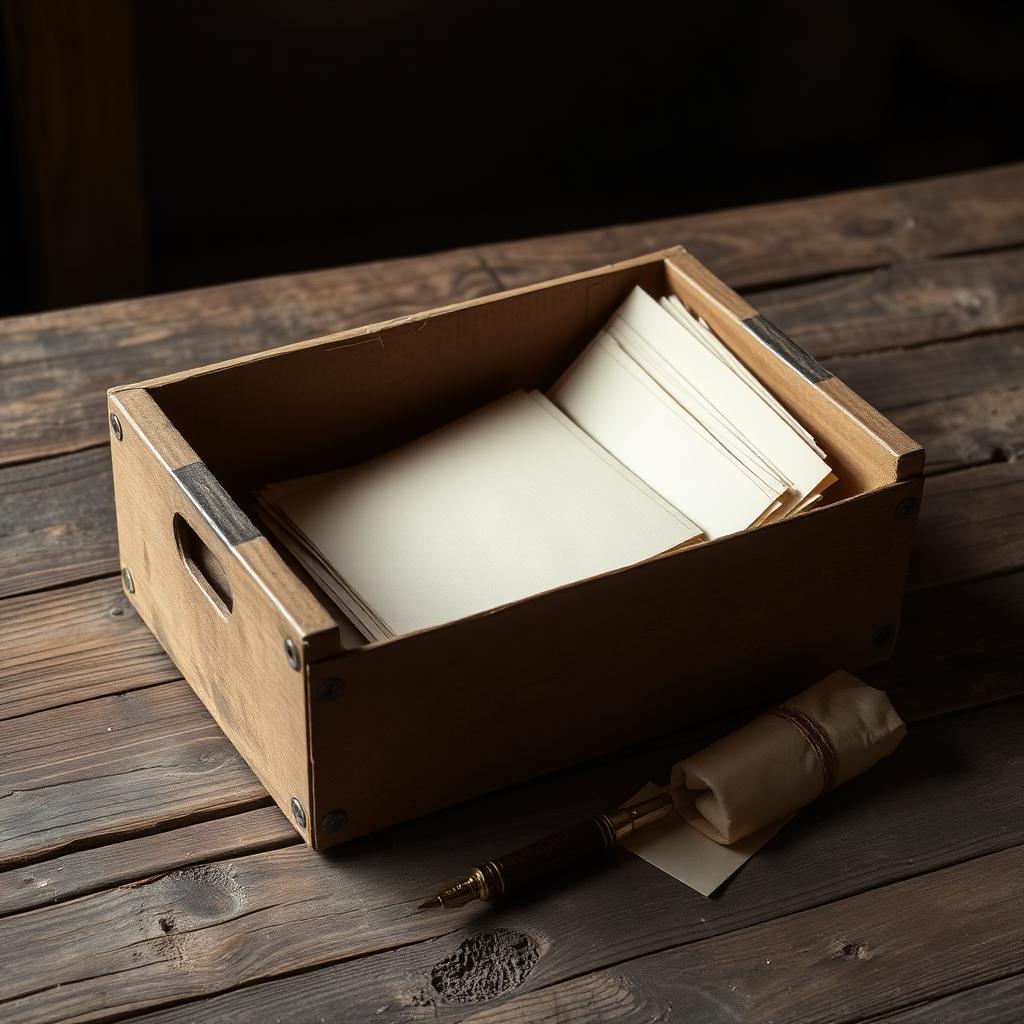
Before he leaves, Stanley's mother packs a small bag of personal items including a toothbrush, toothpaste and a box of stationery. The point of the stationery is simple: Stanley promised his mother he would write to her at least once a week so she would not worry. The box becomes a recurring emotional anchor in the book.
Stanley initially writes upbeat letters home pretending camp is fine. The other boys mock him when they realise he is writing to his mum, and the stationery slowly becomes a quiet symbol of the gap between the story Stanley tells his family and the reality of life at Camp Green Lake.
Stanley Kubrick and His Real Life Boxes
The other Stanley people mean when they ask this question is filmmaker Stanley Kubrick (1928 to 1999), the director of 2001: A Space Odyssey, The Shining, A Clockwork Orange and Eyes Wide Shut.
After his death, journalist Jon Ronson was invited to Kubrick's Childwickbury estate in Hertfordshire and discovered the now legendary boxes. The director had spent decades amassing an enormous personal archive of research material, fan mail, location photographs, screenplay drafts, lens tests and meticulous production notes, all stored in identical heavy duty cardboard boxes.
The boxes themselves were custom made by a British packaging firm called G. Ryder and Co, based in Buckinghamshire, who had been making boxes for Kubrick since the 1970s. Each box was uniform in size so they would stack cleanly on industrial shelving across multiple rooms of the estate.

Was Kubrick Really a Stationery Obsessive?
Yes. Multiple accounts from his collaborators describe Kubrick as fascinated by paper, pens, typewriters and filing systems. He had strong opinions about specific notebook styles and would often ask producers and assistants to track down particular pens or papers he had liked years earlier. The boxes were the visible end of a much deeper love of organisation and stationery itself.
Why the Question Comes Up so Often
"Why did Stanley have a box of stationery" tends to surface in two very different audiences: school students working through Holes for an English class, and film fans who have just watched the 2008 documentary Stanley Kubrick's Boxes by Jon Ronson. Same question, two completely different Stanleys, two completely different boxes.
Bottom Line
If your Stanley is Stanley Yelnats in Holes, the box of stationery exists so he can keep his weekly letter promise to his mother. If your Stanley is Stanley Kubrick, the boxes were a custom made cardboard archive system from G. Ryder and Co that held a lifetime of obsessively organised film research. Either way the box of stationery is doing more emotional and cultural work than its plain exterior suggests.
How the Box of Stationery Question Trended Online
The phrase "why did Stanley have a box of stationery" has bounced around English class study guides and film discussion boards for years. School students searching it almost always mean Stanley Yelnats from Holes. Film fans searching it mean Stanley Kubrick. Voice search and AI chatbots regularly mix the two answers up because the question itself is identical even though the Stanleys are not.
If a teacher asks the question in class the answer is the Holes interpretation: Stanley had a box of stationery because he promised his mother he would write to her weekly from Camp Green Lake. If a friend asks it after a Kubrick documentary the answer is the archive boxes from G. Ryder and Co.
Final Word on the Stanley Box of Stationery Question
Two Stanleys, two boxes, two completely different stories. The box of stationery in Holes is an emotional anchor for a kid sent to a brutal detention camp. The boxes of stationery in Kubrick's house at Childwickbury are the visible end of a film director's lifelong obsession with paper, archives and meticulous notes. Both answers are correct depending on which Stanley you mean.